Fall Lawn Care Checklist for Cool- and Warm-Season Grass
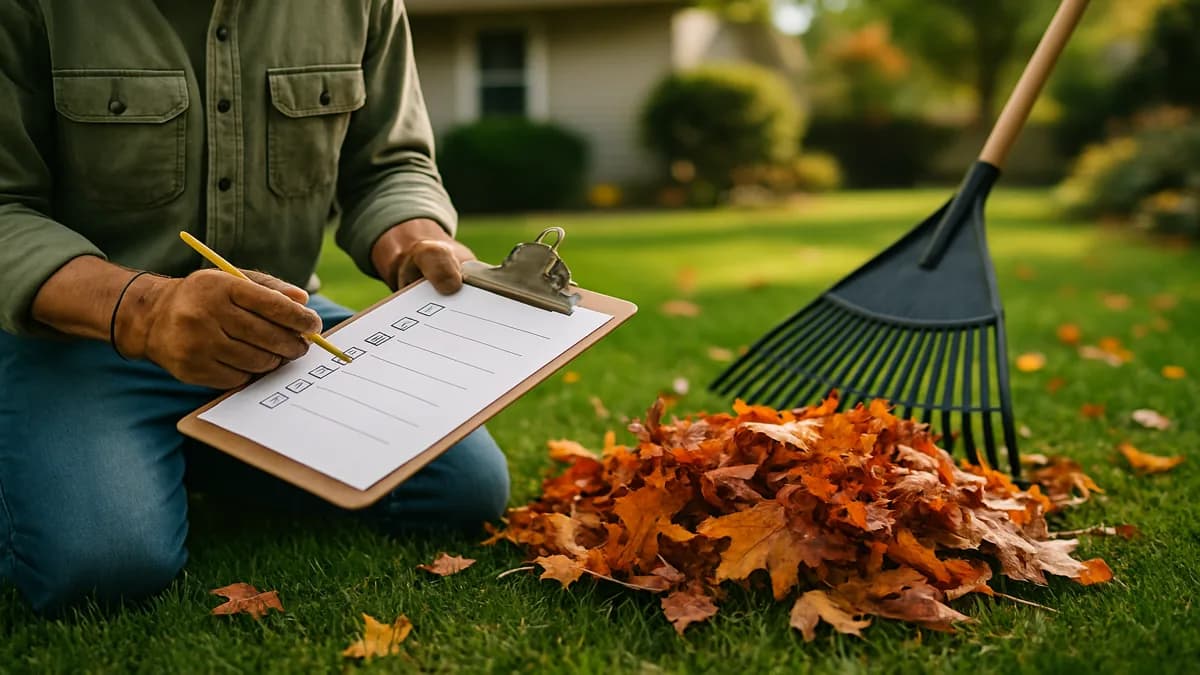
Fall is renovation season for cool-season lawns and wind-down season for warm-season lawns. Follow the checklist that matches your grass.
On this page
- Know Your Grass Family First
- Cool-Season Fall Checklist
- 1. Soil test if you are due
- 2. Lime only with a recommendation
- 3. Core aerate while grass is growing
- 4. Overseed thin turf
- 5. Fertilize on a fall-heavy schedule
- 6. Keep mowing at a sensible height
- 7. Manage leaves before they mat
- 8. Note local blower rules
- Warm-Season Fall Checklist
- 1. Taper nitrogen
- 2. Continue mowing until growth stops
- 3. Skip fall core aeration
- 4. Control broadleaf weeds if labeled and weather allows
- 5. Clear leaves and debris
- 6. Plan spring pre-emergent early
- Two-Week Cool-Season Sprint (Example)
- Regional Notes
- Tool and Material Staging List
- Weather Contingencies
- Pest and Disease Watch While You Renovate
- Warm-Season Winterization Notes
- What Not to Stuff Into Fall
- Printable Priority Order (Cool-Season)
- Budgeting Fall Without Buying Everything
- Spring Prep Notes to Capture Now
- Neighbor Coordination
- Final Fall Walkthrough
Fall separates lawns that coast into winter from lawns that fight for survival every April. Cool-season turf wants renovation now. Warm-season turf wants a clean wind-down. Use the checklist that matches your grass, then open the linked guides for full how-tos.
Know Your Grass Family First (opens in a new tab)
| Grass family | Fall job | Skip in fall |
|---|---|---|
| Cool-season (fescue, bluegrass, rye) | Renovate and feed | Heavy summer-style nitrogen habits |
| Warm-season (bermuda, zoysia, St. Augustine) | Harden off, clean up | Late nitrogen, fall core aeration |
| Mixed / unknown | Identify before seeding | Random seed bag from the clearance aisle |
Cool-Season Fall Checklist (opens in a new tab)
1. Soil test if you are due (opens in a new tab)
Every 2 to 3 years, or anytime fertilizer keeps failing. How to soil test your lawn.
2. Lime only with a recommendation (opens in a new tab)
Fall is a preferred liming season when pH is low. When to lime your lawn.
3. Core aerate while grass is growing (opens in a new tab)
Early fall is the prime window. When to aerate your lawn.
4. Overseed thin turf (opens in a new tab)
Seed into aeration holes when temperatures favor cool-season germination. How often to overseed.
5. Fertilize on a fall-heavy schedule (opens in a new tab)
Early fall feeding matters most; late fall winterizer comes next while turf is still green. Year-round fertilizer schedule.
6. Keep mowing at a sensible height (opens in a new tab)
Do not scalp before winter. Maintain the right height for your species. Mowing height by grass type.
7. Manage leaves before they mat (opens in a new tab)
Mulch light layers; remove heavy mats. Best ways to clean up leaves.
8. Note local blower rules (opens in a new tab)
Some towns restrict gas blowers. Gas leaf blower bans.
Warm-Season Fall Checklist (opens in a new tab)
1. Taper nitrogen (opens in a new tab)
Stop substantial nitrogen early enough that growth can harden before frost. Exact cutoff depends on your first-frost risk.
2. Continue mowing until growth stops (opens in a new tab)
Gradually ease height only within your grass’s recommended range. Avoid a final scalping.
3. Skip fall core aeration (opens in a new tab)
Save cores for late spring to early summer after green-up.
4. Control broadleaf weeds if labeled and weather allows (opens in a new tab)
Fall can be effective for some broadleaf weeds on still-green turf. Match products carefully; see weed and feed vs separate products and dandelion control.
5. Clear leaves and debris (opens in a new tab)
Warm-season lawns still smother under leaf mats.
6. Plan spring pre-emergent early (opens in a new tab)
Fall is for notes and calendar reminders, not for missing next year’s crabgrass window. Review crabgrass timing before winter ends.
Two-Week Cool-Season Sprint (Example) (opens in a new tab)
| Day | Task |
|---|---|
| Weekend 1 | Soil moisture check, aerate, overseed, starter or fall fertilizer as appropriate |
| Midweek | Keep seedbed moist (not soggy) |
| Weekend 2 | Mow high if seedlings allow, continue leaf management, spot-water dry zones |
| Ongoing | Second fall fertilizer later while grass stays green |
Regional Notes (opens in a new tab)
- Upper Midwest / New England: Earlier fall windows; do not wait until October snow threats.
- Transition zone: Excellent cool-season renovation weather; warm-season lawns should already be tapering.
- South: Warm-season shutdown timing varies widely; watch local frost history.
- Pacific Northwest: Use the PNW schedule for moss, rain, and month detail.
Tool and Material Staging List (opens in a new tab)
Stage these before the first cool front catches you unprepared:
- Soil probe or trowel for sampling
- Core aerator reservation (fall weekends book out)
- Grass seed matched to existing turf
- Fertilizer that fits your soil test (not a random clearance bag)
- Lime only if recommended
- Leaf plan: mulching mower, bags, or compost system
- Rain gauge for watering newly seeded areas
Weather Contingencies (opens in a new tab)
| Forecast | Adjustment |
|---|---|
| Heat spike in early fall | Delay heavy fertilizer; keep seed moist without cooking |
| Steady gentle rain after aerate/seed | Helpful; avoid walking new seedbeds into mud |
| Early hard freeze warning | Prioritize seeding earlier next year; focus on leaf removal and final mow now |
| Drought restrictions | Follow local rules; survival watering for new seed may be limited |
Pest and Disease Watch While You Renovate (opens in a new tab)
Fall is not pest-free:
- Cool-season lawns can still show grubs into early fall in some regions (grubs guide)
- Broadleaf weeds remain visible and often treatable
- Do not assume every thin patch needs seed; confirm causes first
Warm-Season Winterization Notes (opens in a new tab)
Beyond nitrogen cutoffs:
- Reduce traffic on frost-sensitive bermuda when possible
- Keep leaves off so crowns get light on mild winter days in the Deep South
- Schedule equipment service now so spring pre-emergent is not delayed
What Not to Stuff Into Fall (opens in a new tab)
- Spring crabgrass preventer “early”
- Heavy quick-release nitrogen during a heat spike
- Seeding warm-season grass as if it were tall fescue
- Ignoring a soil test for the third year running
- Turning this checklist into five duplicate articles that repeat aeration or overseed deep-dives
- Final scalping “to clean it up for winter”
- Leaving a tarp of leaves on turf for weeks
Printable Priority Order (Cool-Season) (opens in a new tab)
- Soil test / lime decision
- Aerate
- Overseed
- Fertilize
- Mow correctly
- Manage leaves
- Note spring pre-emergent date for next year
Budgeting Fall Without Buying Everything (opens in a new tab)
If money is tight, prioritize in this order for cool-season lawns:
- Overseed thin turf (genetic density beats another random fertilizer bag)
- Fertilize once in early fall
- Aerate if soil is compacted
- Lime only with a test recommendation
- Leaf management (often free if you mulch-mow)
Skipping leaf cleanup can undo seeding. Skipping a fancy soil amendment rarely kills a lawn that was mowed and fed on time.
Spring Prep Notes to Capture Now (opens in a new tab)
While fall work is fresh, write down:
- Where crabgrass was worst (spring pre-emergent reminder)
- Where water pools (drainage / aeration notes)
- Which seed brand/cultivar you used
- Soil test date and lime status
Photograph thin zones before and after renovation. Next September you will remember what worked without relying on memory alone.
Neighbor Coordination (opens in a new tab)
If you share a HOA mowing crew or a common irrigation clock, align fall fertilizer and leaf cleanup so heavy nitrogen does not hit the day before a leaf-dump, and so seedbeds are not driven over the morning after you overseed. A five-minute conversation prevents a week of repair.
Final Fall Walkthrough (opens in a new tab)
On a cool afternoon, walk the lawn with a notebook:
- Soft spots that need drainage work next year
- Shade edges that failed again (tree pruning or groundcover candidates)
- Irrigation heads buried in thatch
- Fence lines packed with leaves
Close the season when tasks on your grass-family checklist are done, not when the big-box endcap says “winterizer week.” Cool-season lawns that get aeration, seed, feed, and leaf management now ask for far less panic in April. Warm-season lawns that taper nitrogen and stay clear of leaf mats enter dormancy cleaner and green up more evenly.
This page is a hub. When a task needs depth, open the linked guide and do that job fully once.
Frequently asked questions
Calculators for this job
Grass Seed Calculator
Seeding rates differ by species by a factor of twenty, bermudagrass wants 1 lb per 1,000 sq ft, perennial ryegrass wants 8. Pick your grass and whether you're starting fresh or overseeding.
OpenFertilizer Calculator
Turf guidance is written in pounds of nitrogen per 1,000 sq ft, but fertilizer is sold as a percentage analysis. This converts between them for any bag you have, enter the three numbers on the front.
OpenLawn Area Calculator
Almost every other lawn number depends on this one. Break your yard into simple shapes, subtract the parts that aren't grass, and get a square footage you can use for seed, fertilizer, and quotes.
OpenCompost Calculator
Compost gets applied far thinner than mulch or soil, and the right depth depends entirely on the job. Enter your area and pick the application to get volume, bags, and cost.
OpenKeep reading
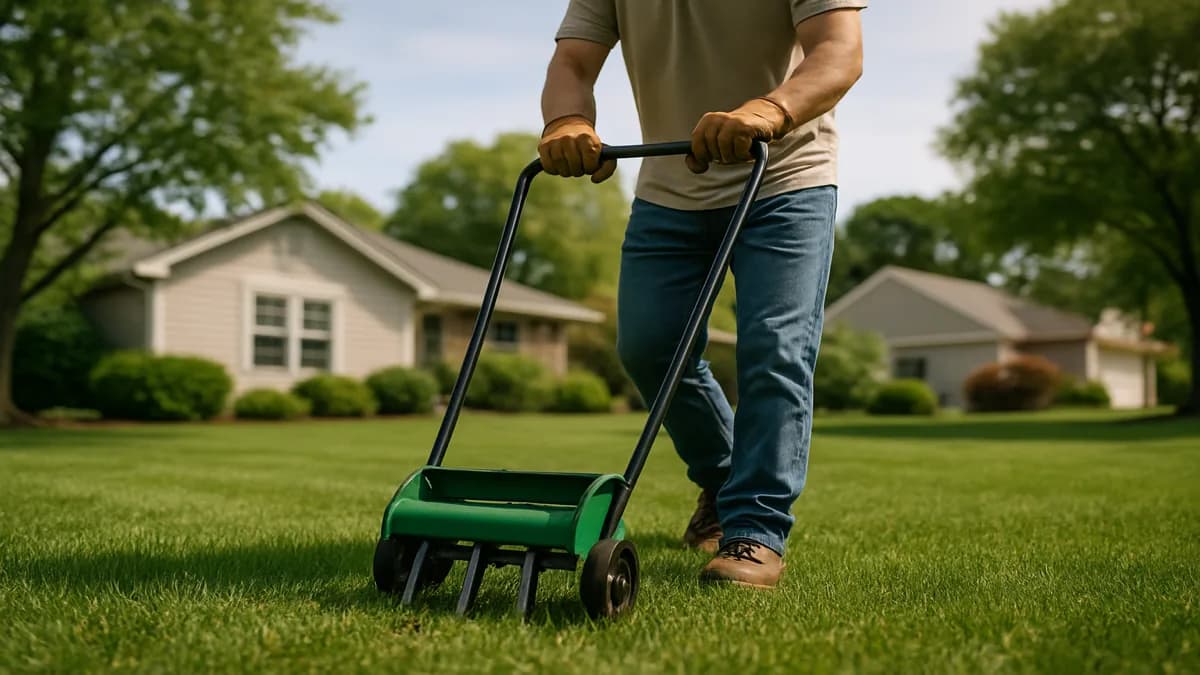
When to Aerate Your Lawn (Cool-Season vs Warm-Season)
Aerate when grass is growing hard enough to recover. Fall for cool-season lawns, late spring to early summer for warm-season lawns.
6 min read
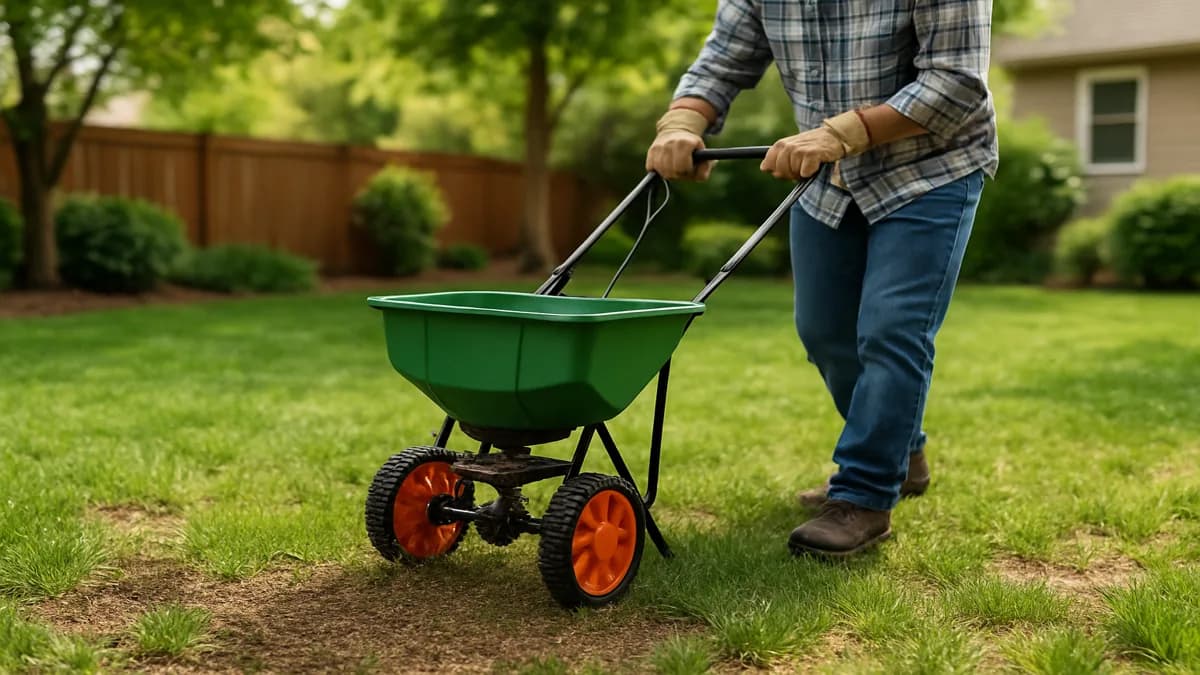
How Often Should You Overseed a Lawn?
Overseeding isn’t a yearly chore for everyone. Here’s how to decide if, when, and how much to overseed,plus the steps that actually matter.
7 min read
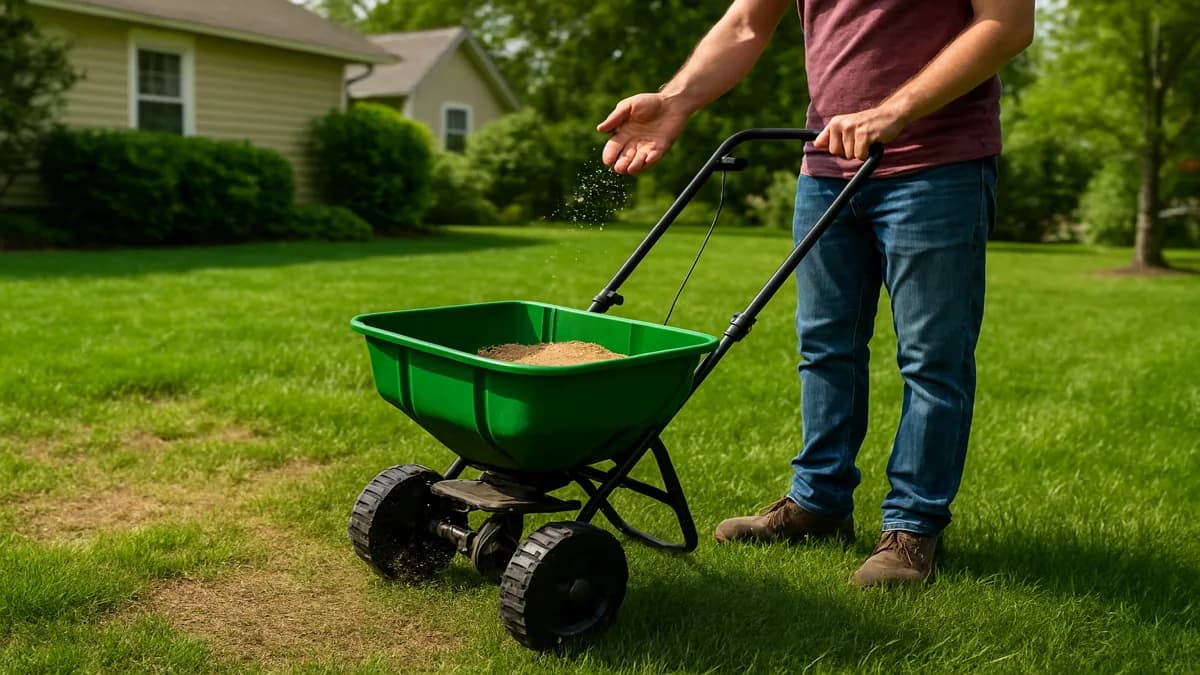
How to Overseed a Lawn for Thicker Grass
Overseeding works best when seed touches loosened soil, gets steady moisture, and is mowed only after seedlings are rooted.
8 min read
Spotted something out of date or wrong? Tell us , we correct guides rather than leaving them to rot.