Lawn Mowing Height by Grass Type (Plus the One-Third Rule)
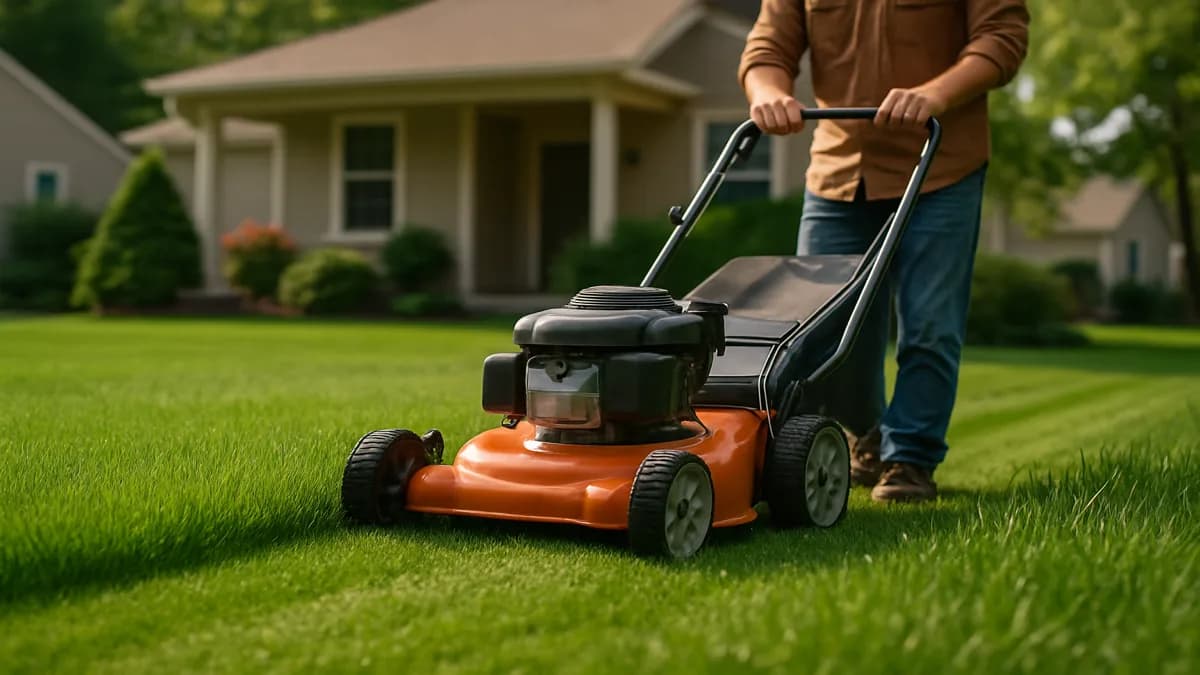
Mowing height is a cultural practice, not a preference. Match the deck to your grass, never cut more than one-third, and raise the cut in heat.
On this page
- The One-Third Rule
- Recommended Mowing Heights by Grass Type
- Cool-season grasses
- Warm-season grasses
- How Often Should You Mow?
- Summer and Stress Adjustments
- Clippings, Bagging, and Thatch Myths
- New Grass and Repair Zones
- Worked Example: 3-Inch Tall Fescue Lawn
- Blade Type and Cut Quality
- Pattern, Overlap, and Edges
- Shade Lawns Need Height, Not Hope
- Growth Regulators and “Low Mow” Marketing
- Troubleshooting After a Bad Cut
- Common Mowing Mistakes
Mowing is the cultural practice you repeat most often, and the height setting decides whether turf thickens or thins. Cut too short and you weaken roots, invite crabgrass, and turn summer into a survival contest. Cut on time at the right height and you crowd weeds out with leaf canopy alone.
The One-Third Rule (opens in a new tab)
Extension turf programs teach the same core rule: do not remove more than one-third of the leaf tissue in a single mowing (LSU AgCenter (opens in a new tab), Ohio State (opens in a new tab), Clemson HGIC (opens in a new tab)).
Examples:
| Target height | Mow when grass reaches about |
|---|---|
| 2.0 in | 3.0 in |
| 3.0 in | 4.5 in |
| 3.5 in | about 5.25 in |
| 4.0 in | 6.0 in |
If life got in the way and the lawn is far above target, raise the deck and step down over multiple visits. Scalping in one pass shocks crowns and can yellow the lawn for weeks.
Recommended Mowing Heights by Grass Type (opens in a new tab)
Ranges below are typical home-lawn targets from university guidance. Local climate, shade, and cultivar can nudge you within the band.
Cool-season grasses (opens in a new tab)
| Grass | Typical home height | Notes |
|---|---|---|
| Tall fescue | 3.0–4.0 in | Keep higher in summer; strong weed competition when dense |
| Kentucky bluegrass | 2.5–3.5 in | Higher in heat; blends often sit near 3 in |
| Perennial ryegrass | 2.0–3.5 in | Often used in mixes; avoid ultra-low home rotary cuts |
| Fine fescues | 2.5–4.0 in | Good in shade; do not scalp |
Warm-season grasses (opens in a new tab)
| Grass | Typical home height | Notes |
|---|---|---|
| Common bermudagrass | 1.0–2.0 in | Needs frequent mowing in peak growth |
| Hybrid bermuda | 0.5–1.5 in | Lower end often needs a reel mower |
| Zoysiagrass | 1.0–2.5 in | Cultivar matters; see zoysiagrass guide |
| St. Augustinegrass | 2.5–4.0 in | Keep on the high side to reduce stress and weeds |
| Centipedegrass | 1.5–2.5 in | Low-input grass; avoid aggressive nitrogen and scalping |
Pacific Northwest recommendations can run shorter for some species than Midwestern/southern guides. When local extension differs, prefer the local sheet for your county.
How Often Should You Mow? (opens in a new tab)
Frequency is a growth question:
- Spring / fall cool-season flush: maybe twice weekly
- Summer stress: slower growth, sometimes weekly or less
- Peak bermuda/zoysia summer: often weekly or more at lower heights
Mow when the one-third threshold says so, not because Saturday arrived. Dull blades tear tips and leave a grayish cast; sharpen on a regular schedule.
Summer and Stress Adjustments (opens in a new tab)
Raise height toward the top of the range when:
- Heat or drought is on
- The lawn is shaded
- You are fighting crabgrass pressure
Taller leaf area shades soil, cools crowns, and deepens roots. Mowing low to “starve weeds” backfires. Crabgrass loves open light at the soil surface. Keep height honest and use proper weed timing instead (crabgrass guide).
Clippings, Bagging, and Thatch Myths (opens in a new tab)
Returned clippings from proper one-third cuts break down quickly and return nutrients. They are not the main cause of thatch. Thatch is mostly stems and roots from certain grasses and overfertilized systems. Bag when:
- You delayed mowing and clumps smother turf
- You are removing diseased tissue on advice
- Local rules require it for a specific cleanup
New Grass and Repair Zones (opens in a new tab)
New seed or sod needs different handling until established. For sod, wait for rooting before the first mow and follow the new sod care schedule. After overseeding, keep traffic light and avoid scalping tender seedlings (how often to overseed).
Worked Example: 3-Inch Tall Fescue Lawn (opens in a new tab)
You want a 3.5-inch summer height.
- Set the deck to 3.5 inches and verify with a tape on pavement.
- Mow when grass hits about 5.25 inches.
- If a vacation leaves it at 7 inches, cut at 5 inches first, then step down to 3.5 over the next visits.
- Leave clippings unless they pile up.
- In fall, you can ease toward 3.0–3.5 inches as growth cools.
Blade Type and Cut Quality (opens in a new tab)
Rotary mowers dominate home lawns and work well at typical cool-season heights. Reel mowers shine on low-cut bermuda or zoysia when you want a scissor cut. A dull rotary blade shreds tips, raises water loss, and gives the lawn a brownish cast that people misdiagnose as disease.
Maintenance habits that pay off:
- Sharpen blades multiple times per season
- Balance the blade after sharpening
- Clean the deck so wet clumps do not re-deposit on turf
- Check deck level side to side so one wheel does not scalp
Pattern, Overlap, and Edges (opens in a new tab)
Change mowing direction across visits when practical so soil and grass are not always pressed the same way. Overlap enough to avoid mohawks. On edges along sidewalks, keep the deck flat; tilting the outside wheels down is a classic scalp that browns a stripe all summer.
If you use a string trimmer, match the finished height to the mower setting. Trimming far below deck height creates a weak perimeter that weeds colonize.
Shade Lawns Need Height, Not Hope (opens in a new tab)
Grass in shade already runs a light deficit. Mowing shade turf at the high end of its range preserves leaf area. If a northern side of the house cannot hold turf even at proper height, consider thinning trees or switching to shade groundcovers rather than scalping harder. The shade garden plants guide covers non-lawn options when turf is the wrong plant.
Growth Regulators and “Low Mow” Marketing (opens in a new tab)
Some seed mixes are sold as low-mow or microclover blends. Follow the specific height guidance for that mix. Do not assume a marketing phrase means you can ignore the one-third rule. Fine fescue left unmowed for a meadow look is a different system than a formal lawn.
Troubleshooting After a Bad Cut (opens in a new tab)
| Problem | Likely cause | Fix |
|---|---|---|
| Gray shredded tips | Dull blade | Sharpen, remow cleanly when growth allows |
| Yellow strips | Scalping / uneven deck | Level deck, raise height |
| Clumps smothering turf | Delayed mow | Bag once, return to schedule |
| Weed explosion after short cut | Open canopy | Raise height, thicken stand, timed weed control |
If yellowing persists without a mechanical cause, use the yellow grass diagnostic.
Common Mowing Mistakes (opens in a new tab)
- Setting one height for every grass on the block
- Scalping edges with the mower deck tilted into the curb
- Cutting wet turf into ropes that smother the canopy
- Ignoring dull blades
- Mowing lower after fertilizer to “clean it up”
- Removing more than one-third after vacation instead of stepping down
- Bagging every time out of habit when clippings could return nutrients
Mowing will not fix bad soil chemistry or a grub outbreak, but the wrong height can make every other problem worse. Set the deck for the grass you grow, then keep the one-third rule nonnegotiable.
Frequently asked questions
Calculators for this job
Lawn Area Calculator
Almost every other lawn number depends on this one. Break your yard into simple shapes, subtract the parts that aren't grass, and get a square footage you can use for seed, fertilizer, and quotes.
OpenGrass Seed Calculator
Seeding rates differ by species by a factor of twenty, bermudagrass wants 1 lb per 1,000 sq ft, perennial ryegrass wants 8. Pick your grass and whether you're starting fresh or overseeding.
OpenLawn Care Cost Calculator
Build a service plan and see what it costs per visit, per month, and per year. Mowing usually accounts for most of the total, and lawn size matters less than people expect.
OpenKeep reading
Zoysiagrass: What to Know Before You Plant (and How to Keep It Happy)
Zoysiagrass makes a thick, weed-fighting lawn but takes patience and goes brown for months. Here’s how to plant, care for, and decide if zoysia fits your yard.
7 min read
Perennial Ryegrass: Fast Green-Up, Smart Uses, and Where It Falls Short
Perennial ryegrass seed is your shortcut to a green lawn,if you use it right. Here’s how to seed, blend, and care for it, plus where it works and where it fizzles.
7 min read
Crabgrass Killer: What Actually Works (and What Doesn’t)
Crabgrass keeps coming back because most folks miss the timing or use the wrong product. Here’s how to kill crabgrass, prevent it, and avoid wasted effort.
7 min read
Spotted something out of date or wrong? Tell us , we correct guides rather than leaving them to rot.