How Often Should You Overseed a Lawn?
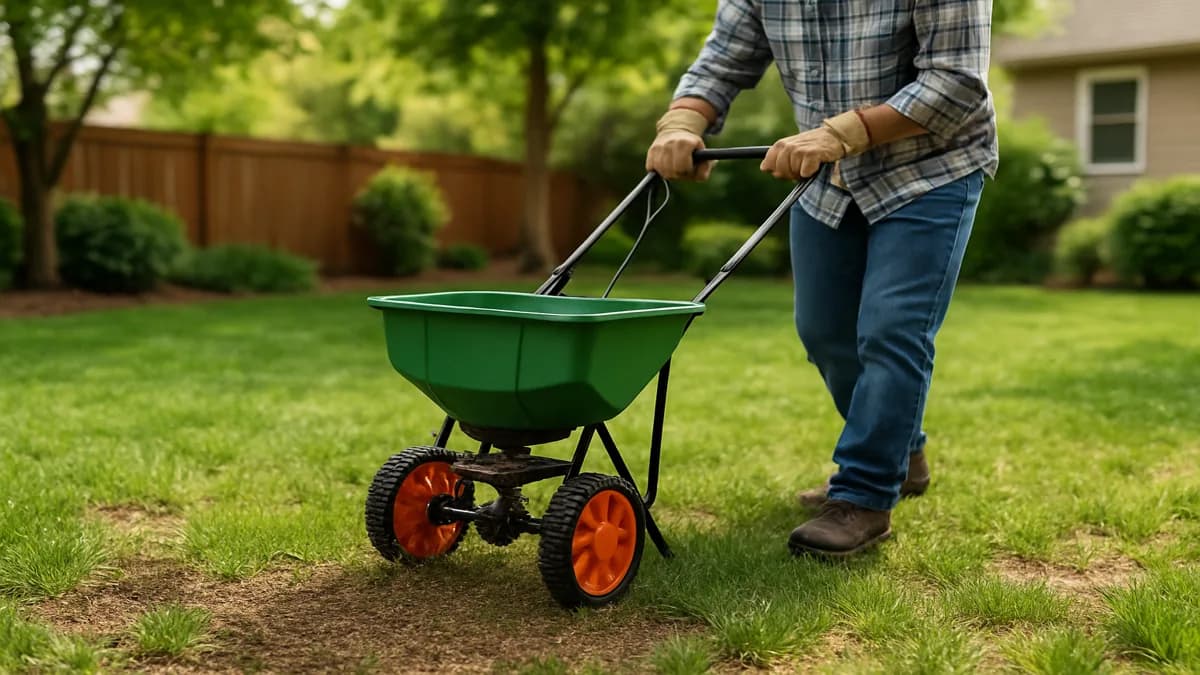
Overseeding isn’t a yearly chore for everyone. Here’s how to decide if, when, and how much to overseed,plus the steps that actually matter.
On this page
- How Often to Overseed: By Grass Type
- When to Overseed: Month-by-Month Timing
- Cool-Season Lawns (Fescue, Ryegrass, Bluegrass, Fine Fescue)
- Warm-Season Lawns (Bermuda, Zoysia, Bahia)
- Overseeding Seed Rates: How Much is Enough?
- The Step Most People Skip: Seed-to-Soil Contact
- Step-by-Step: How to Overseed for Real Results
- Worked Example: How Much Seed for a 5,000 sq ft Fescue Lawn?
- Mowing and Fertilizer After Overseeding
- When Overseeding Won’t Help (Skip-It Scenarios)
- Where People Mess Up: Overseeding Without Aeration
- Overseeding and Other Lawn Chores
- Quick Recap
If you’re here, you’re probably staring at thin patches or bare spots and wondering: Should I overseed this year,or at all? Here’s the short answer: Not every lawn needs overseeding every year. It depends on your grass type, how your lawn looks, and whether you’re willing to do the prep work that actually makes overseeding worth it.
On most lawns, bunch-type grasses (like tall fescue and perennial ryegrass) need overseeding every 1-2 years to stay thick. Spreading grasses (like Kentucky bluegrass and bermuda) can skip it most years unless you’ve got real damage. Timing and seed-to-soil contact matter more than frequency. When you are ready to do the job, follow the step-by-step overseeding process.
How Often to Overseed: By Grass Type (opens in a new tab)
Your grass species decides how often you need to overseed. Here’s what I tell customers at the counter:
| Grass Type | Growth Habit | Overseeding Frequency |
|---|---|---|
| Tall fescue | Bunch | Every 1-2 years |
| Perennial ryegrass | Bunch | Every 1-2 years |
| Fine fescue | Bunch | Every 2-3 years |
| Kentucky bluegrass | Spreading (rhizomes) | Only after damage |
| Bermudagrass | Spreading (rhizomes & stolons) | Rarely, only after damage |
| Zoysiagrass | Spreading (rhizomes & stolons) | Rarely, seed is slow |
| St. Augustinegrass | Spreading (stolons) | Not seeded,use plugs or sod |
If you have a fescue or ryegrass lawn and it’s thinning out, overseeding is your main tool. For bluegrass, bermuda, or zoysia, don’t bother unless you’ve got big bare spots from disease, drought, or pets.
When to Overseed: Month-by-Month Timing (opens in a new tab)
Timing is everything. Seed needs the right soil temperature and enough time to get established before heat or cold sets in. Here’s what works in most of the U.S.:
Cool-Season Lawns (Fescue, Ryegrass, Bluegrass, Fine Fescue) (opens in a new tab)
- Best window: Late August through early October
- Why: Warm soil (above 55°F), cool air, less weed pressure, and enough time before frost. Seedlings get a head start before winter.
- Spring overseeding: Possible, but seedlings may not survive summer heat. You’ll also have to skip pre-emergent weed control or your seed won’t sprout.
Warm-Season Lawns (Bermuda, Zoysia, Bahia) (opens in a new tab)
- Best window: Late spring to early summer, once soil is 65°F or warmer
- Why: Warm-season grasses need heat to germinate and grow. Don’t seed too early,cold soil means poor results.
- Winter overseeding: Some folks overseed bermuda or zoysia with annual rye for green color in winter, but that’s just for looks and can stress your main grass in spring.
| Month | Cool-Season Lawns | Warm-Season Lawns |
|---|---|---|
| March-April | Not ideal; too cold | Still dormant |
| May-June | Patch repairs only | Best seeding window |
| July | Avoid,too hot | Patch repairs if needed |
| Aug-Sept | Best overseeding window | Optional rye for winter |
| October | Last chance in mild areas | Dormant or rye only |
| November | Too late | Dormant |
Overseeding Seed Rates: How Much is Enough? (opens in a new tab)
Don’t just dump a bag and hope for the best. Use about half the new-lawn seeding rate. More seed isn’t better,crowding leads to weak, spindly grass.
| Grass Type | New Lawn Rate (lb/1,000 sq ft) | Overseeding Rate (lb/1,000 sq ft) |
|---|---|---|
| Tall fescue | 6-8 | 4-6 |
| Perennial ryegrass | 6-9 | 4-6 |
| Kentucky bluegrass | 2-3 | 1-2 |
| Fine fescue | 4-5 | 3-4 |
| Bermudagrass (hulled) | 1-2 | 1-2 |
| Bahiagrass | 6-10 | 4-6 |
The Step Most People Skip: Seed-to-Soil Contact (opens in a new tab)
Here’s where most DIYers go wrong: tossing seed on top of matted grass or thatch and hoping it’ll sprout. It won’t. Seed needs to touch bare soil to germinate. If it sits on thatch or gets caught in grass blades, it dries out and dies.
Core aeration right before overseeding is the single best way to get seed where it belongs. Aeration pulls out plugs, leaving holes for seed to settle into. You’ll see a much higher germination rate,worth the rental fee or service cost.
Step-by-Step: How to Overseed for Real Results (opens in a new tab)
Mow Short and Bag Clippings
Cut your lawn to about 2 inches. Bag or rake up the clippings. Short grass lets seed reach the soil and gives new seedlings more light.
Core Aerate (Don’t Skip)
Rent a core aerator or hire a service. Go over the lawn in two directions if soil is compacted. Leave the plugs,they’ll break down on their own.
Spread Seed Evenly
Apply half the seed in one direction, then the rest at a right angle. This covers missed spots and avoids stripes.
Optional: Topdress with Compost
Spread up to 1/4 inch of compost or screened topsoil. This helps keep seed moist and improves soil. Don’t bury your grass.
Water Lightly, Often
Mist the area 1-2 times a day to keep the top inch damp until seeds sprout (usually 7-21 days, depending on grass type and weather).
Switch to Deep Watering
Once seedlings are 1-2 inches tall, water less often but more deeply to encourage strong roots.
Worked Example: How Much Seed for a 5,000 sq ft Fescue Lawn? (opens in a new tab)
Let’s say you have a 5,000 sq ft tall fescue lawn. Overseeding rate is 4-6 lb per 1,000 sq ft.
- 5,000 sq ft ÷ 1,000 = 5
- 5 x 4 = 20 lb (low end)
- 5 x 6 = 30 lb (high end)
So you’ll want about 25 lb of seed. Split it: 12.5 lb in one direction, 12.5 lb at right angles. Core aerate, mow short, water daily until you see green fuzz.
Mowing and Fertilizer After Overseeding (opens in a new tab)
- Wait until new grass is at least 3 inches tall (2-4 weeks) before mowing. Use a sharp blade. Don’t scalp or you’ll rip up seedlings.
- If your soil is poor or you haven’t fertilized in a while, use a starter fertilizer labeled for new seedings. Check local phosphorus rules,many states limit it except for new lawns.
- Don’t use weed-and-feed or pre-emergent herbicides when overseeding. They’ll kill your new grass before it starts.
For more, see 9 FAQs About Applying Starter Fertilizer to Your Lawn and Fertilizer Numbers: What They Mean.
When Overseeding Won’t Help (Skip-It Scenarios) (opens in a new tab)
Don’t waste time or money overseeding if:
- Deep shade: Most turf grasses need at least 4 hours of sun. For heavy shade, try mulch beds or shade-tolerant groundcovers instead. See Best Shade Garden Plants.
- Compacted soil: If you can’t push a screwdriver into damp soil, aerate first or nothing will sprout.
- Grub or pest damage: If the turf peels up like a rug, treat pests before seeding. See How to Repair Mole Damage in Yard.
- Poor drainage: Soggy soil kills seedlings. Fix drainage first.
- Big tree roots: Trees outcompete grass for water and nutrients. Expand your mulch beds or plant under the canopy.
Where People Mess Up: Overseeding Without Aeration (opens in a new tab)
The most common mistake I see: spreading seed on top of a lawn without aerating. What usually happens is most seed never touches soil, dries out, and dies. You end up with the same thin spots you started with, and you’ve wasted a bag of seed. Aeration is the single best thing you can do to make overseeding work.
Overseeding and Other Lawn Chores (opens in a new tab)
- Don’t overseed right after using pre-emergent weed control. Wait 8-12 weeks or your seed won’t sprout. For more, see Corn Gluten Meal: Natural Weed and Feed.
- Clean up leaves and debris before overseeding. Seed can’t get through a mat of leaves. See Best Ways to Clean Up Leaves in Your Yard.
- If you’re considering hydroseeding, see DIY Hydroseeding Guide.
- For topdressing tips, see Guide: Topdressing Lawn Grass.
Quick Recap (opens in a new tab)
- Overseed bunch-type grasses (fescue, ryegrass) every 1-2 years; spreading types (bluegrass, bermuda) only after damage.
- Best time: late summer to early fall for cool-season lawns, late spring to early summer for warm-season.
- Use half the new-lawn seed rate. Measure your turf area.
- Core aerate before overseeding for best results.
- Fix soil, shade, and pest problems before you seed.
For more on picking good seed, see How to Tell if Grass Seed is Good. For aeration options, check Liquid Aeration vs. Core Aeration.
Frequently asked questions
Calculators for this job
Grass Seed Calculator
Seeding rates differ by species by a factor of twenty, bermudagrass wants 1 lb per 1,000 sq ft, perennial ryegrass wants 8. Pick your grass and whether you're starting fresh or overseeding.
OpenLawn Area Calculator
Almost every other lawn number depends on this one. Break your yard into simple shapes, subtract the parts that aren't grass, and get a square footage you can use for seed, fertilizer, and quotes.
OpenFertilizer Calculator
Turf guidance is written in pounds of nitrogen per 1,000 sq ft, but fertilizer is sold as a percentage analysis. This converts between them for any bag you have, enter the three numbers on the front.
OpenKeep reading
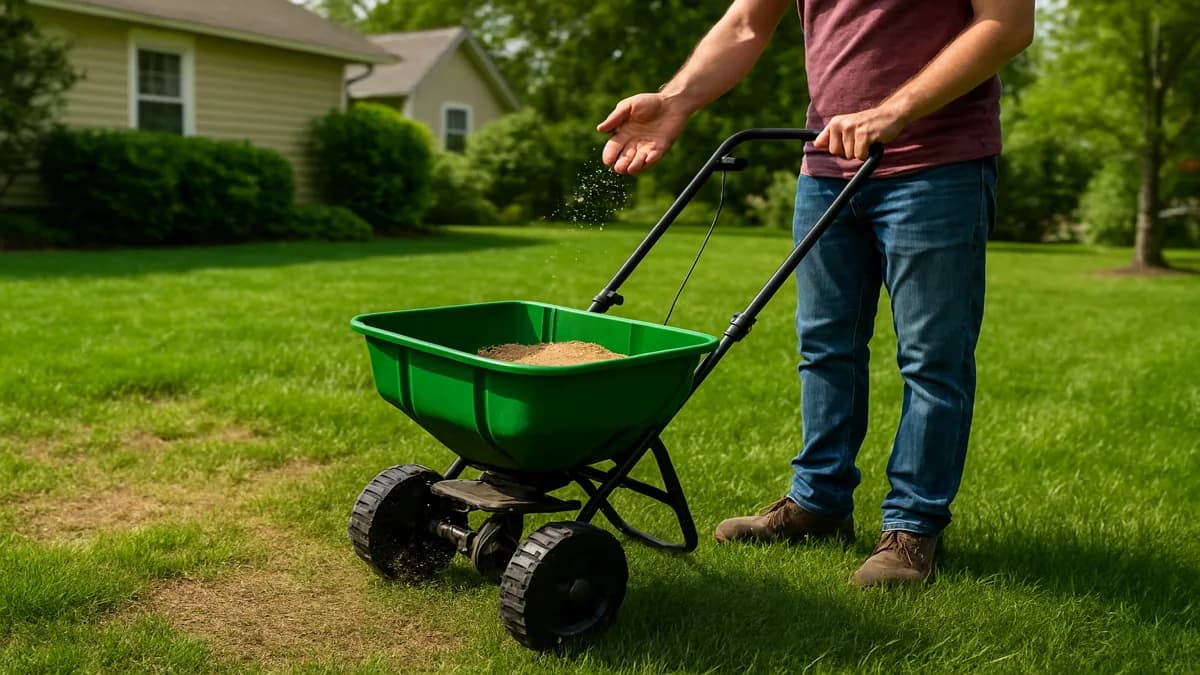
How to Overseed a Lawn for Thicker Grass
Overseeding works best when seed touches loosened soil, gets steady moisture, and is mowed only after seedlings are rooted.
8 min read
How to Add Microclover to an Existing Lawn
Microclover can fill thin turf and add green cover, but it still needs watering, mowing, the right herbicide plan, and realistic expectations.
8 min read
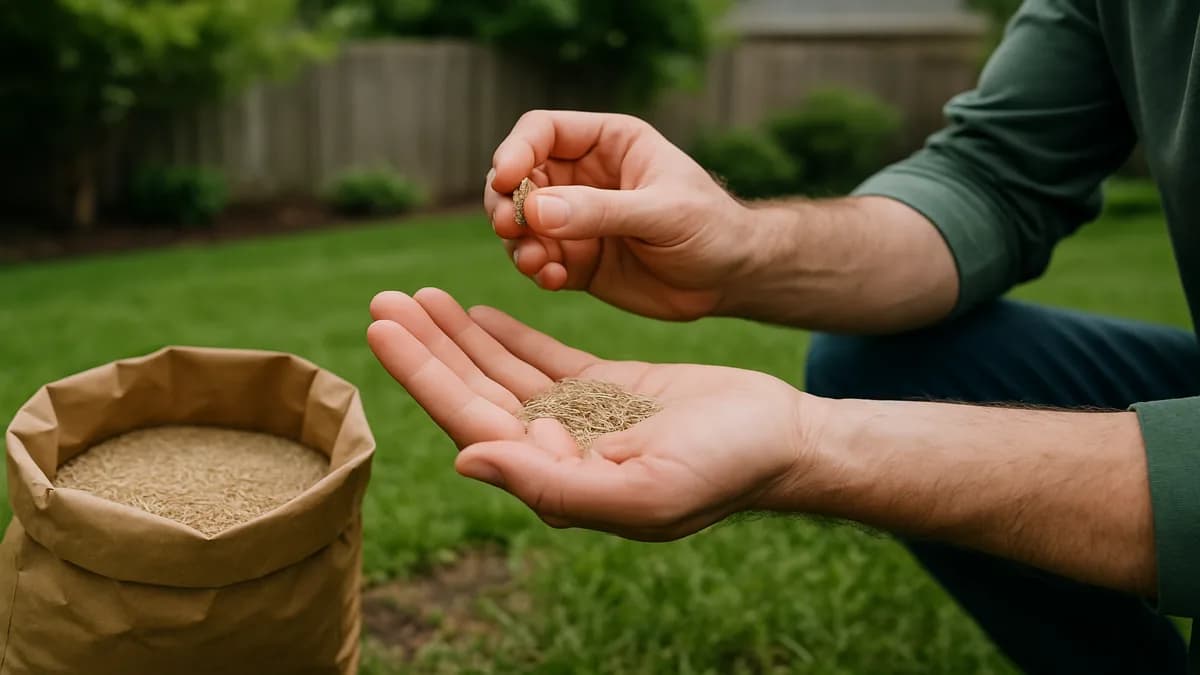
How to Know If Your Grass Seed Is Still Worth Using
Grass seed loses its punch with time and poor storage. Here’s how to check if your old seed will still sprout, what the label really means, and when to just buy fresh.
7 min read
Spotted something out of date or wrong? Tell us , we correct guides rather than leaving them to rot.