Cost
How Much Does Fence Installation Cost?
Fence installation costs depend on material, total linear feet, post spacing, gate count, terrain, access, demolition, and whether you build it yourself or hire a crew.
9 min read
20 calculators, every formula shown
Size mulch, soil, seed, sod, or concrete for your yard, see the formula behind every number, then follow the guide that explains how to do the job.
Enter your measurements, get an answer instantly, and see exactly how it was worked out.
Enter your bed dimensions and how deep you want the mulch. You'll get cubic yards, the number of 2 cu ft bags, delivered weight, and whether bags or bulk works out cheaper at that volume.
OpenSeeding rates differ by species by a factor of twenty, bermudagrass wants 1 lb per 1,000 sq ft, perennial ryegrass wants 8. Pick your grass and whether you're starting fresh or overseeding.
OpenGet cubic yards and exact bag counts for slabs, footings, cylindrical piers, and stairs, plus whether mixing bags or ordering ready-mix makes sense at your volume.
OpenEnter your lawn area to get square feet, individual pieces, and pallets, plus the cut allowance you'll actually need. Sod is perishable, so ordering short means a second delivery fee.
OpenGravel is ordered by the ton but measured by volume, so this calculator gives you both. Pick your stone, enter the area and depth, and you'll get cubic yards, tons, and a delivered cost range.
OpenTopsoil is heavy, roughly a ton per cubic yard, so knowing the weight matters as much as the volume. Enter your area and depth for yards, bags, and delivered tonnage.
OpenEnter your patio or walkway size and paver dimensions to get the paver count plus every layer underneath, base depth by traffic type, bedding sand, joint sand, and edging.
OpenTurf guidance is written in pounds of nitrogen per 1,000 sq ft, but fertilizer is sold as a percentage analysis. This converts between them for any bag you have, enter the three numbers on the front.
OpenBreak odd shapes into simple sections. The area calculator handles rectangles, circles, triangles, and L-shapes, then adds them up.
Bags and bulk, tons and cubic yards, with a waste allowance built in, and a note when the load exceeds what a pickup can carry.
Every calculator shows its formula and a worked example, and links to the guide that explains the decisions behind the number.
Whatever you're doing this weekend, the numbers are here.
Work out how much mulch, soil, gravel, or sand a project needs.
Start with what you can see. Most lawn problems are cultural, water, mowing height, or compaction, long before they are disease or insects, so it pays to confirm the cause before buying a treatment.
Written for people doing the work themselves, with the assumptions spelled out.
Fence installation costs depend on material, total linear feet, post spacing, gate count, terrain, access, demolition, and whether you build it yourself or hire a crew.
9 min read
A drought plan is not the same as a perfect green lawn plan. Learn when to water for survival, when to let grass go brown, and what work to skip.
8 min read
Winterizing a sprinkler system is about removing trapped water before it freezes. The right method depends on your climate, system design, and backflow setup.
8 min read
Microclover can fill thin turf and add green cover, but it still needs watering, mowing, the right herbicide plan, and realistic expectations.
8 min read
Brown patch often shows up as tan rings or smoke-ring patches in humid weather. The fix starts with mowing, watering, and nitrogen timing before fungicide.
8 min read
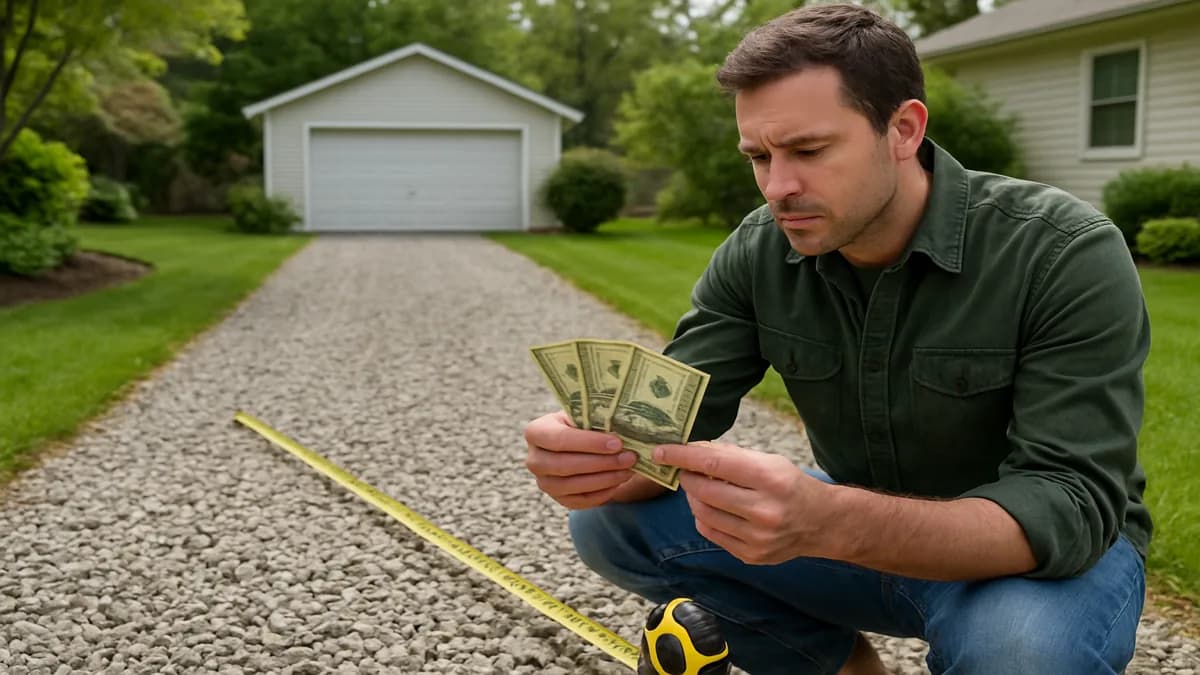
A gravel driveway is cheaper than concrete or pavers, but the final price depends on length, width, depth, base rock, surface stone, fabric, edging, and delivery access.
8 min read
Guides grouped the way projects actually break down.
Practical answers for seeding, feeding, watering, and weed control. Each guide links to the calculator that sizes the job for your lawn.
BrowseBeds, hardscape, privacy planting, and outdoor structures. Measure once, buy the right amount, and build in the right order.
BrowseChoose plants that fit your light and climate, then plant and care for them without guesswork.
BrowseUse these ranges to sanity-check bids and budget materials. Local access, soil, and season can move prices a lot.
BrowseIdentify the pest first, then choose a control that matches the damage. Wrong ID is the most expensive mistake.
BrowseMatch the grass to your climate and how you use the yard. The wrong species causes most chronic lawn problems.
BrowseStart with the symptom, work back to the cause. Most lawn problems are cultural, not a mystery disease.
BrowseBuild guides with real material lists, the order of work, and where the money usually goes.
BrowsePrice a patio, a fence, or a full yard renovation with realistic ranges, and see the DIY material cost against what a contractor would charge, so the trade-off is a decision rather than a guess.