How to Soil Test Your Lawn (and Actually Use the Results)
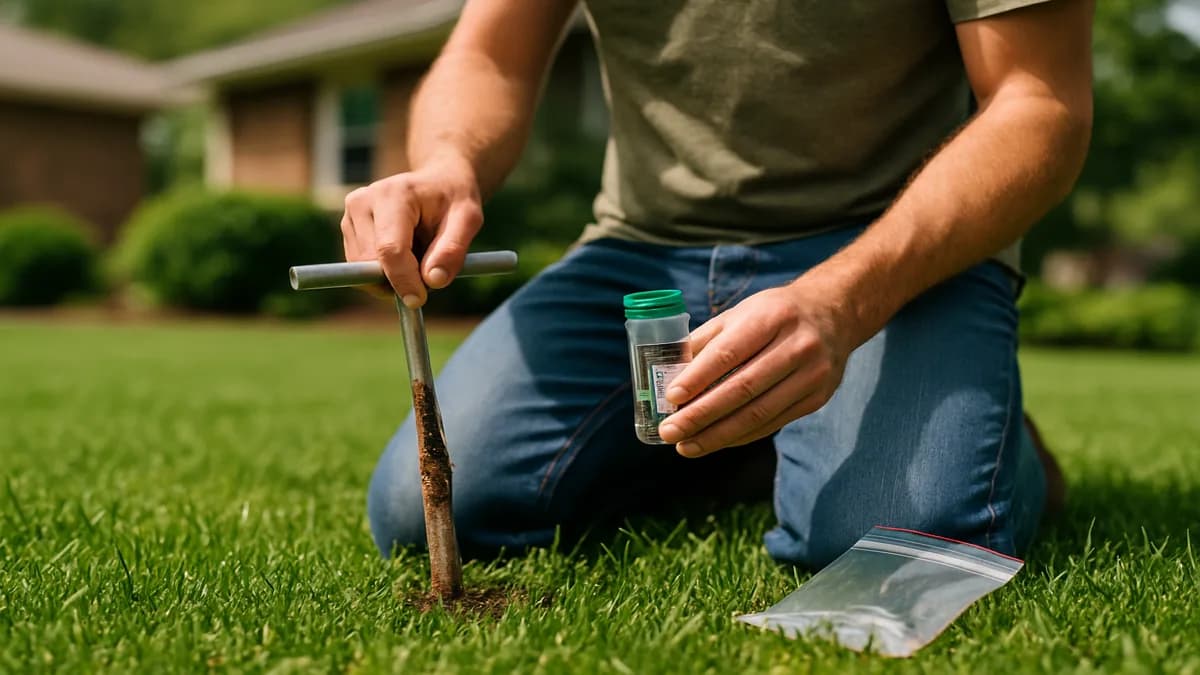
A soil test replaces fertilizer guesswork with numbers. Here’s how to sample, read the report, and turn results into a plan.
On this page
- Why Soil Testing Beats Bag Guesswork
- Lab Test vs DIY Kit
- How to Take a Lawn Soil Sample
- How to Read a Lawn Soil Test Report
- Start with pH
- Then read P and K ratings
- Buffer pH and lime rate
- Turn Results Into a Simple Action Plan
- Worked Example: Reading a Typical Report
- Common Soil Test Mistakes
- When a Soil Test Is Not Enough
A soil test is the cheapest way to stop guessing about fertilizer, lime, and yellow grass. You pull a few cores, send about a pint of mixed soil to a lab, and get a report that says what your lawn actually lacks, and what it already has. If you have never tested, start here before you buy another bag of fertilizer.
Why Soil Testing Beats Bag Guesswork (opens in a new tab)
Fertilizer bags tell you what is in the bag, not what is in your soil. Lawns that look hungry are often dealing with wrong pH, compaction, shade, or watering, not a missing middle number on a bag. University extension programs across the U.S. treat periodic soil testing as the baseline for home lawn fertility plans (Purdue Extension (opens in a new tab), Missouri Extension (opens in a new tab)).
A good report usually includes:
- Soil pH and, when acidic, a lime requirement or buffer pH
- Phosphorus (P) and potassium (K) availability
- Often calcium, magnesium, organic matter, and CEC
- Recommendations in pounds per 1,000 square feet for turf
Nitrogen is different. Available nitrogen swings quickly, so many labs skip a firm N number and instead recommend a seasonal nitrogen program for your grass type.
Lab Test vs DIY Kit (opens in a new tab)
| Method | Best for | Strengths | Limits |
|---|---|---|---|
| Extension / commercial lab | Fertilizer and lime decisions | Accurate, turf-specific rates | Wait 1 to 3 weeks, small fee |
| Digital or color DIY kit | Quick pH check | Fast, cheap | Weak on P/K and lime rate |
| Store probe meter | Spot pH screening | Instant | Easy to miscalibrate |
If the question is “Should I lime?” or “Do I need starter fertilizer with phosphorus?”, use a lab. Save DIY kits for curiosity checks between full tests.
How to Take a Lawn Soil Sample (opens in a new tab)
Timing matters. Wait at least 6 to 8 weeks after fertilizing, liming, or heavy compost applications so the report reflects the soil, not the last product you dumped.
Split the yard if needed
Sample problem spots separately from healthy areas. Do not mix a soggy low corner with a dry sunny front yard if they behave differently.Pull 8 to 10 cores
Use a soil probe, bulb planter, or clean trowel. Take each sample from the top 2 to 4 inches after scraping away thatch and green tissue.Mix into one composite
Combine cores from similar turf in a clean plastic bucket. Remove roots and stones. Take about one pint of the mix for the lab bag.Label and ship
Note grass type, sun vs shade, and whether this is a new lawn or renovation. Ask for a turf or lawn recommendation package.
How to Read a Lawn Soil Test Report (opens in a new tab)
Start with pH (opens in a new tab)
pH controls whether nutrients already in the soil are available to roots. For most home lawns, the working target sits near 6.0 to 7.0. Below that, phosphorus can lock up even when the soil contains it. Above about 7.5, iron and manganese problems show up as yellowing that fertilizer alone will not fix (Ohio State University Extension (opens in a new tab)).
If the report recommends lime, move to a dedicated lime plan rather than guessing from the bag. See When to Lime Your Lawn.
Then read P and K ratings (opens in a new tab)
Labs usually show phosphorus and potassium as ppm or pounds per acre, plus a rating such as low, medium, optimum, or high.
| Result | What it usually means | Typical action |
|---|---|---|
| Low P | Rooting and establishment may suffer | Use phosphorus only if seeding/sodding or the lab recommends it |
| Optimum / high P | Soil already has enough | Buy 0-middle-number fertilizer for maintenance |
| Low K | Stress and winter hardiness may suffer | Add potassium per lab rate, often in fall |
| Optimum / high K | No need to force potash | Skip specialty K bags unless renovating |
This is where fertilizer numbers stop being abstract. The bag’s N-P-K should match the deficiency, not marketing claims.
Buffer pH and lime rate (opens in a new tab)
Surface pH tells you acidity. Buffer pH (or lime index) tells the lab how much limestone it takes to move your soil. Sandy soils often need less lime than clay at the same pH. Cap single applications on established turf near 50 pounds per 1,000 square feet, then retest later if the total recommendation is higher (University of Arkansas Extension (opens in a new tab)).
Turn Results Into a Simple Action Plan (opens in a new tab)
- Correct pH first if lime or sulfur is recommended. Nutrient applications work better after pH is in range.
- Match fertilizer to P and K, not habit. Many established lawns only need nitrogen.
- Use starter fertilizer only when seeding or sodding, or when the soil test shows low phosphorus. See starter fertilizer FAQs.
- Prefer slow-release nitrogen for routine feeding once pH and P/K are settled. See slow vs quick release.
- Retest after one growing season if you made big pH corrections; otherwise every 2 to 3 years.
Worked Example: Reading a Typical Report (opens in a new tab)
Say your cool-season lawn report shows:
- pH 5.6, lime recommended at 40 lb per 1,000 sq ft
- Phosphorus: optimum
- Potassium: low
- Recommendation: 0.75 to 1.0 lb nitrogen per 1,000 sq ft per application in season
Your plan is not “buy 10-10-10.” It is:
- Apply pelletized lime at the lab rate in fall or early spring, water it in.
- Choose a fertilizer with little or no phosphorus (for example 24-0-6 or similar).
- Include potassium in the fall feeding.
- Skip starter fertilizer unless you overseed and local rules allow it.
If the lawn is still yellow after pH and fertility are corrected, check watering, iron chlorosis, and pests using the yellow grass diagnostic guide.
Common Soil Test Mistakes (opens in a new tab)
- Sampling only one spot under a tree or next to a driveway
- Mixing fertilizer into the sample bag
- Liming every spring “just because”
- Buying phosphorus fertilizer in a phosphorus-restricted state without a documented deficiency
- Testing, then ignoring the report and repeating last year’s product stack
When a Soil Test Is Not Enough (opens in a new tab)
A soil test will not diagnose grubs, brown patch, dog urine spots, shade, or compaction by itself. Use it for chemistry. Pair it with:
- A screwdriver or probe check for compaction (then aeration)
- A watering audit (inches per week, not minutes on the dial)
- Symptom diagnosis when patches appear overnight
If you only have budget for one diagnostic this year, make it the soil test. Everything else in your fertilizer aisle gets cheaper and more accurate once you have numbers.
Frequently asked questions
Calculators for this job
Fertilizer Calculator
Turf guidance is written in pounds of nitrogen per 1,000 sq ft, but fertilizer is sold as a percentage analysis. This converts between them for any bag you have, enter the three numbers on the front.
OpenLawn Area Calculator
Almost every other lawn number depends on this one. Break your yard into simple shapes, subtract the parts that aren't grass, and get a square footage you can use for seed, fertilizer, and quotes.
OpenCompost Calculator
Compost gets applied far thinner than mulch or soil, and the right depth depends entirely on the job. Enter your area and pick the application to get volume, bags, and cost.
OpenKeep reading
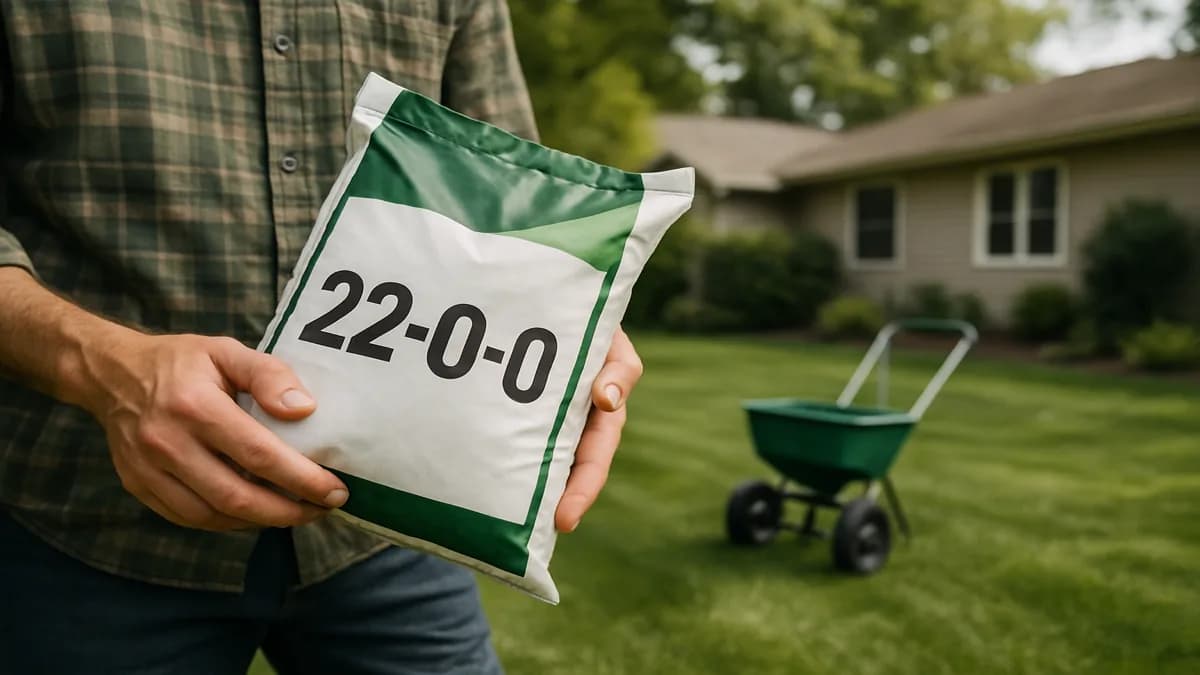
What Fertilizer Numbers Really Mean (NPK and Lawn Fertilizer Math)
Wondering what those fertilizer numbers mean? Here’s how to read NPK ratios, why phosphorus is often zero, and how to figure out the right amount for your grass.
7 min read
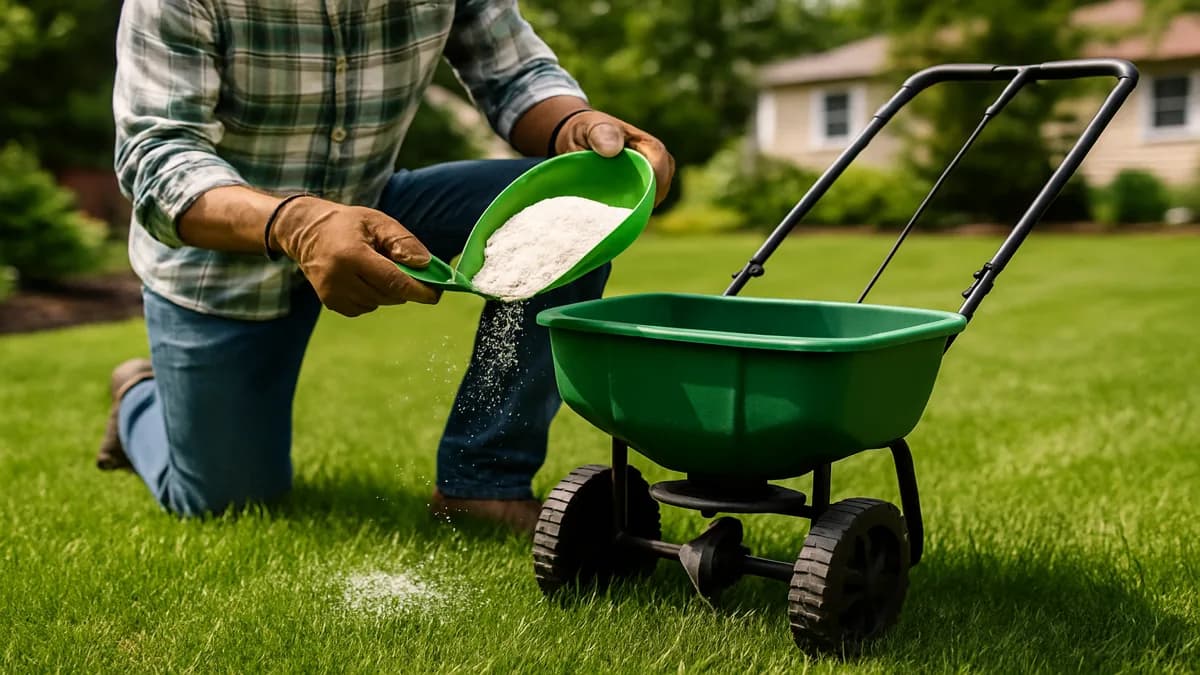
When to Lime Your Lawn (and How Much to Use)
Lime only helps acidic soil. Test first, follow the lab rate, and cap single applications so you raise pH without burning the turf.
6 min read
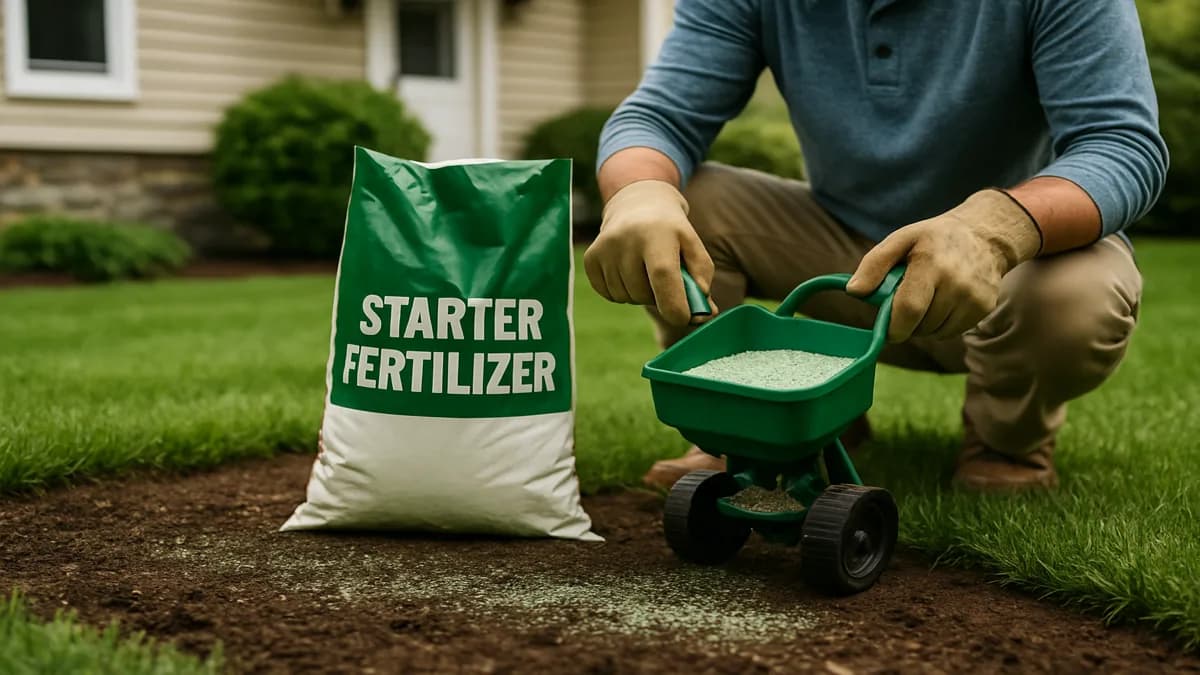
Starter Fertilizer for New Grass: What Most Homeowners Get Wrong
Starter fertilizer can jumpstart new grass, but using it wrong wastes money or breaks the law. Here’s what to know before you spread.
6 min read
Spotted something out of date or wrong? Tell us , we correct guides rather than leaving them to rot.