How to Actually Get Rid of Dandelions (Not Just the Flowers)
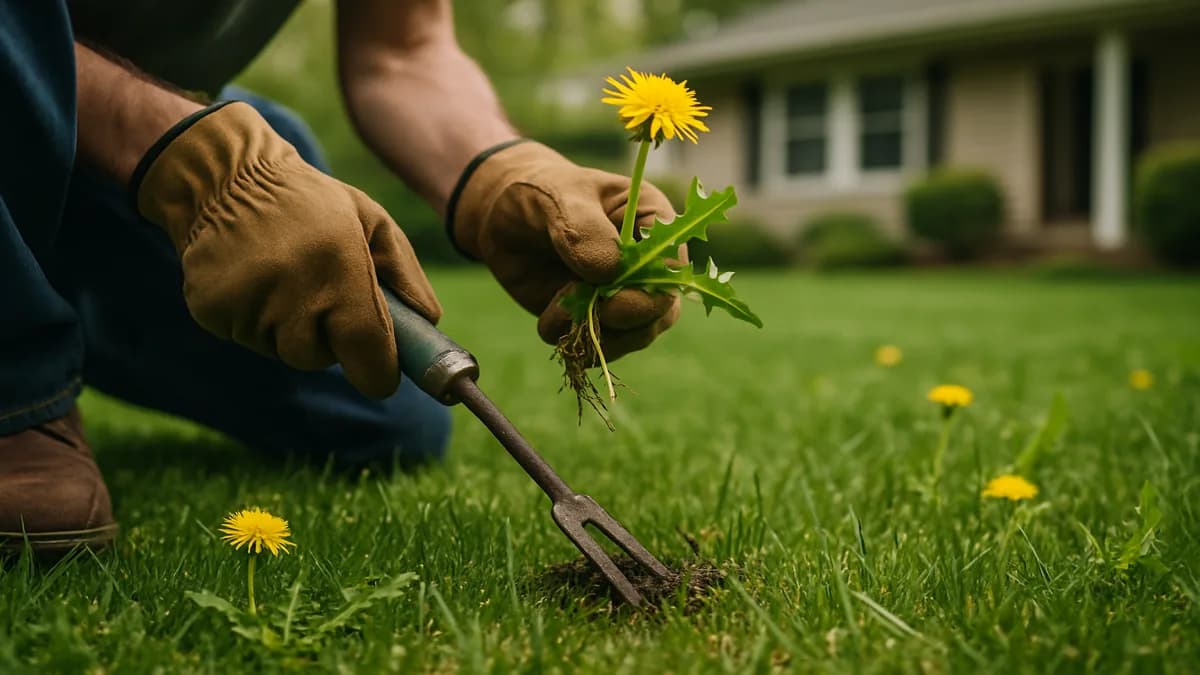
Dandelion taproots make them stubborn. Here’s how to remove or kill dandelions so they don’t return, plus when to act and when to just let them be.
On this page
- Why Dandelions Are So Hard to Kill
- What Usually Happens
- When Should You Treat Dandelions? (Timing Chart)
- How to Pull Dandelions (If You Insist)
- Herbicides: What Works and What to Watch Out For
- Worked Example: How Much Herbicide?
- Natural and DIY Dandelion Killers: What’s Worth It?
- Preventing Dandelions: Make Your Lawn Unfriendly
- Where People Mess Up Most
- When to Skip Dandelion Control
- Real-World Example: Spot-Treating a Typical Lawn
- Related Reading
You’re here because you want those dandelions gone,roots and all,not just mowed over for a week or two. Maybe you’ve tried pulling or spraying and they just keep coming back. Here’s what actually works, what doesn’t, and how to keep your lawn from turning into a dandelion patch year after year.
Why Dandelions Are So Hard to Kill (opens in a new tab)
Dandelions (Taraxacum officinale) are perennial weeds with a single taproot that can go 6 to 10 inches deep (15-25 cm). If you break it, even a little piece left in the ground can regrow,sometimes into several new plants. That’s why most quick fixes fail.
What Usually Happens (opens in a new tab)
On most lawns, folks pull the tops, mow the flowers, or spray in spring. The leaves die, but the root survives and sends up new growth. By summer, the dandelion is back, sometimes with friends.
When Should You Treat Dandelions? (Timing Chart) (opens in a new tab)
Dandelion control is all about timing. Herbicides work best when the plant is moving nutrients down into the root, not up to the leaves and flowers.
| Season | What Dandelions Are Doing | Effect of Herbicide |
|---|---|---|
| Early Spring | Growing leaves and flowers | Kills tops, root survives |
| Late Spring | Seeding, storing energy | Poor kill, seeds already spread |
| Summer | Dormant or slow growth | Weak results, label may restrict use above 85°F |
| Early-Mid Fall | Moving sugars into taproot | Best kill rate,root dies |
If you only spray once a year, do it in fall. If you see dandelions blooming in spring, cut the flowers to stop seeds, but save the big guns for autumn.
How to Pull Dandelions (If You Insist) (opens in a new tab)
Hand-pulling works for a few dandelions, but only if you get the whole root. Here’s the method that gives you a fighting chance:
Water the area the day before
Wet soil lets the root slide out instead of snapping. Dry soil = broken roots.Use the right tool
A dandelion fork, long screwdriver, or narrow weeder is better than a trowel. Go straight down next to the root.Loosen, then lever
Rock the tool to loosen soil all around. Don’t yank,steady pressure is better.Pull slow and steady
If the root snaps, mark the spot. It’ll be back.Fill and reseed
Bare spots invite more weeds. Fill the hole with soil and overseed with your grass type.
Herbicides: What Works and What to Watch Out For (opens in a new tab)
If you’ve got more dandelions than you can pull, it’s time for a selective broadleaf herbicide. These are designed to kill dandelions and other broadleaf weeds without hurting most lawn grasses. But you have to use them right.
- Spot-treat, don’t blanket-spray. Use a pump or trigger sprayer to hit just the weeds. Less chemical, less risk to your lawn and garden.
- Check your grass type. Some products are fine for Kentucky bluegrass or fescue but will damage St. Augustine or centipedegrass. Read the label,don’t guess.
- Don’t mow right before or after. Herbicide needs leaf surface to work. Wait at least 2-3 days before and after spraying.
- Spray on cool, calm days. Above 85°F, many herbicides can vaporize and drift. Don’t spray if it’s windy or hot.
Worked Example: How Much Herbicide? (opens in a new tab)
Let’s say you have 2,000 sq ft of lawn with scattered dandelions. Most liquid weed killers recommend 1-1.5 oz per 1,000 sq ft. For spot treatment, you’ll use much less,maybe 2-3 oz total mixed in a 1-gallon sprayer. Always follow the label.
Natural and DIY Dandelion Killers: What’s Worth It? (opens in a new tab)
- Boiling water: Kills everything it touches, including grass. Only use in sidewalk cracks or gravel.
- Vinegar: Regular kitchen vinegar (5%) burns leaves but rarely kills the root. Horticultural vinegar (20%) is stronger but dangerous to handle and non-selective.
- Flame weeders: Burn the top, root survives. Not safe for lawns.
- Corn gluten meal: Prevents new dandelion seeds from sprouting if applied early spring, but does nothing to established plants. It’s also a fertilizer.
| Method | Kills Taproot? | Safe for Grass? | Cost (per 1,000 sq ft) | When to Use |
|---|---|---|---|---|
| Pulling | Sometimes | Yes | Free (tools $10-20) | Small numbers, moist soil |
| Herbicide (selective) | Yes | Yes (if labeled) | $10-20 | Best in fall, spot-treat |
| Boiling water | No | No | Free | Cracks, not lawn |
| Vinegar | No | No | $5-10 | Cracks, not lawn |
| Corn gluten meal | No (prevents) | Yes | $25-40 | Early spring, as pre-emergent |
Preventing Dandelions: Make Your Lawn Unfriendly (opens in a new tab)
You can’t stop windblown seeds, but you can make your lawn less inviting:
- Mow high. Set your mower at 3 inches or higher. Taller grass shades the soil, making it harder for dandelion seeds to sprout.
- Overseed thin spots. Thick turf outcompetes weeds. Fall is the best time to overseed.
- Feed right. Too much or too little fertilizer weakens your lawn. Match rates to your grass type. See what fertilizer numbers mean.
- Water deep, not often. Deep roots help grass outcompete weeds. Water 1 inch per week (including rain), early morning.
Where People Mess Up Most (opens in a new tab)
What usually trips folks up is treating dandelions in spring, when the plant is sending energy up to the leaves and flowers. Herbicides then mostly kill the top, not the root. You see brown leaves, think you’ve won, and then the weed is back in a month. If you only treat once, do it in early to mid-fall.
When to Skip Dandelion Control (opens in a new tab)
If you only have a few dandelions and don’t mind a little yellow in spring, it’s fine to leave them. They’re not toxic, and they provide early food for bees. Some homeowners even let them bloom until the grass greens up, then mow them off.
But if your lawn is more dandelion than grass, or you want a tidy look, you’ll need to act.
Real-World Example: Spot-Treating a Typical Lawn (opens in a new tab)
Say you have a 5,000 sq ft lawn with scattered dandelions. In early October, you mix up 2 oz of a liquid selective herbicide in a 2-gallon pump sprayer. You walk the yard, spraying only the dandelion rosettes. You avoid garden beds and wait a week. Most dandelions wilt and die; a few stubborn ones get a second spot-spray two weeks later. In spring, you overseed bare spots and mow high. Next year, you’ll have fewer dandelions and thicker grass.
Related Reading (opens in a new tab)
- Corn gluten meal as a natural weed and feed
- How to make homemade weed killer
- Best ways to clean up leaves in your yard
- How often to overseed your lawn
- Guide to topdressing lawn grass
If you want a dandelion-free lawn, you have to outsmart the roots and time your attack. Most folks don’t. But with the right timing and a little patience, you can win the battle,at least for a season.
Frequently asked questions
Calculators for this job
Fertilizer Calculator
Turf guidance is written in pounds of nitrogen per 1,000 sq ft, but fertilizer is sold as a percentage analysis. This converts between them for any bag you have, enter the three numbers on the front.
OpenGrass Seed Calculator
Seeding rates differ by species by a factor of twenty, bermudagrass wants 1 lb per 1,000 sq ft, perennial ryegrass wants 8. Pick your grass and whether you're starting fresh or overseeding.
OpenLawn Area Calculator
Almost every other lawn number depends on this one. Break your yard into simple shapes, subtract the parts that aren't grass, and get a square footage you can use for seed, fertilizer, and quotes.
OpenKeep reading
Crabgrass Killer: What Actually Works (and What Doesn’t)
Crabgrass keeps coming back because most folks miss the timing or use the wrong product. Here’s how to kill crabgrass, prevent it, and avoid wasted effort.
7 min read
Homemade Weed Killer: Real-World Results, Risks, and Recipes
Homemade weed killers like vinegar and salt can zap weeds in cracks, but they’re risky for soil and useless on deep roots. Here’s what works, what fails, and safer options for your lawn.
7 min read
Corn Gluten Meal for Lawns: Honest Results, Rates, and When to Skip It
Corn gluten meal offers some weed suppression and a hefty nitrogen boost, but it’s pricey, inconsistent, and not for every lawn. Here’s what works, what doesn’t, and how to avoid wasting your money.
7 min read
Spotted something out of date or wrong? Tell us , we correct guides rather than leaving them to rot.