Lawn Fertilizer Schedule: When to Feed Cool- and Warm-Season Grass
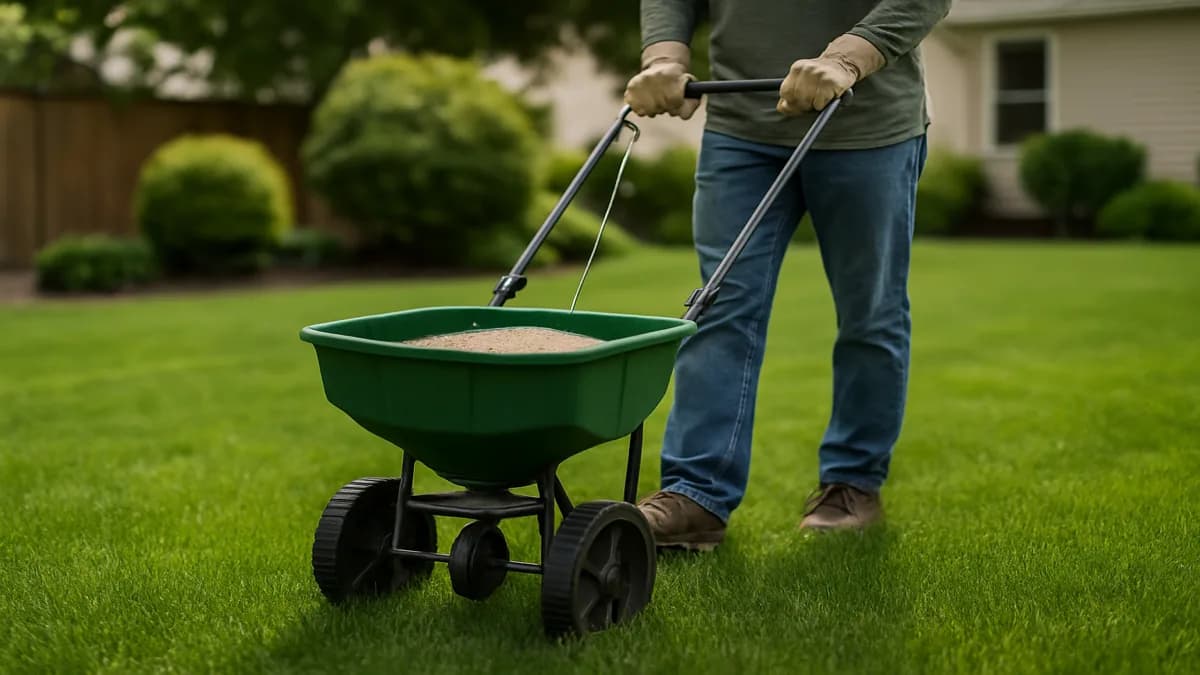
Cool-season lawns lean on fall. Warm-season lawns feed after green-up through summer. Here’s a practical national calendar hub.
On this page
- Start With a Soil Test and the Right Bag Math
- Soil Temperature Beats Holiday Timing
- Cool-Season Schedule (Fescue, Bluegrass, Rye)
- Warm-Season Schedule (Bermuda, Zoysia, St. Augustine, Centipede)
- Spring Fertilizer Window (National)
- Fall Fertilizer Window
- Sample Annual Plans (Illustrative)
- Tall fescue, Midwest-ish climate
- Bermudagrass, southern climate
- What This Schedule Does Not Cover
- How Much Nitrogen Is “Enough”?
- Organic and Natural Fertilizer Timing
- Liquid Programs vs Granular Calendars
- Troubleshooting Color Without Adding More N
- Mistakes That Blow Up a Calendar
- One-Page Annual Reminder
- Clipping Return and Fertilizer Math
A fertilizer schedule answers when, not which brand. Cool-season and warm-season grasses grow on opposite calendars. Feed during active growth, match nitrogen to the season, and let a soil test decide phosphorus and potassium.
Start With a Soil Test and the Right Bag Math (opens in a new tab)
Before you build a calendar:
- Soil test every few years
- Learn what fertilizer numbers mean
- Prefer slow-release nitrogen for routine apps
- Use starter fertilizer only for establishment or documented low phosphorus
This hub does not replace those product pages. It tells you when to use them.
Soil Temperature Beats Holiday Timing (opens in a new tab)
Extension turf guidance increasingly ties spring feeding to soil temperature and growth, not Memorial Day. Summaries used by practitioners often cite about 55°F soil for cool-season spring feeding and about 65°F with full green-up for warm-season starts. Check a local 2- to 4-inch soil reading when you can.
Cool-Season Schedule (Fescue, Bluegrass, Rye) (opens in a new tab)
| Season | Priority | Typical action |
|---|---|---|
| Early spring | Medium | Light N after growth resumes; do not dump heavy quick-release on cold soil |
| Late spring | Optional | Light feeding only if growth and color still lag |
| Summer | Low | Skip or very light; heat + nitrogen can push disease |
| Early fall | Highest | Main feeding of the year while nights cool |
| Late fall | High | Winterizer-style feeding while turf is still green |
A common homeowner pattern is three to four applications totaling a moderate annual nitrogen budget split across those windows. Exact pounds per 1,000 sq ft belong on your bag label and local extension sheet.
Pacific Northwest month detail: PNW lawn care schedule.
Warm-Season Schedule (Bermuda, Zoysia, St. Augustine, Centipede) (opens in a new tab)
| Season | Priority | Typical action |
|---|---|---|
| Dormant winter | None | Do not nitrogen-feed brown dormant turf |
| Green-up | High | First feeding after the lawn is fully green |
| Early to midsummer | High | Continue on a 6 to 8 week rhythm while growing |
| Late summer | Medium | Taper; stop well before frost risk |
| Fall | Low / none | Avoid late nitrogen that delays hardiness |
Centipede often needs less nitrogen than bermuda. Overfeeding centipede is a known path to decline. Follow grass-specific extension rates.
Spring Fertilizer Window (National) (opens in a new tab)
Spring is when garden centers shout loudest. Keep it disciplined:
- Cool-season: wait for growth, keep the first app modest if fall was solid
- Warm-season: wait for green-up; early fertilizer on mostly dormant turf feeds weeds
- Do not let a weed-and-feed bag force bad fertilizer timing (weed and feed vs separate products)
Fall Fertilizer Window (opens in a new tab)
For cool-season lawns, fall is the money season:
- Early fall feeding supports recovery and density
- Pair with aeration and overseeding when needed
- Late fall feeding targets roots while tops still photosynthesize
Warm-season lawns should already be tapering by early fall in most of the country.
Sample Annual Plans (Illustrative) (opens in a new tab)
Tall fescue, Midwest-ish climate (opens in a new tab)
| App | Rough timing | Focus |
|---|---|---|
| 1 | April after growth | Light N, low/zero P unless tested low |
| 2 | Early September | Main N feeding |
| 3 | October–November | Winterizer with K if soil needs it |
Bermudagrass, southern climate (opens in a new tab)
| App | Rough timing | Focus |
|---|---|---|
| 1 | May after full green-up | Season-start N |
| 2 | June–July | Continue while growing |
| 3 | Early August | Final substantial N; then stop |
Adjust dates by latitude. South Florida is not St. Louis.
What This Schedule Does Not Cover (opens in a new tab)
- Hydroseeding or new sod establishment calendars (use establishment guides)
- Product brand rankings
- Liquid program sales pitches
- Feeding through drought dormancy “to wake it up”
If color fails after a sensible schedule, test soil and check yellow grass causes before adding more nitrogen.
How Much Nitrogen Is “Enough”? (opens in a new tab)
Annual nitrogen needs vary by grass species, length of growing season, and whether you return clippings. Rather than chase a single national number, use:
- Your state extension turf sheet for species rates
- A soil test for P and K
- Slow-release products to reduce surge growth
- Visual response over two to three weeks, not two days
Returning clippings effectively recycles a portion of nitrogen. Bagging every cut means you may need slightly more fertilizer over the year to hold color.
Organic and Natural Fertilizer Timing (opens in a new tab)
Organic fertilizers still need growth-season timing. Applying them to cold, inactive soil wastes money and can sit until microbes wake up. Many organics release more slowly, which pairs well with cool-season fall programs and warm-season summer growth, but they are not a free pass to fertilize dormant turf.
Corn gluten is a special case: it adds nitrogen and acts as a weak pre-emergent. See corn gluten meal rather than treating it as a complete fertilizer program.
Liquid Programs vs Granular Calendars (opens in a new tab)
Lawn-care company calendars often include four to six liquid or granular visits. The underlying biology is the same: feed during growth, ease off during stress, respect phosphorus rules. If you DIY, you can often match results with fewer, well-timed apps and a soil test. If you hire out, ask what N rate each visit applies and whether spring visits are lighter after a strong fall.
Troubleshooting Color Without Adding More N (opens in a new tab)
| Observation | Check before more fertilizer |
|---|---|
| Yellow despite feeding | Soil test, iron, water, pH |
| Surge growth then fade | Too much quick-release N |
| Tips burned | Overlap, heat, wet fertilizer on leaves |
| Weeds thriving after feed | Thin canopy; overseed/aerate; timed weed control |
Mistakes That Blow Up a Calendar (opens in a new tab)
- Heavy April nitrogen on cool-season turf after skipping fall
- Feeding warm-season grass in February because the bag was on sale
- Using the same schedule for tall fescue and bermuda
- Ignoring phosphorus restrictions
- Stacking weed-and-feed on every holiday weekend
- Fertilizing drought-dormant turf “to wake it up”
- Skipping the soil test for five years while rotating random bags
One-Page Annual Reminder (opens in a new tab)
Cool-season: Light spring → protect summer → feed hard in fall → optional late fall.
Warm-season: Wait for green-up → feed through summer growth → stop before dormancy.
Any lawn: Test soil, match N-P-K, prefer slow-release for routine apps.
Clipping Return and Fertilizer Math (opens in a new tab)
If you bag clippings all year, you export nutrients. If you return them under the one-third rule, you recycle a meaningful share of nitrogen. That is one reason two neighbors on the same schedule can need slightly different bag counts. Keep the calendar, then fine-tune rates with color, growth, and your soil test.
Pick the grass family first, then the season, then the bag. That order keeps fertilizer working for the lawn instead of the aisle display.
Frequently asked questions
Calculators for this job
Fertilizer Calculator
Turf guidance is written in pounds of nitrogen per 1,000 sq ft, but fertilizer is sold as a percentage analysis. This converts between them for any bag you have, enter the three numbers on the front.
OpenLawn Area Calculator
Almost every other lawn number depends on this one. Break your yard into simple shapes, subtract the parts that aren't grass, and get a square footage you can use for seed, fertilizer, and quotes.
OpenLawn Calculator
Rather than running four calculators separately, enter your lawn size and grass type once and get the full picture, seed, nitrogen for the year, water per week, and what the whole thing costs to maintain.
OpenKeep reading
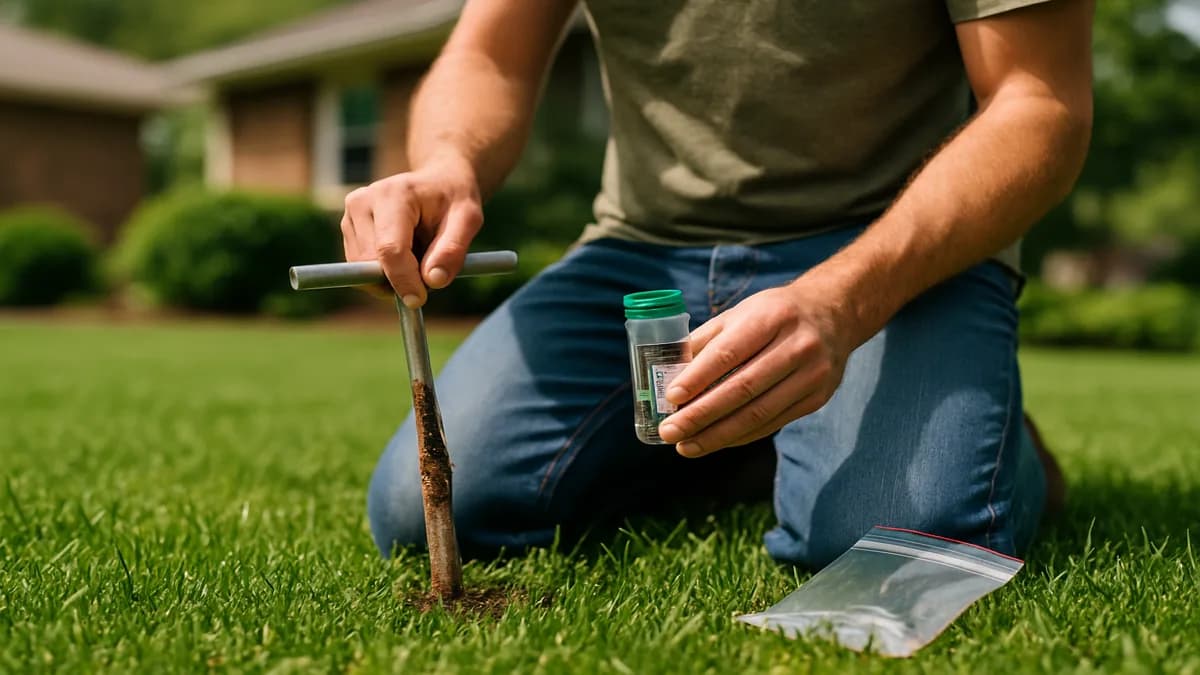
How to Soil Test Your Lawn (and Actually Use the Results)
A soil test replaces fertilizer guesswork with numbers. Here’s how to sample, read the report, and turn results into a plan.
6 min read
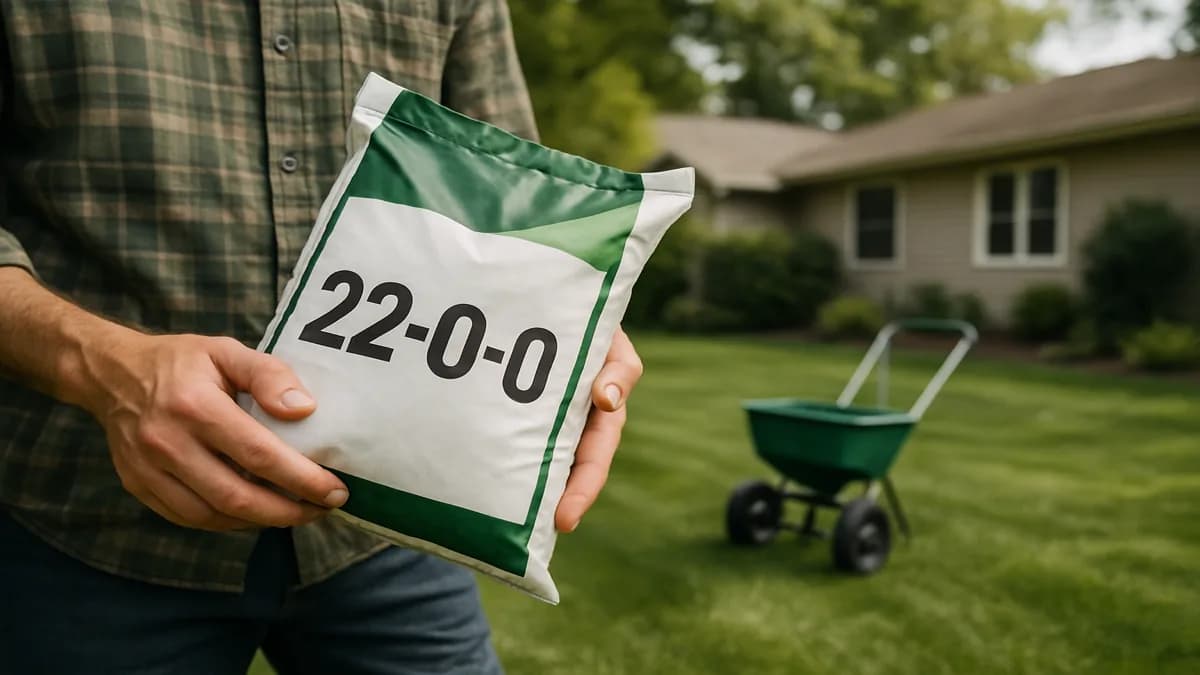
What Fertilizer Numbers Really Mean (NPK and Lawn Fertilizer Math)
Wondering what those fertilizer numbers mean? Here’s how to read NPK ratios, why phosphorus is often zero, and how to figure out the right amount for your grass.
7 min read
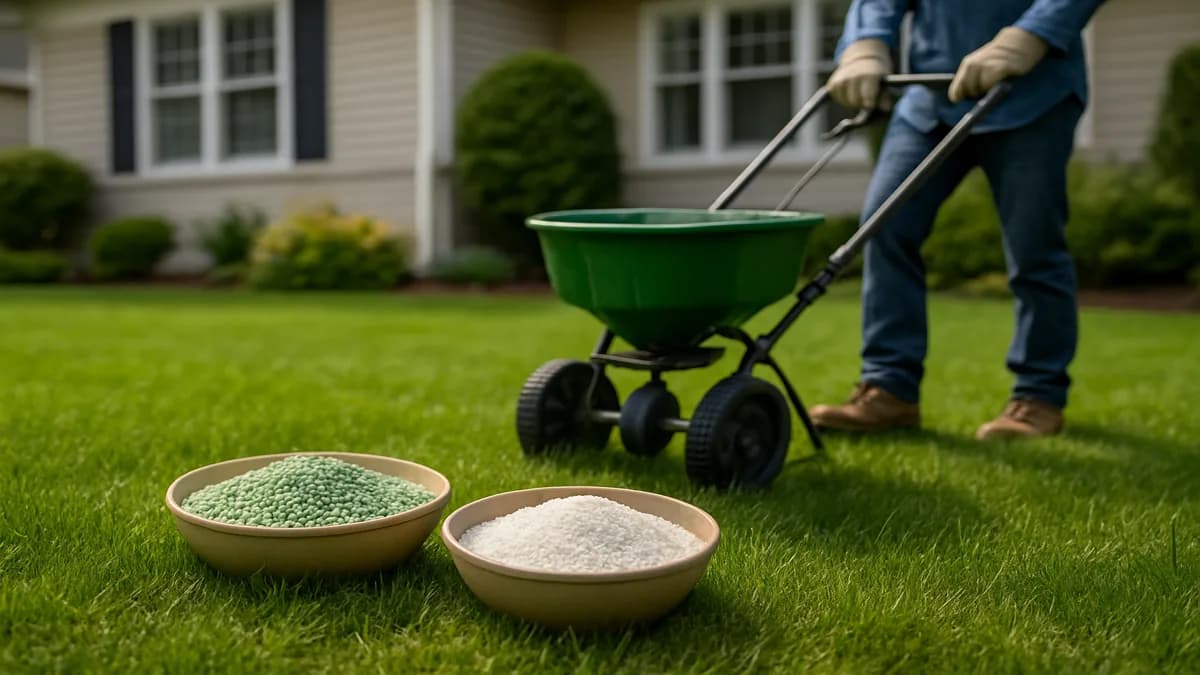
Slow Release vs Quick Release Fertilizer: What Actually Matters for Your Lawn
Slow release fertilizer feeds your lawn for weeks with less risk. Quick release acts fast but can burn and fades quickly. Here’s how to choose and apply the right one.
7 min read
Spotted something out of date or wrong? Tell us , we correct guides rather than leaving them to rot.