Crabgrass Killer: What Actually Works (and What Doesn’t)
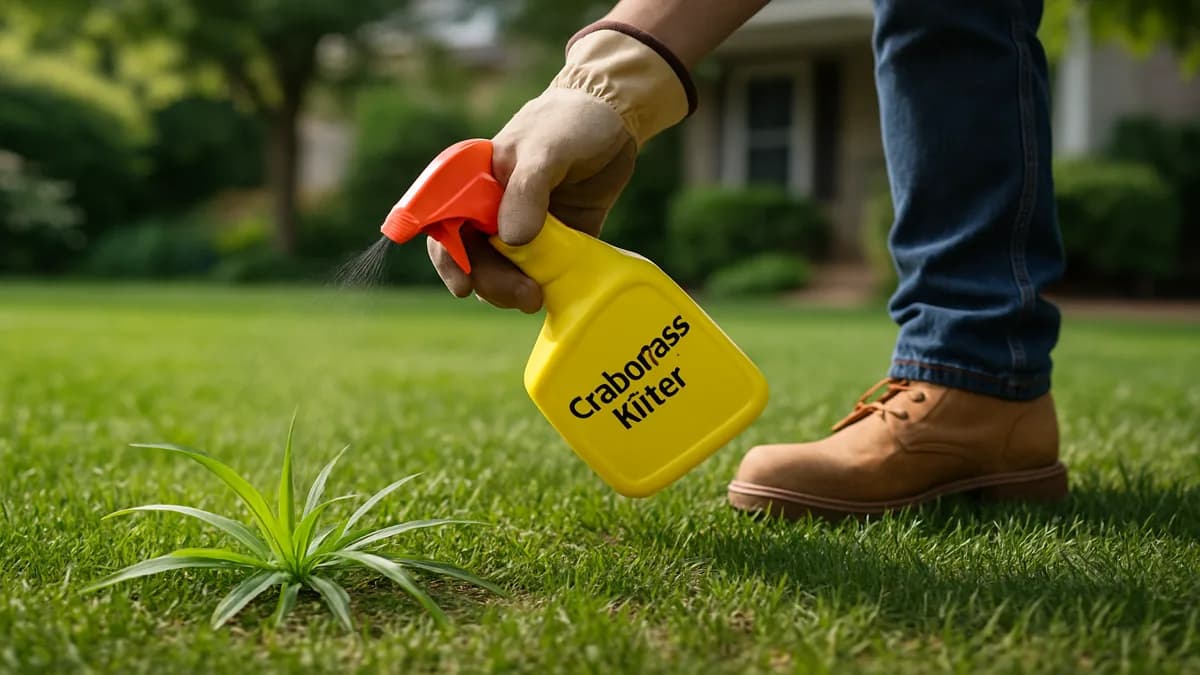
Crabgrass keeps coming back because most folks miss the timing or use the wrong product. Here’s how to kill crabgrass, prevent it, and avoid wasted effort.
On this page
- Crabgrass Identification: Don’t Spray the Wrong Weed
- How to Kill Crabgrass That’s Already Up
- Hand-Pulling
- Post-Emergent Herbicides
- Crabgrass Preventer: Timing Is Everything
- How to Apply Pre-Emergent for Crabgrass
- Split Applications
- Why Crabgrass Keeps Coming Back
- Mow Higher
- Overseed and Repair Thin Spots
- Water Deeply, Not Often
- Natural Crabgrass Control: What Works, What Doesn’t
- Common Mistake: Late Pre-Emergent
- Year-Round Crabgrass Control Plan
- Where Most People Mess Up
- Internal Links for More Help
You’re staring at a patch of crabgrass and want it gone,fast. Maybe you’re wondering if you should spray, pull, or just wait for frost. Or maybe you’re tired of fighting the same battle every spring and want to keep it from coming back. Here’s what actually works, what wastes your time, and how to time crabgrass killer so you aren’t just feeding next year’s weeds.
Crabgrass Identification: Don’t Spray the Wrong Weed (opens in a new tab)
If you want to kill crabgrass, make sure that’s what you’re dealing with. I’ve seen plenty of folks waste money on the wrong weed. Crabgrass grows low, pale green, and spreads out from a single point. Each plant is separate,no underground runners. The blades are wide and flat, and the stems splay out like fingers from a palm.
| Weed Type | Looks Like Crabgrass? | Key Differences | What to Do |
|---|---|---|---|
| Crabgrass | Yes | Wide, pale blades, radiates from crown | Use crabgrass killer |
| Goosegrass | Yes | White/silver center, zipper-like base | Germinates later, harder to kill |
| Tall fescue | Sometimes | Upright, stays green in winter | Not a weed, don’t spray |
| Nimblewill | Sometimes | Fine, wiry, spreads by stolons | Needs different control |
How to Kill Crabgrass That’s Already Up (opens in a new tab)
Hand-Pulling (opens in a new tab)
If you only see a few plants, pull them. Water the area first so the roots come out easier. Grab the whole crown,crabgrass roots at the nodes, so if you leave any behind, it’ll regrow. Pull before you see seed heads, or you’re just making more work for next year.
Post-Emergent Herbicides (opens in a new tab)
For bigger patches, you’ll need a post-emergent crabgrass killer. Look for products with quinclorac, fenoxaprop, or mesotrione,but check the label for your grass type. Some of these will fry St. Augustine or centipede lawns. Here’s how to avoid wasting money:
Spray Young Plants
Crabgrass is easiest to kill at the 2-4 leaf stage. Once it’s big and tough, you’ll need a second shot or you may not kill it at all.Mind the Weather
Don’t spray when it’s over 85°F. Hot, stressed grass will burn, and herbicides won’t work as well.Read the Label
Some crabgrass killers say you can’t overseed for weeks after use. Don’t guess,check, or you’ll be stuck with bare patches all fall.
Honest Skip-It Scenario (opens in a new tab)
If it’s August, the crabgrass is seeding, and you’re already planning fall overseeding, skip the spray. The plants will die with frost anyway. Focus on thickening your lawn this fall so you don’t fight the same battle next year.
Crabgrass Preventer: Timing Is Everything (opens in a new tab)
Pre-emergent herbicides are your best bet for crabgrass control, but they only work if you get the timing right. They don’t kill seeds,they make a barrier that stops new seedlings from sprouting.
Crabgrass seeds start germinating when soil at 2 inches deep hits 55°F for several days. That’s usually mid-spring, but the date changes every year. Air temperature and calendar dates are unreliable.
| Timing Method | How Reliable? | Details |
|---|---|---|
| Soil thermometer (2" depth) | Best | Check mid-morning several days in a row |
| State extension soil map | Very good | Many states post live soil temps online |
| Forsythia bloom (ending) | Good | Traditional cue, works in much of the U.S. |
| Calendar date | Poor | Varies by region and year |
How to Apply Pre-Emergent for Crabgrass (opens in a new tab)
- Apply when soil is 50-55°F and rising
- Use a spreader set to the label rate (usually 1.5-4 lbs per 1,000 sq ft)
- Water in with ½ inch (about 12 mm) of water right after application
- Don’t disturb the soil after spreading,no raking or aerating, or you’ll break the barrier
Split Applications (opens in a new tab)
Most pre-emergents last 6-10 weeks. In warm climates or if you’ve had goosegrass problems, split the dose: half at 55°F, half 6-8 weeks later. Never exceed the label’s annual max rate.
Worked Example: Pre-Emergent on a 4,000 Sq Ft Lawn (opens in a new tab)
Let’s say your pre-emergent label says 3 lbs per 1,000 sq ft. For a 4,000 sq ft lawn:
- 3 lbs x 4 = 12 lbs total
- Spread evenly over the lawn
- Water in with ½ inch within 3 days
- If splitting, do 6 lbs at 55°F, 6 lbs 6-8 weeks later
Why Crabgrass Keeps Coming Back (opens in a new tab)
Crabgrass loves thin, bare, or scalped lawns. If you don’t fix those, you’ll keep fighting it every year. Here’s what usually happens: folks mow too low, skip overseeding, or let bare spots go all season. Crabgrass fills every gap.
Mow Higher (opens in a new tab)
Taller grass shades the soil and keeps it cooler,crabgrass hates that. Here’s what to aim for:
| Grass Type | Mow Height (inches) | Why It Works |
|---|---|---|
| Tall fescue | 3-4 | Deep roots, thick canopy |
| Kentucky bluegrass | 2.5-3.5 | Spreads, fills gaps |
| Perennial ryegrass | 1.5-2.5 | Mow at upper end |
| Bermudagrass | 1-2 | Dense if not scalped |
Never cut more than one-third of the grass blade at once. Scalping exposes the soil and invites weeds.
Overseed and Repair Thin Spots (opens in a new tab)
Bare patches are crabgrass magnets. Overseed in fall (for cool-season lawns) or late spring (for warm-season lawns) to thicken turf before weeds get a chance.
Water Deeply, Not Often (opens in a new tab)
Crabgrass thrives in dry, compacted, or shallowly watered lawns. Water about 1 inch per week in one or two deep soakings. Shallow, frequent watering just helps weeds.
Natural Crabgrass Control: What Works, What Doesn’t (opens in a new tab)
- Corn gluten meal: The only natural pre-emergent with some research behind it. Needs 15-20 lbs per 1,000 sq ft. Results are mixed, and it adds a lot of nitrogen,adjust your fertilizer plan. Don’t use before overseeding.
- Vinegar or salt sprays: These kill whatever they touch,grass included. Only use in cracks or on pavement, not on your lawn.
- Thick turf and proper mowing: The best non-chemical defense. It takes a couple of seasons, but it works.
Common Mistake: Late Pre-Emergent (opens in a new tab)
Every spring, people wait until they see crabgrass before applying preventer. Don’t do that. Pre-emergent only works before seeds sprout. If you’re late, you’ve missed your shot for the year.
Year-Round Crabgrass Control Plan (opens in a new tab)
| Season | Action |
|---|---|
| Late winter | Buy soil thermometer, sharpen mower blades |
| Soil 50-55°F | Apply pre-emergent, water in |
| 6-8 weeks later | Second pre-emergent if needed |
| Late spring | Raise mowing height, spot-treat young crabgrass |
| Summer | Water deeply, mow high, skip late herbicides |
| Early fall | Aerate, overseed thin spots |
| Fall | Fertilize (see grass type for timing) |
Where Most People Mess Up (opens in a new tab)
- Spraying mature crabgrass in late summer,waste of money, seeds are already dropped
- Applying pre-emergent after crabgrass is visible,too late
- Using the wrong product for their grass type,damage or no effect
- Skipping lawn repairs,bare spots = crabgrass every year
Internal Links for More Help (opens in a new tab)
Frequently asked questions
Calculators for this job
Grass Seed Calculator
Seeding rates differ by species by a factor of twenty, bermudagrass wants 1 lb per 1,000 sq ft, perennial ryegrass wants 8. Pick your grass and whether you're starting fresh or overseeding.
OpenFertilizer Calculator
Turf guidance is written in pounds of nitrogen per 1,000 sq ft, but fertilizer is sold as a percentage analysis. This converts between them for any bag you have, enter the three numbers on the front.
OpenLawn Area Calculator
Almost every other lawn number depends on this one. Break your yard into simple shapes, subtract the parts that aren't grass, and get a square footage you can use for seed, fertilizer, and quotes.
OpenKeep reading

How to Actually Get Rid of Dandelions (Not Just the Flowers)
Dandelion taproots make them stubborn. Here’s how to remove or kill dandelions so they don’t return, plus when to act and when to just let them be.
6 min read

Corn Gluten Meal for Lawns: Honest Results, Rates, and When to Skip It
Corn gluten meal offers some weed suppression and a hefty nitrogen boost, but it’s pricey, inconsistent, and not for every lawn. Here’s what works, what doesn’t, and how to avoid wasting your money.
7 min read
How Often Should You Overseed a Lawn?
Overseeding isn’t a yearly chore for everyone. Here’s how to decide if, when, and how much to overseed,plus the steps that actually matter.
7 min read
Spotted something out of date or wrong? Tell us , we correct guides rather than leaving them to rot.