How to Overseed a Lawn for Thicker Grass
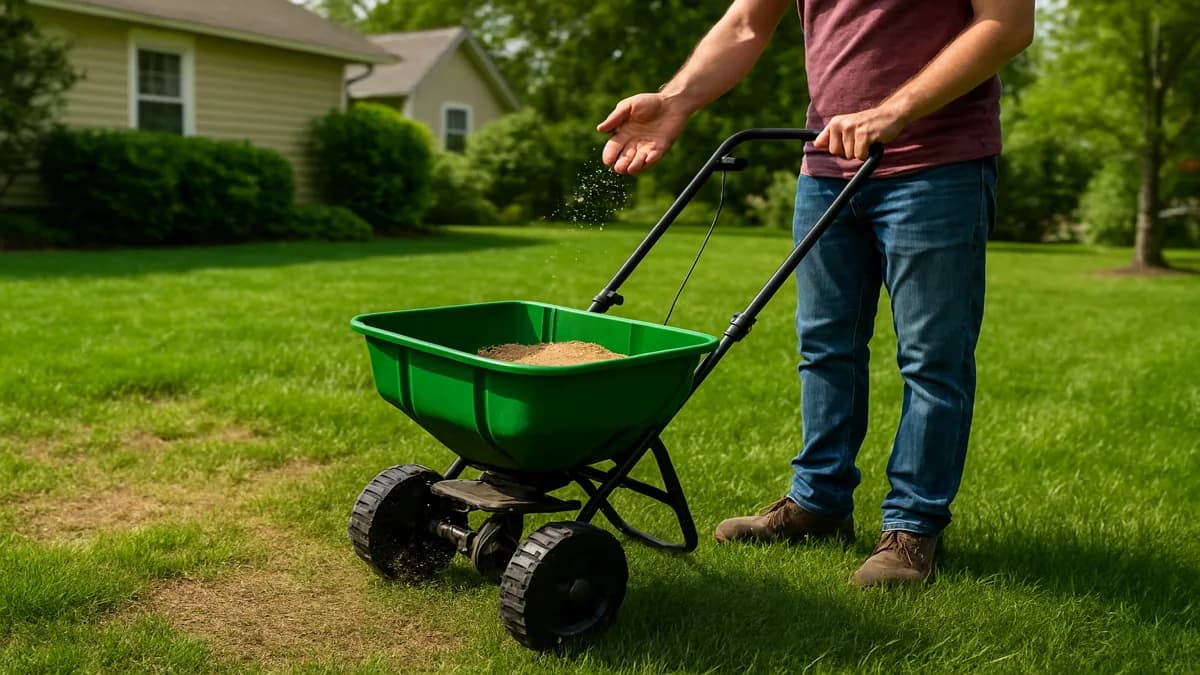
Overseeding works best when seed touches loosened soil, gets steady moisture, and is mowed only after seedlings are rooted.
On this page
- Best Time to Overseed
- Step 1: Measure the Lawn
- Step 2: Check Seed Quality and Grass Match
- Step 3: Mow, Bag, and Open the Soil
- Step 4: Spread Seed at the Overseeding Rate
- Worked Example: Tall Fescue Overseeding
- Step 5: Add Fertilizer Only When It Fits
- Step 6: Topdress Lightly if Needed
- Step 7: Water Like You Mean It
- Step 8: Mow and Use the Lawn Carefully
- When to Skip Overseeding
- Common Overseeding Mistakes
- Simple Overseeding Checklist
To overseed a lawn, mow a little lower than usual, remove debris, loosen the soil surface, spread grass seed at about half the new-lawn rate, keep the seedbed moist, and delay hard use until seedlings are rooted. The job works only when seed reaches soil and stays damp long enough to germinate.
Assumptions for this guide: you are a US homeowner repairing a thin lawn, not establishing bare dirt from scratch; you are matching seed to your existing grass and climate; and you will follow the seed label, fertilizer label, and local phosphorus rules. If you are deciding how often this job belongs on your calendar, read how often to overseed a lawn.
Best Time to Overseed (opens in a new tab)
The best overseeding window is when your grass type is actively growing and weather gives seed mild temperatures plus steady moisture. Cool-season lawns usually overseed best from late summer into early fall. Warm-season lawns are usually patched or seeded in late spring to early summer after full green-up.
| Lawn type | Best overseeding window | Why it works |
|---|---|---|
| Tall fescue, Kentucky bluegrass, perennial ryegrass | Late summer to early fall | Soil is warm, air is cooler, and seedlings have time before winter |
| Cool-season lawn in a spring emergency | Early spring | Works for small repairs, but summer heat and spring weed pressure are harder |
| Bermudagrass or seeded zoysia | Late spring to early summer | Warm soil supports germination and spreading |
| Dormant or drought-stressed lawn | Wait | Seed fails when turf is not growing and water is limited |
If your lawn is mostly weeds or bare soil, overseeding alone is the wrong expectation. You may need weed control, grading, soil correction, or sod.
Step 1: Measure the Lawn (opens in a new tab)
Measure the area you plan to seed before buying anything. A 7,500-square-foot property is not a 7,500-square-foot lawn once you subtract the house, driveway, patio, beds, and trees.
Write down separate areas for front, back, and side yards if conditions differ. Shady side yards, sunny curb strips, and worn play zones often need different seed blends or different expectations.
Step 2: Check Seed Quality and Grass Match (opens in a new tab)
Choose seed that fits your lawn, not just the cheapest bag near the register. Tall fescue belongs in many transition-zone lawns; perennial ryegrass germinates quickly but is not always a long-term answer in hot summers; zoysia and bermuda need warm soil and full sun.
Before you spread an old bag, check the label date, storage condition, and seed mix. The guide on how to tell if grass seed is good can help you avoid wasting a Saturday on seed that sat hot and damp in a shed.
Step 3: Mow, Bag, and Open the Soil (opens in a new tab)
Mow the existing grass about 0.5 to 1 inch lower than your usual height, but do not scalp into crowns. Bag clippings if they would cover the soil. Seed sitting on clippings, leaves, or thatch will dry out or wash away.
Rake thin spots hard enough to scratch the soil. If thatch is heavy, dethatch before seed. If the ground is compacted, core aeration is usually the better prep because it opens channels for air, water, and seed. The deeper timing details are in when to aerate your lawn.
| Lawn condition | Prep move | What to avoid |
|---|---|---|
| Thin but loose soil | Mow, rake, and seed | Burying seed under thick topsoil |
| Compacted soil | Core aerate, then seed | Spike shoes as the only fix |
| Heavy thatch | Dethatch first, then seed | Seeding on top of a brown mat |
| Bare washout | Fix grade or drainage first | Re-seeding the same failure pattern |
| Weed-filled lawn | Control weeds on the proper label timeline | Applying a pre-emergent that blocks new grass |
Step 4: Spread Seed at the Overseeding Rate (opens in a new tab)
Set your spreader for a lighter pass and make two perpendicular passes: north-south, then east-west. This gives better coverage than one heavy pass, especially around edges and curves.
Common overseeding rates are roughly half of new-lawn rates, but labels win. Use the seed bag if it gives a rate for overseeding.
| Seed type | Typical new-lawn rate | Typical overseeding rate |
|---|---|---|
| Tall fescue | 6 to 8 lb per 1,000 sq ft | 3 to 4 lb per 1,000 sq ft |
| Kentucky bluegrass | 2 to 3 lb per 1,000 sq ft | 1 to 1.5 lb per 1,000 sq ft |
| Perennial ryegrass | 5 to 10 lb per 1,000 sq ft | 2.5 to 5 lb per 1,000 sq ft |
| Bermudagrass seed | 1 to 2 lb per 1,000 sq ft | 0.5 to 1 lb per 1,000 sq ft |
Worked Example: Tall Fescue Overseeding (opens in a new tab)
Say the lawn area calculator shows 4,800 square feet of turf. You choose a tall fescue blend with a new-lawn label rate of 8 pounds per 1,000 square feet. For overseeding, use about half that rate: 4 pounds per 1,000 square feet.
The math is:
4,800 sq ft ÷ 1,000 = 4.8
4.8 × 4 lb = 19.2 lb of seed
Buy a 20-pound bag if the label and coverage match. If the lawn has several bare patches, lightly seed those at the repair rate listed on the bag, then keep the broad lawn at the overseeding rate.
Step 5: Add Fertilizer Only When It Fits (opens in a new tab)
Starter fertilizer can help seedlings when soil phosphorus is low or allowed by local rules. It can also be the wrong move if your soil already has enough phosphorus or your state restricts phosphorus except during establishment.
Read the bag and avoid guessing. If you have not tested in the last 2 to 3 years, start with how to soil test your lawn. For product timing, the starter fertilizer FAQ explains how to apply starter fertilizer to a lawn.
Step 6: Topdress Lightly if Needed (opens in a new tab)
A thin compost topdressing helps rough seedbeds hold moisture, but more is not better. Aim for seed-to-soil contact and a light cover, not a blanket. Grass seed buried too deep runs out of energy before it reaches light.
If your lawn has low spots, uneven soil, or poor organic matter, fix drainage and grade problems before you spend money on seed.
Step 7: Water Like You Mean It (opens in a new tab)
New seed needs frequent light watering at first. The top 0.25 to 0.5 inch of soil should stay damp, not muddy. In warm, windy weather, that may mean 2 to 3 short cycles per day. In mild cloudy weather, one cycle may be enough.
After germination, gradually shift to deeper and less frequent watering so roots chase moisture down. The details change by soil and weather, so use a rain gauge and the lawn watering guide on how often to water your lawn.
| Stage | Watering target | Practical check |
|---|---|---|
| Days 1 to germination | Keep seedbed damp | Soil surface dark, not puddled |
| Early seedlings | Prevent drying between cycles | Seedlings stay upright by afternoon |
| After first mowing | Begin deeper watering | Moisture reaches 3 to 4 inches |
| Established young grass | Match normal lawn schedule | No daily misting habit |
Step 8: Mow and Use the Lawn Carefully (opens in a new tab)
Mow when the existing grass needs a cut and new seedlings are tall enough to avoid being yanked or blown sideways. A common target is when seedlings reach about 3 to 4 inches, but your grass type matters.
Use a sharp blade, dry turf, and light turns. Stay within the recommended mowing range for your grass type. Keep heavy foot traffic, dogs, and play equipment off the seeded area until the grass has been mowed a few times.
When to Skip Overseeding (opens in a new tab)
Skip overseeding when you cannot water, when a pre-emergent herbicide is still active, when the lawn is going dormant, or when the real problem is shade, compaction, grubs, or poor soil. Seed is not a repair spell. It is a living crop, and it needs the same basics every crop needs.
Also skip broad overseeding if only a few small spots need repair. Spot-seed the patches, then spend the rest of the budget on mowing height, irrigation, soil testing, or weed timing.
Common Overseeding Mistakes (opens in a new tab)
The biggest mistake is spreading seed over an unprepared lawn and hoping rain handles the rest. Seed needs soil contact. If you can still see a layer of leaves, dead grass, or thatch, the seed cannot do its job.
Other common misses are using the new-lawn rate on an existing lawn, mowing too late and smothering seedlings with clippings, applying weed preventer at the wrong time, and letting the seedbed dry out on day three. Keep notes on seed type, rate, watering, and weather so the next overseeding job is easier to judge.
Simple Overseeding Checklist (opens in a new tab)
- Measure the lawn area.
- Choose seed matched to the existing grass and climate.
- Mow lower, bag clippings, and remove debris.
- Rake, dethatch, or core aerate so seed reaches soil.
- Spread seed at the overseeding rate.
- Add starter fertilizer only when label, soil test, and local rules support it.
- Water lightly and often until germination, then transition deeper.
- Mow carefully once seedlings are tall and rooted.
Done well, overseeding fills thin turf without starting the whole lawn over. Done casually, it becomes expensive birdseed. Put most of your effort into soil contact, correct seed rate, and steady moisture, and the grass has a fair shot.
Frequently asked questions
Calculators for this job
Grass Seed Calculator
Seeding rates differ by species by a factor of twenty, bermudagrass wants 1 lb per 1,000 sq ft, perennial ryegrass wants 8. Pick your grass and whether you're starting fresh or overseeding.
OpenLawn Area Calculator
Almost every other lawn number depends on this one. Break your yard into simple shapes, subtract the parts that aren't grass, and get a square footage you can use for seed, fertilizer, and quotes.
OpenFertilizer Calculator
Turf guidance is written in pounds of nitrogen per 1,000 sq ft, but fertilizer is sold as a percentage analysis. This converts between them for any bag you have, enter the three numbers on the front.
OpenKeep reading
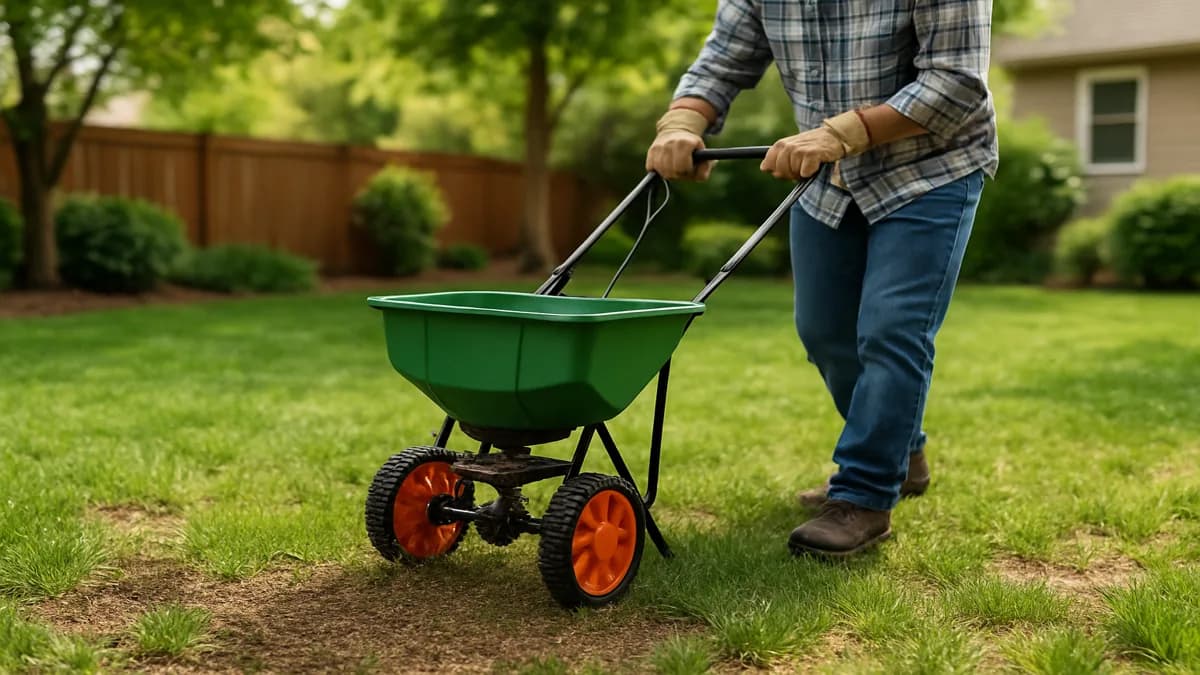
How Often Should You Overseed a Lawn?
Overseeding isn’t a yearly chore for everyone. Here’s how to decide if, when, and how much to overseed,plus the steps that actually matter.
7 min read
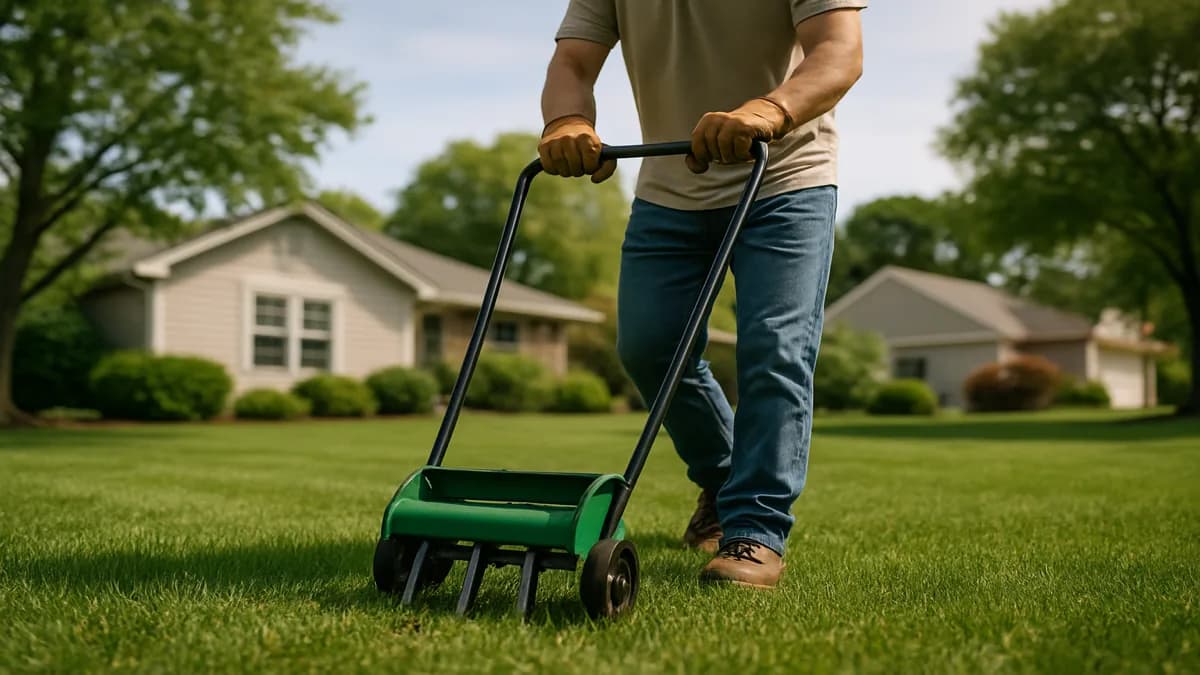
When to Aerate Your Lawn (Cool-Season vs Warm-Season)
Aerate when grass is growing hard enough to recover. Fall for cool-season lawns, late spring to early summer for warm-season lawns.
6 min read
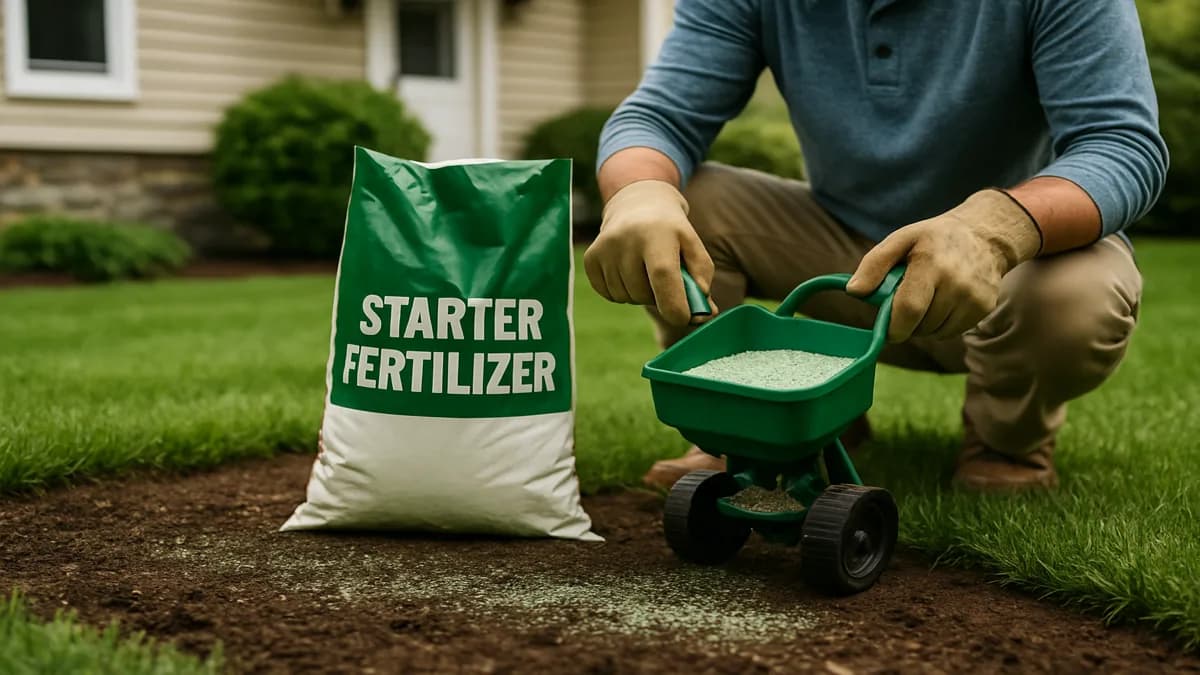
Starter Fertilizer for New Grass: What Most Homeowners Get Wrong
Starter fertilizer can jumpstart new grass, but using it wrong wastes money or breaks the law. Here’s what to know before you spread.
6 min read
Spotted something out of date or wrong? Tell us , we correct guides rather than leaving them to rot.