When to Aerate Your Lawn (Cool-Season vs Warm-Season)
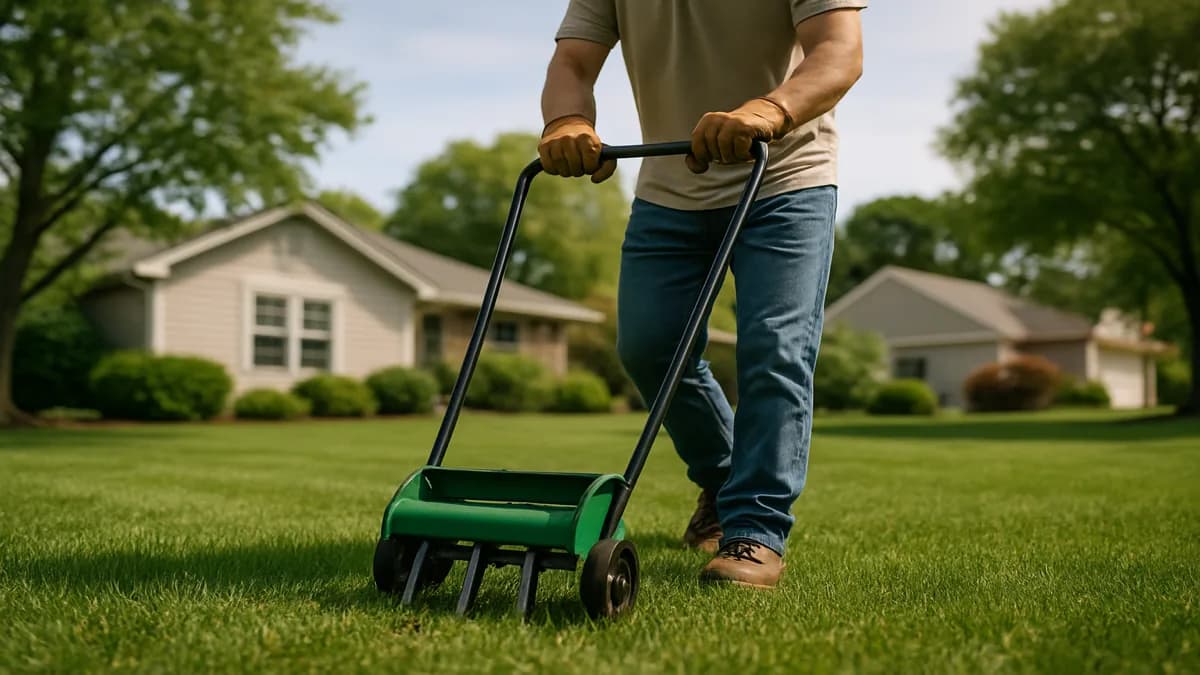
Aerate when grass is growing hard enough to recover. Fall for cool-season lawns, late spring to early summer for warm-season lawns.
On this page
- Why Timing Beats the Rental Weekend
- Cool-Season Lawns: Fall First
- Warm-Season Lawns: After Green-Up
- How to Tell You Need Aeration
- Day-Of Conditions
- How Often to Aerate
- Regional Timing Sketch (Not a Calendar Law)
- Pairing Aeration With the Rest of the Season
- Core vs Spike vs Liquid (Timing Still Rules)
- Overseeding Synergy in Fall
- Traffic, Pets, and High-Use Paths
- Rental Day Checklist
- Mistakes That Waste the Rental Fee
- Quick Timing Card
- Equipment Size and Hole Density
Aeration only helps when grass can grow into the holes you open. Pull cores in the wrong season and you stress turf, invite weeds, and watch plugs sit open for weeks. This page is about when. For which method to use, see liquid aeration vs core aeration.
Why Timing Beats the Rental Weekend (opens in a new tab)
Core aeration punches holes and deposits plugs so air, water, and roots move again in compacted soil. Recovery depends on shoot and root growth. Aerating dormant or heat-stressed grass leaves open wounds without fill-in.
Iowa State, Clemson, and other extension programs consistently tie aeration to peak growth windows rather than a single national date (Soil temperature timing summaries commonly cite fall for cool-season and late spring for warm-season stands (opens in a new tab)).
Cool-Season Lawns: Fall First (opens in a new tab)
Grasses: Kentucky bluegrass, tall fescue, perennial ryegrass, fine fescue.
| Window | Ranking | Notes |
|---|---|---|
| Early fall (often late Aug–Oct by region) | Best | Warm soil, cool air, strong rooting, pairs with overseed |
| Early to mid-spring | Backup | Higher weed risk; less recovery before summer |
| Summer heat | Avoid | Extra stress on already struggling turf |
Practical triggers:
- Grass is green and growing
- Soil at a few inches deep is roughly in an active-growth band (often discussed near 50–65°F for cool-season work)
- About 6 to 8 weeks remain before your average hard frost so holes can fill
If you plan to overseed, aerate first, then seed into the open holes. Details: how often to overseed.
Warm-Season Lawns: After Green-Up (opens in a new tab)
Grasses: bermuda, zoysia, St. Augustine, centipede, bahia.
| Window | Ranking | Notes |
|---|---|---|
| Late spring to early summer | Best | Full green-up, rapid stolon/rhizome growth |
| Midsummer extreme heat/drought | Caution | Only if turf is actively growing and watered |
| Fall / winter dormancy | Avoid | Holes linger; weeds colonize |
Wait until the lawn has fully greened and is producing new growth. Early “mostly brown” spring is too soon in many transition-zone yards.
How to Tell You Need Aeration (opens in a new tab)
Timing aside, skip the machine if the lawn does not need it.
Signs compaction or thatch is limiting growth:
- Water puddles or runs off instead of soaking
- Screwdriver hard to push into moist soil
- Spongy thatch layer over dense soil
- Heavy traffic paths stay thin
Measure thatch separately from compaction. Power raking is a different job; see power rake vs dethatching.
Day-Of Conditions (opens in a new tab)
Water ahead if dry
One day before, lightly irrigate so tines penetrate. Skip if soil is already muddy.Flag irrigation heads
Know where heads and shallow lines sit before you rent a machine.Make multiple passes
Heavy compaction often needs two directions for enough holes per square foot.Leave the plugs
They break down and return soil. Rake only if you need a cleaner surface for a party, not because plugs are “bad.”Overseed and feed if planned
Fall cool-season renovations often combine aeration, seeding, and a scheduled fertilizer app.
Topdressing after aeration can help level and improve surface soil. See topdressing your lawn.
How Often to Aerate (opens in a new tab)
| Lawn situation | Typical frequency |
|---|---|
| Clay soil, kids/pets/traffic | Every year |
| Average suburban lawn | Every 1 to 2 years |
| Sandy, low-traffic, healthy roots | Every 2 to 3 years |
Frequency is a diagnosis, not a subscription.
Regional Timing Sketch (Not a Calendar Law) (opens in a new tab)
| Region (general) | Cool-season primary | Warm-season primary |
|---|---|---|
| Upper Midwest / New England | Sept–early Oct | Rare as permanent turf |
| Mid-Atlantic / Transition | Sept–Oct | May–June after green-up |
| South | Tall fescue pockets: fall | April–June by latitude |
| Pacific Northwest | Early fall | Mostly cool-season care |
Always adjust for this year’s soil temperature and rainfall. A warm September can shift the window earlier; a late spring delays warm-season green-up.
Pairing Aeration With the Rest of the Season (opens in a new tab)
- Fall checklist: Use aeration as a checklist item, not the whole plan (fall lawn care checklist).
- Fertilizer: Feed on a growth-based schedule, not because the aerator was rented (fertilizer schedule).
- Pre-emergent conflict: If you spring-aerate cool-season turf, understand crabgrass timing so you do not create a seedbed for weeds.
Core vs Spike vs Liquid (Timing Still Rules) (opens in a new tab)
Even in the right season, method matters:
- Core aeration: Best mechanical choice for compaction on most home lawns
- Spike aeration: Punches holes without removing soil; limited compaction relief
- Liquid aeration: Surfactant/soil products; not a full substitute for cores on brick-hard clay
Pick timing first, method second. The comparison deep-dive stays on liquid vs core aeration.
Overseeding Synergy in Fall (opens in a new tab)
Cool-season renovation often stacks three jobs:
- Core aerate
- Overseed
- Fertilize on schedule
Aeration without seed helps roots and water movement. Aeration with seed helps establishment. If the lawn is already dense and weed-free, you may aerate without seeding. If it is thin, skipping seed wastes the open seedbed.
Traffic, Pets, and High-Use Paths (opens in a new tab)
Paths that stay bald may need:
- Annual aeration
- Temporary traffic redirect while seed establishes
- Soil improvement beyond a single pass
Aeration alone will not fix a daily dog track if the soil is pulverized and the canopy never gets rest. Combine timing with repair seeding and, when needed, stepping stones or mulch paths.
Rental Day Checklist (opens in a new tab)
- Confirm grass type and season window
- Soil moist, not muddy
- Irrigation heads flagged
- Seed and fertilizer on hand if renovating
- Rain forecast checked (a light rain after aeration/seed can help; a washout storm can hurt)
- Plan for plugs on sidewalks and driveways
Bring a leaf rake or blower for cleanup of plugs on hard surfaces, not because plugs must leave the lawn.
Mistakes That Waste the Rental Fee (opens in a new tab)
- Aerating dormant warm-season grass in October
- Pulling cores from soup-wet clay
- Skipping overseed in fall when the lawn is thin and cool-season
- Expecting liquid sprays alone to replace mechanical cores on brick-hard soil
- Aerating every April out of habit while ignoring fall
- Running one light pass on severely compacted clay and calling it done
- Seeding warm-season grass in a cool-season fall window just because holes exist
Quick Timing Card (opens in a new tab)
| Grass | Best aeration window | Pair with |
|---|---|---|
| Tall fescue / bluegrass / rye | Early fall | Overseed + fall feed |
| Bermuda / zoysia / St. Augustine | Late spring–early summer | Active growth, optional topdress |
| Any grass, drought wilt | Wait | Recover first |
Equipment Size and Hole Density (opens in a new tab)
Homeowner rentals vary in tine count and depth. On compacted clay, two perpendicular passes beat one rushed pass. Deep enough to reach compacted layers matters more than a perfect checkerboard. If plugs are tiny crumbs, soil may be too dry; if they smear into ribbons, soil is too wet.
Commercial machines often pull more cores per square foot. That does not mean a homeowner rental is useless. It means you should not expect golf-course hole density from a single light pass on a Saturday.
Rent the machine when roots are ready to use the holes. That single timing choice matters more than brand of aerator.
Frequently asked questions
Calculators for this job
Lawn Area Calculator
Almost every other lawn number depends on this one. Break your yard into simple shapes, subtract the parts that aren't grass, and get a square footage you can use for seed, fertilizer, and quotes.
OpenCompost Calculator
Compost gets applied far thinner than mulch or soil, and the right depth depends entirely on the job. Enter your area and pick the application to get volume, bags, and cost.
OpenGrass Seed Calculator
Seeding rates differ by species by a factor of twenty, bermudagrass wants 1 lb per 1,000 sq ft, perennial ryegrass wants 8. Pick your grass and whether you're starting fresh or overseeding.
OpenKeep reading
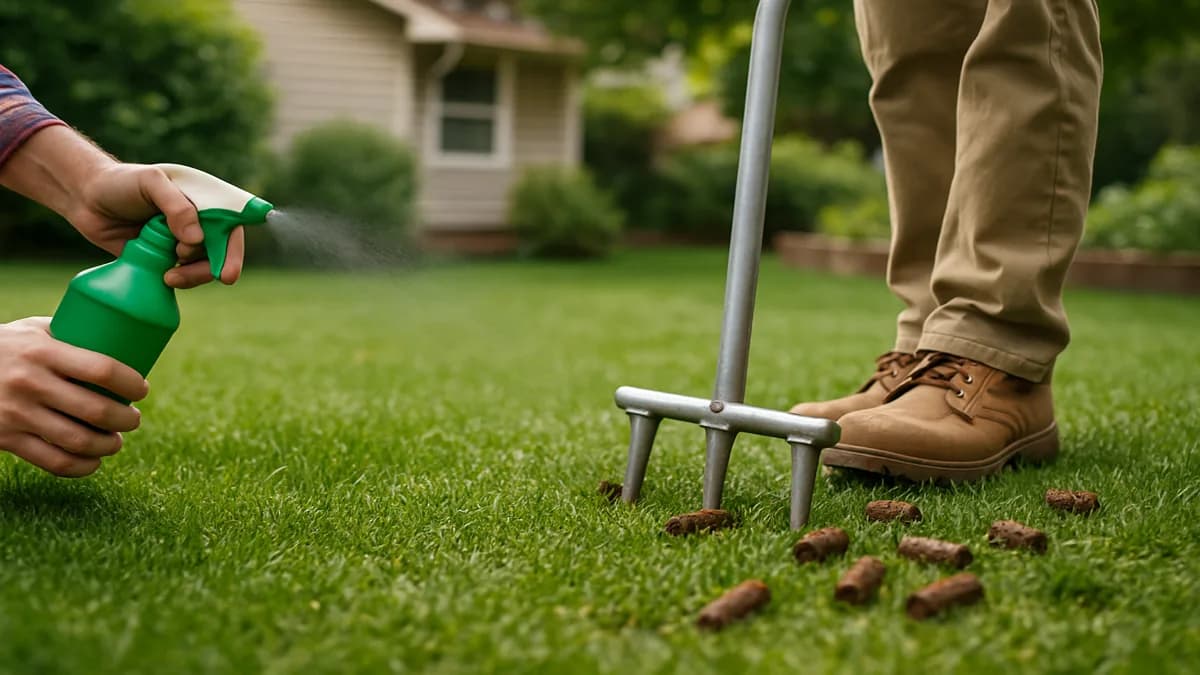
Liquid Aeration vs Core Aeration: Straight Answers for Real Lawns
Liquid aeration and core aeration aren’t the same. Here’s what each does, where they work, and how to tell which will actually help your lawn.
6 min read
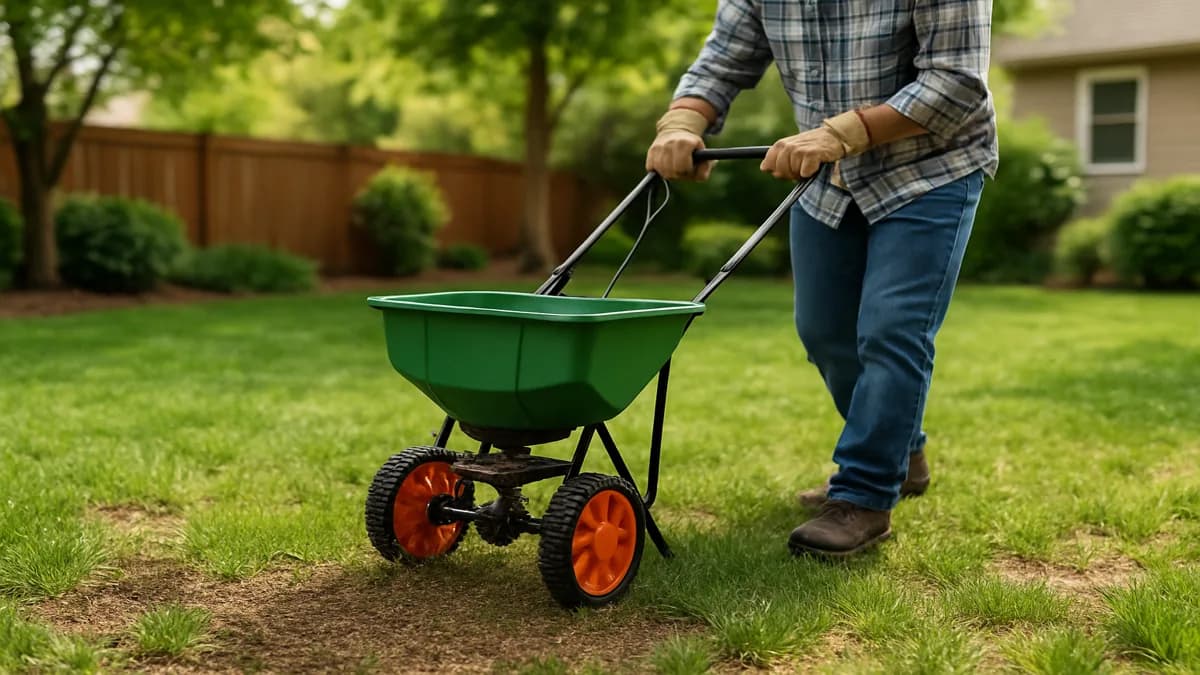
How Often Should You Overseed a Lawn?
Overseeding isn’t a yearly chore for everyone. Here’s how to decide if, when, and how much to overseed,plus the steps that actually matter.
7 min read
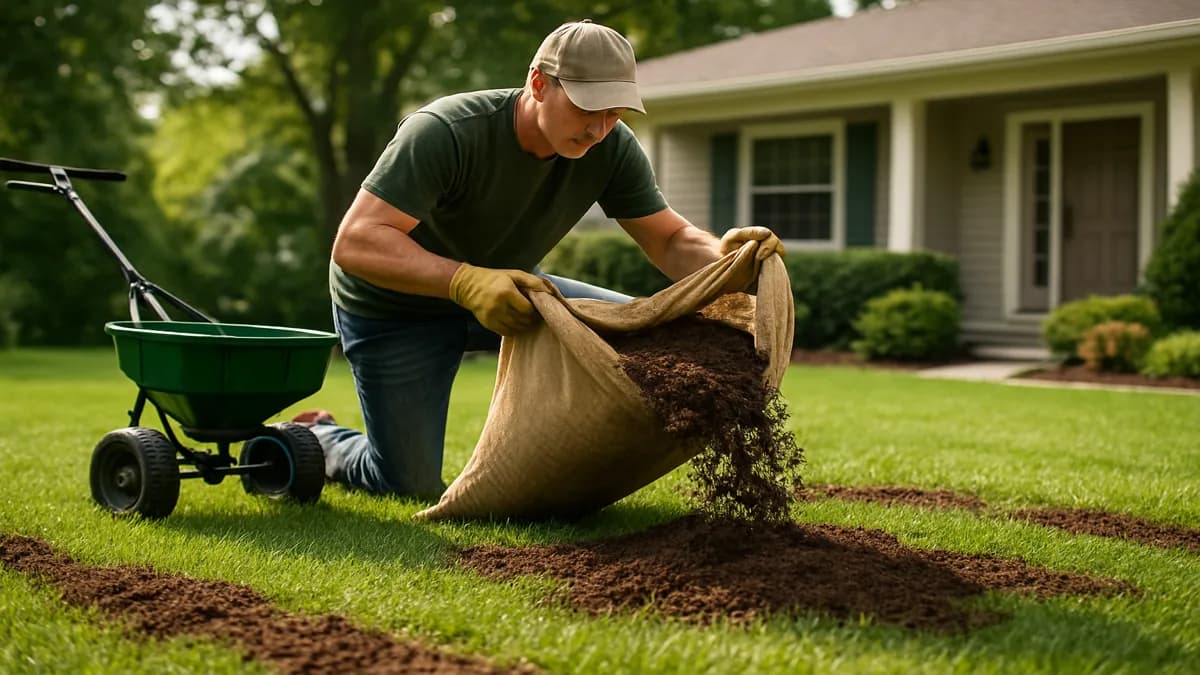
Topdressing Your Lawn: Real Advice for Healthier, Smoother Grass
Topdressing means spreading a thin layer of compost or soil over your lawn to fix bumps, improve soil, and help grass grow. The trick is never to bury the grass.
6 min read
Spotted something out of date or wrong? Tell us , we correct guides rather than leaving them to rot.