Pacific Northwest Lawn Care: What to Do, When, and Why
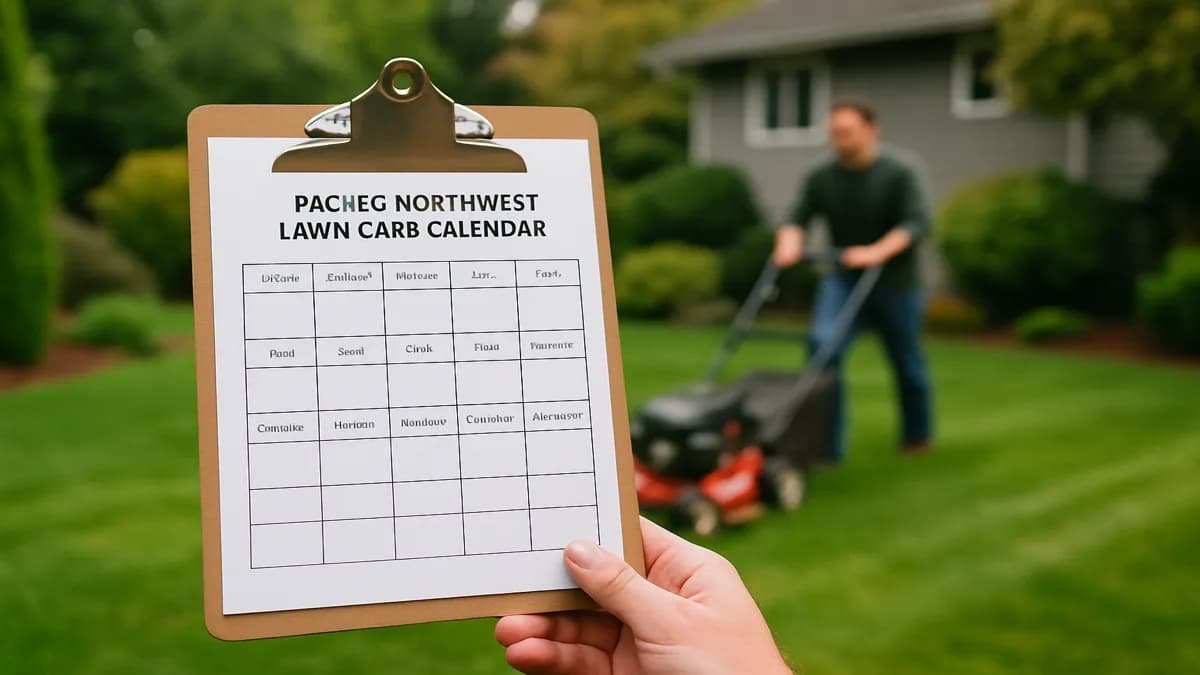
Here’s how to actually keep a lawn alive and healthy in the Pacific Northwest, from moss battles to the best time to overseed and water.
On this page
- Why the PNW Lawn Calendar Is Its Own Beast
- Month-by-Month: What to Do and When
- January-February
- March
- April
- May
- June
- July-August
- September
- October
- November
- December
- Moss: The PNW’s Never-Ending Battle
- Fertilizing: Timing and Rates for PNW Lawns
- Where Most People Mess Up
- Worked Example: September Fertilizer for a 5,000 sq ft Lawn
- Skip It: Summer Fertilizer Without Irrigation
- More PNW Lawn Resources
If you’re standing in your backyard in Oregon or Washington, staring at moss, patchy grass, and a forecast that can’t decide between drizzle or drought, you’re not alone. Folks around here want to know: What do I actually need to do for my lawn,and when,so I’m not wasting time or money?
Let’s get right to it. The Pacific Northwest lawn care schedule is different from anywhere else. You’ll deal with a long, cool growing season, months of summer drought, and winters that never freeze hard but stay soggy. If you want a decent lawn, you need to work with the climate, not against it.
Why the PNW Lawn Calendar Is Its Own Beast (opens in a new tab)
- Grass grows most of the year. You’ll mow in December, then again by February or March.
- From July to September, rain shuts off. Lawns without irrigation go brown and dormant.
- Winters are wet, not cold. Moss loves this. So do crane flies and fungal diseases.
- Soils are acidic (often pH 5.0-5.8). That’s why moss takes over and fertilizer doesn’t always work right.
Month-by-Month: What to Do and When (opens in a new tab)
January-February (opens in a new tab)
- Grass barely grows, but it’s not dead. Don’t let leaves or branches pile up,smothering is real.
- Stay off soggy turf. Foot traffic now means ruts and compaction later.
- Plan ahead: If you want pro aeration, get on their list now.
- Moss is everywhere, but don’t treat it yet. Wait until grass is actively growing.
March (opens in a new tab)
- Grass wakes up. Moss is glaringly obvious.
- Now’s the time for iron-based moss killer (not regular fertilizer). Wait for a dry spell, then apply. Rake out blackened moss after a week.
- First mow of the year: blade sharp, don’t scalp. Cut to 2-2.5 inches.
- Test soil pH. Only lime if you’re below 6.0.
- Light fertilizer (half-rate): 0.5 lb nitrogen per 1,000 sq ft.
April (opens in a new tab)
- Peak grass growth. Mow weekly, maybe more.
- Overseed bare or moss-cleared patches. Spring seeding works here, but fall is still better.
- Core aerate if soil is compacted and not waterlogged.
- Moderate fertilizer: 0.75-1 lb nitrogen per 1,000 sq ft.
- Crabgrass pre-emergent? Rarely needed in the PNW, but use only if you’ve had issues,and skip if you’re overseeding.
May (opens in a new tab)
- Still growing fast. Rain starts to fade.
- Raise mowing height to 2.5-3 inches as summer nears.
- Check irrigation system. Fix leaks, adjust heads, set timers.
- Spot-spray broadleaf weeds (dandelion, clover) if needed.
June (opens in a new tab)
- Rain gets unreliable. Watch for drought stress (wilting, blue-gray color).
- Start watering before lawn turns brown: 1-1.5 inches per week if you want green grass.
- Only fertilize if you’re irrigating. If not, skip it.
- Mow high. Taller grass shades roots and keeps soil cooler.
July-August (opens in a new tab)
- Hot and dry. You have two choices:
- Irrigate: 1-1.5 inches of water per week, early morning, deep and infrequent.
- Let it go dormant: Water just enough (0.5 inch every 2-3 weeks) to keep crowns alive. Don’t fertilize, don’t mow unless it’s getting shaggy.
- Don’t fertilize dormant or heat-stressed grass. You’ll burn it.
- Watch for crane fly larvae (spongy turf, sudden thinning).
September (opens in a new tab)
- The most important month for your lawn.
- Core aerate and overseed now. Warm soil, cool air, and returning rain make this the best window all year.
- Apply your main fertilizer: 1 lb nitrogen per 1,000 sq ft.
- Dormant lawns will green up on their own as rain returns.
- Resume regular mowing.
October (opens in a new tab)
- Still growing, just slower. Keep mowing as needed.
- Remove leaves promptly. Wet leaves = disease and dead patches.
- Late overseeding is possible if it’s mild, but don’t push it past mid-October.
- Only lime if soil test says so.
November (opens in a new tab)
- Growth slows, but doesn’t stop. Last fertilizer (0.5-1 lb N per 1,000 sq ft) to build roots for winter.
- Mow one last time at 2.5 inches.
- Clear all leaves before winter rains set in.
- Winterize irrigation (drain pipes, insulate backflow). Freezes are rare but not impossible.
December (opens in a new tab)
- Grass barely grows. Moss starts creeping back.
- Mow only if needed, and only when it’s dry enough.
- Keep debris off the lawn. Stay off saturated areas.
Moss: The PNW’s Never-Ending Battle (opens in a new tab)
Moss isn’t just a cosmetic problem. It’s a sign your grass is losing. Here’s what usually causes it,and what actually works to fix it:
| Problem | What Actually Helps |
|---|---|
| Too much shade | Prune trees/shrubs for 4+ hours of sun. If you can’t, plant shade-tolerant groundcovers instead of grass. |
| Poor drainage | Core aerate, fix grading, or install drains. |
| Acidic soil | Only lime if pH below 6.0 (test first). |
| Compacted soil | Core aerate yearly or as needed. |
| Mowing too short | Raise mowing height to 2.5-3 inches. |
| Thin turf | Overseed in September to thicken grass. |
Fertilizing: Timing and Rates for PNW Lawns (opens in a new tab)
You can fertilize more often here than in most places, but the schedule matters. Here’s a cheat sheet:
| Month | Fertilizer Rate (N/1,000 sq ft) | Notes |
|---|---|---|
| March | 0.5 lb | Light feeding to wake up grass |
| April/May | 0.75-1 lb | Peak growth, main spring feeding |
| June | 0.5 lb (only if irrigating) | Skip if lawn is going dormant |
| July/Aug | 0 | Never fertilize dormant/stressed lawn |
| September | 1 lb | Most important feeding of the year |
| November | 0.5-1 lb | Builds roots for winter |
Where Most People Mess Up (opens in a new tab)
- Overwatering in spring or fall. Rain usually does the job,don’t drown your lawn.
- Skipping fall overseeding. September is the best shot at thick turf and less moss.
- Liming every year without a test. Too much lime causes other problems.
- Trying to keep a green summer lawn with half-hearted watering. Pick: irrigate or let it go dormant. Don’t do both.
- Waiting until April or later to treat moss. By then, it’s already spreading.
Worked Example: September Fertilizer for a 5,000 sq ft Lawn (opens in a new tab)
Say you want to apply 1 lb of nitrogen per 1,000 sq ft in September, using a 24-4-12 fertilizer (24% nitrogen).
- Lawn size: 5,000 sq ft
- Nitrogen needed: 5 x 1 lb = 5 lbs N
- Fertilizer needed: 5 lbs N ÷ 0.24 = about 21 lbs of fertilizer
Use the fertilizer calculator above to double-check your math and set your spreader right.
Skip It: Summer Fertilizer Without Irrigation (opens in a new tab)
If you’re not watering in July and August, don’t fertilize. You’ll burn the grass and waste your money. Wait until September, when the rain comes back and the grass wakes up.
More PNW Lawn Resources (opens in a new tab)
Frequently asked questions
Calculators for this job
Irrigation Calculator
Find out how much water your lawn or garden actually needs each week, in both inches and gallons, and how to split it across the week for your soil type.
OpenFertilizer Calculator
Turf guidance is written in pounds of nitrogen per 1,000 sq ft, but fertilizer is sold as a percentage analysis. This converts between them for any bag you have, enter the three numbers on the front.
OpenGrass Seed Calculator
Seeding rates differ by species by a factor of twenty, bermudagrass wants 1 lb per 1,000 sq ft, perennial ryegrass wants 8. Pick your grass and whether you're starting fresh or overseeding.
OpenKeep reading
How Often Should You Overseed a Lawn?
Overseeding isn’t a yearly chore for everyone. Here’s how to decide if, when, and how much to overseed,plus the steps that actually matter.
7 min read
Liquid Aeration vs Core Aeration: Straight Answers for Real Lawns
Liquid aeration and core aeration aren’t the same. Here’s what each does, where they work, and how to tell which will actually help your lawn.
6 min read
Winterizing Your Garden: What Actually Matters
Winter garden prep isn’t about wrapping everything in burlap. Here’s what actually matters for healthy beds, roses, and irrigation,plus what you can skip.
7 min read
Spotted something out of date or wrong? Tell us , we correct guides rather than leaving them to rot.