What Fertilizer Numbers Really Mean (NPK and Lawn Fertilizer Math)
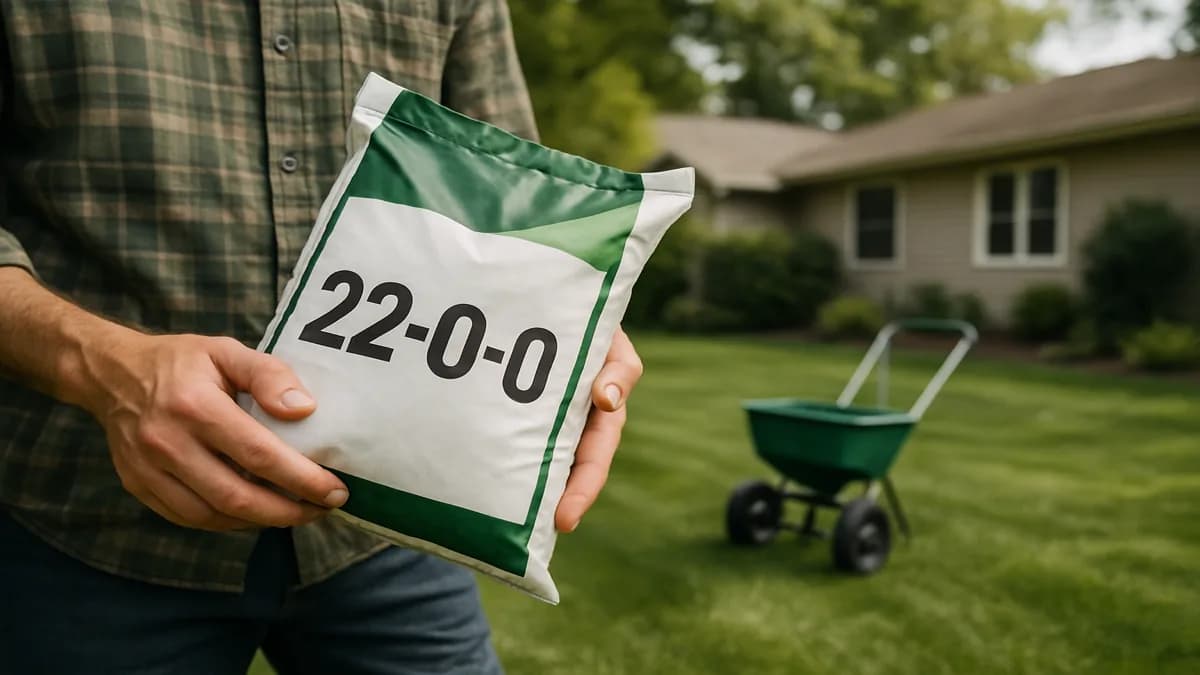
Wondering what those fertilizer numbers mean? Here’s how to read NPK ratios, why phosphorus is often zero, and how to figure out the right amount for your grass.
On this page
- What Do Fertilizer Numbers Mean? (NPK Explained)
- What Does 10-10-10 Mean? And Other Common NPK Ratios
- Why Is Phosphorus Often Zero in Lawn Fertilizer?
- How to Read a Fertilizer Bag: Real Example
- Fertilizer Math: How Much Should You Apply?
- How Much Nitrogen Does Your Grass Type Need?
- Skip-It Scenario: When You Don’t Need Fertilizer
- Common Mistake: Using the Wrong Fertilizer or Too Much
- Why Cheaper Fertilizer Isn’t Always Cheaper
- How to Apply Fertilizer Safely and Effectively
- What Else Is on the Fertilizer Label?
- When to Apply Fertilizer (Timing Table)
- Worked Example: Calculating How Much to Apply
- Related Reading
- Bottom Line
You’re staring at the fertilizer aisle, bag after bag with numbers like 24-0-4, 10-10-10, or 22-0-0. You just want to feed your grass,so which one do you buy? Here’s the short answer: those numbers tell you exactly how much of each major nutrient you’re putting down. Get the numbers wrong, and you waste money or risk burning your lawn. Get them right, and you’ll see greener, thicker grass.
What Do Fertilizer Numbers Mean? (NPK Explained) (opens in a new tab)
Every fertilizer bag has three numbers, always in the same order: nitrogen (N), phosphorus (P), potassium (K). They’re shorthand for the percentage by weight of each nutrient. For example, a 24-0-4 bag is 24% nitrogen, 0% phosphorus (as phosphate), and 4% potassium (as potash).
Here’s what each does for your lawn:
- Nitrogen (N): Drives green growth, blade density, and recovery from wear. Most lawns need more nitrogen than anything else.
- Phosphorus (P): Supports root growth and seedling development. Most established lawns don’t need extra phosphorus unless a soil test says so.
- Potassium (K): Helps grass handle heat, drought, and disease. It’s especially important in sandy soils or high-stress lawns.
What Does 10-10-10 Mean? And Other Common NPK Ratios (opens in a new tab)
Balanced fertilizers like 10-10-10 (10% N, 10% P, 10% K) are everywhere, but they’re not ideal for lawns. Most turfgrasses want a higher first number (nitrogen) and little or no phosphorus unless you’re starting new seed or sod.
| Fertilizer | N-P-K | Typical Use | Notes |
|---|---|---|---|
| 24-0-4 | 24-0-4 | Standard lawn feed | No phosphorus; safe for most lawns |
| 22-0-0 | 22-0-0 | Nitrogen boost | Fast-acting, common in spring |
| 46-0-0 | 46-0-0 | Urea | Very concentrated; easy to overapply |
| 10-10-10 | 10-10-10 | Garden beds, shrubs | Too much phosphorus for most lawns |
| 18-24-12 | 18-24-12 | Starter fertilizer | For new seed or sod only |
| 0-0-60 | 0-0-60 | Potassium only | Use only if soil test shows K deficiency |
| 5-3-3 | 5-3-3 | Organic | Slow release, improves soil |
Why Is Phosphorus Often Zero in Lawn Fertilizer? (opens in a new tab)
On most established lawns, phosphorus is left out for two reasons:
- Runoff risk: Phosphorus can wash into streams and lakes, causing algae blooms. Many states restrict or ban phosphorus on lawns unless you’re seeding, sodding, or a soil test shows a deficiency.
- Grass usually has enough: Most soils already have enough phosphorus for mature turf. Adding more does nothing for green growth.
If you’re starting a new lawn from seed or sod, you might need a starter fertilizer with phosphorus. Otherwise, skip it unless your soil test says you’re low.
How to Read a Fertilizer Bag: Real Example (opens in a new tab)
Let’s say you grab a 40 lb bag of 24-0-4. Here’s what’s inside:
| Nutrient | Percentage | Pounds in 40 lb bag |
|---|---|---|
| Nitrogen | 24% | 9.6 lb |
| Phosphate | 0% | 0 lb |
| Potash | 4% | 1.6 lb |
| Filler/Other | 72% | 28.8 lb |
The rest is just carrier material to help spread the nutrients evenly and prevent burning.
Fertilizer Math: How Much Should You Apply? (opens in a new tab)
This is where people mess up. The numbers on the bag are percentages, but recommendations are always in pounds of actual nitrogen per 1,000 square feet. Here’s the formula:
Pounds of fertilizer needed = Pounds of nitrogen desired ÷ (N% ÷ 100)
Let’s work through a real example:
- You want to apply 1 lb of nitrogen per 1,000 sq ft using 24-0-4.
- 1 ÷ 0.24 = 4.2 lb of product per 1,000 sq ft
- For a 5,000 sq ft lawn: 4.2 × 5 = 21 lb total
How Much Nitrogen Does Your Grass Type Need? (opens in a new tab)
Not all lawns are hungry. Here’s a quick look at annual nitrogen needs for common grasses (per 1,000 sq ft):
| Grass Type | Annual Nitrogen (lb) | Notes |
|---|---|---|
| Centipedegrass | 0.5-2 | Too much N causes problems |
| Buffalograss | 0.5-2 | Low fertility, drought-tolerant |
| Fine fescue | 1-2 | Shade lawns, less N needed |
| Bahiagrass | 1-3 | Tolerates poor soils |
| Tall fescue | 2-4 | Overseed for best results |
| Kentucky bluegrass | 2-4 | Needs more N for color |
| Zoysiagrass | 2-4 | Don’t overdo it |
| St. Augustinegrass | 2-5 | Split into 2-5 feedings |
| Bermudagrass | 3-6 | High-maintenance, fast growth |
Don’t apply more than 1 lb of nitrogen per 1,000 sq ft at once. For quick-release products, keep it to 0.5 lb per application.
Skip-It Scenario: When You Don’t Need Fertilizer (opens in a new tab)
If your lawn is thin, yellow, or patchy, fertilizer might help,but if you’ve never done a soil test, you’re guessing. Sometimes the problem is compacted soil, shade, or poor watering, not a lack of nutrients. If you just moved in and don’t know the lawn’s history, skip the fertilizer and get a soil test first. It’ll save you money and hassle.
Common Mistake: Using the Wrong Fertilizer or Too Much (opens in a new tab)
What usually happens is someone grabs a generic 10-10-10 or pours on a high-nitrogen bag, thinking more is better. The result? Burned spots, surge growth, or wasted money. Always match your fertilizer to your grass type and local rules. And calibrate your spreader,guessing leads to over-application.
Why Cheaper Fertilizer Isn’t Always Cheaper (opens in a new tab)
Don’t shop by bag price. Shop by how much actual nitrogen you’re getting. Here’s a real-world comparison:
| Product | Bag Size | Price | Actual N in Bag | Cost per lb N |
|---|---|---|---|---|
| 10-10-10 | 40 lb | $18 | 4 lb | $4.50 |
| 24-0-4 | 40 lb | $28 | 9.6 lb | $2.92 |
That “cheaper” bag can cost you more in the long run.
How to Apply Fertilizer Safely and Effectively (opens in a new tab)
- Calibrate your spreader: Every brand is different. Check the label, and test on a small area if you’re unsure.
- Sweep up spills: Fertilizer on hard surfaces will wash into storm drains and pollute waterways.
- Water it in: Most granular fertilizers need to be watered after application unless the bag says otherwise.
- Check local rules: Many states and cities restrict phosphorus. Some ban fertilizer use during certain months. Always check before buying.
What Else Is on the Fertilizer Label? (opens in a new tab)
- Guaranteed Analysis: Lists all nutrients, including secondary ones like sulfur, calcium, and micronutrients like iron.
- Slow-Release Percentage: Look for “water-insoluble nitrogen” or “coated urea” for longer feeding and less burn risk. Slow-release feeds for 6-12 weeks.
When to Apply Fertilizer (Timing Table) (opens in a new tab)
| Grass Type | Best Time(s) to Fertilize |
|---|---|
| Cool-season (fescue, bluegrass, rye) | Early spring, late spring, early fall, late fall |
| Warm-season (Bermuda, zoysia, St. Augustine) | Late spring, early summer, late summer |
For more on timing and overseeding, see How Often to Overseed Lawn and How to Care for New Sod.
Worked Example: Calculating How Much to Apply (opens in a new tab)
Let’s say you have a 6,000 sq ft lawn and a 32-0-4 fertilizer. You want to apply 1 lb of nitrogen per 1,000 sq ft.
- 1 ÷ 0.32 = 3.125 lb per 1,000 sq ft
- 3.125 × 6 = 18.75 lb total
So, you’ll need about 19 lb of fertilizer for your whole lawn.
Related Reading (opens in a new tab)
- 9 FAQs About Applying Starter Fertilizer to Your Lawn
- Guide: Topdressing Lawn Grass
- Corn Gluten Meal: Natural Weed and Feed
- Best Ways to Clean Up Leaves in Your Yard
Bottom Line (opens in a new tab)
If you remember nothing else: match the numbers on the bag to what your grass actually needs, measure your lawn, and don’t guess on rates. When in doubt, start with less,you can always feed again, but you can’t un-burn a lawn.
Frequently asked questions
Calculators for this job
Fertilizer Calculator
Turf guidance is written in pounds of nitrogen per 1,000 sq ft, but fertilizer is sold as a percentage analysis. This converts between them for any bag you have, enter the three numbers on the front.
OpenLawn Area Calculator
Almost every other lawn number depends on this one. Break your yard into simple shapes, subtract the parts that aren't grass, and get a square footage you can use for seed, fertilizer, and quotes.
OpenCompost Calculator
Compost gets applied far thinner than mulch or soil, and the right depth depends entirely on the job. Enter your area and pick the application to get volume, bags, and cost.
OpenKeep reading
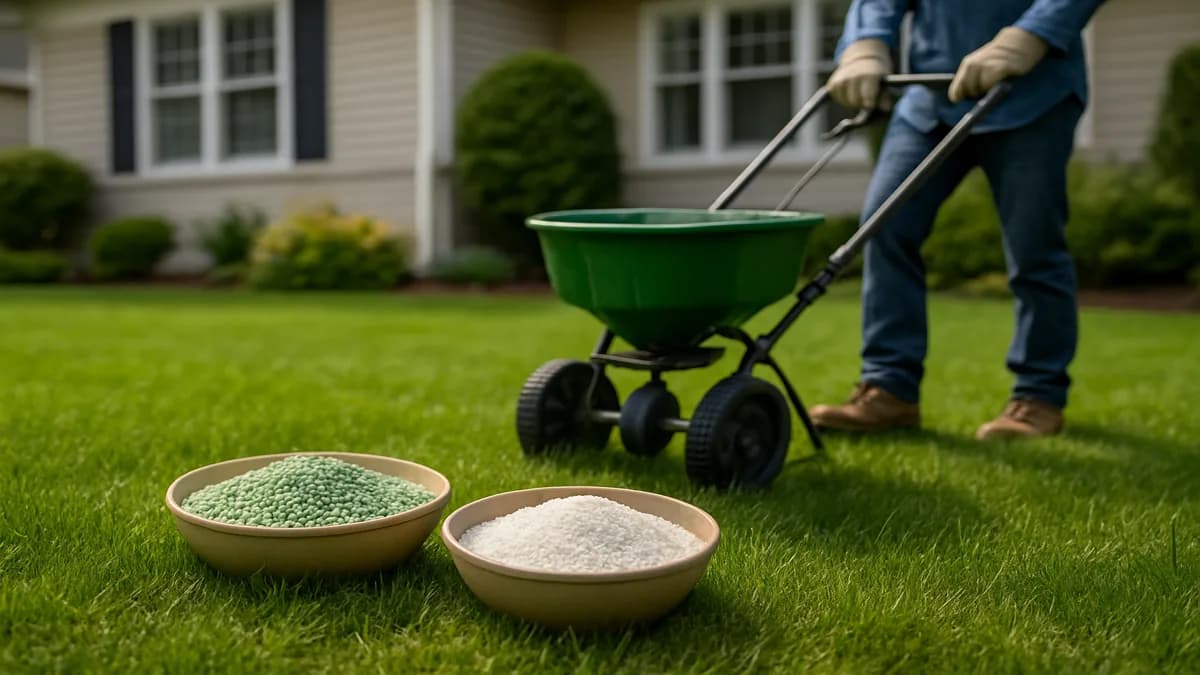
Slow Release vs Quick Release Fertilizer: What Actually Matters for Your Lawn
Slow release fertilizer feeds your lawn for weeks with less risk. Quick release acts fast but can burn and fades quickly. Here’s how to choose and apply the right one.
7 min read
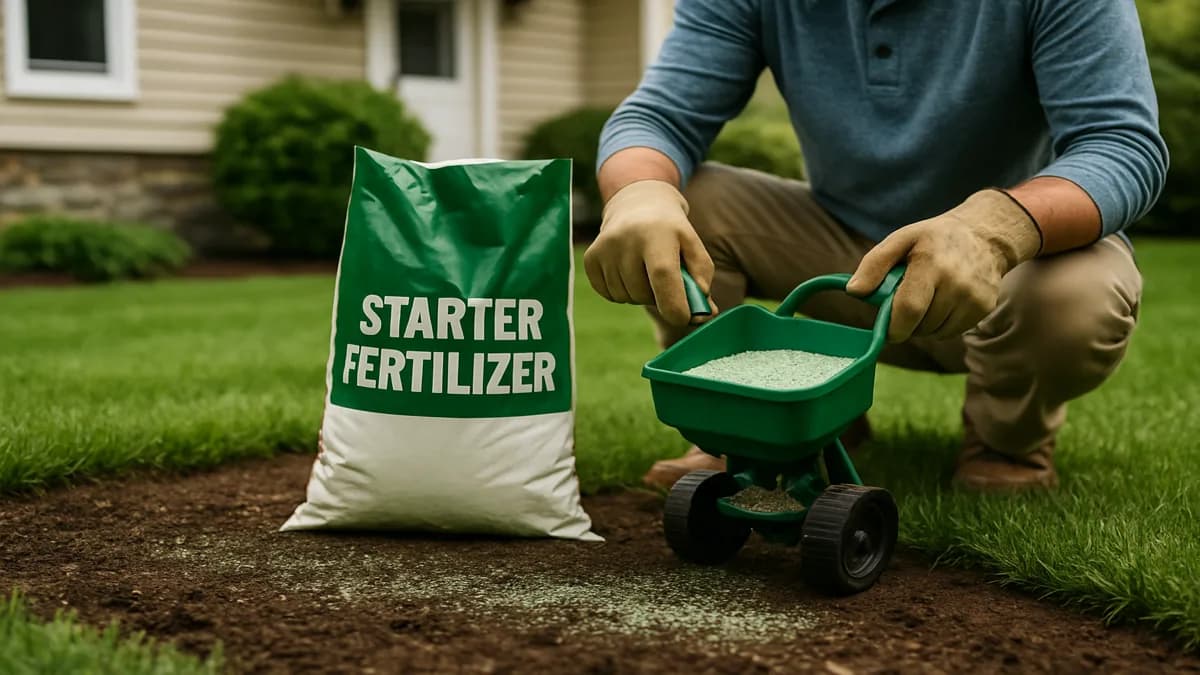
Starter Fertilizer for New Grass: What Most Homeowners Get Wrong
Starter fertilizer can jumpstart new grass, but using it wrong wastes money or breaks the law. Here’s what to know before you spread.
6 min read
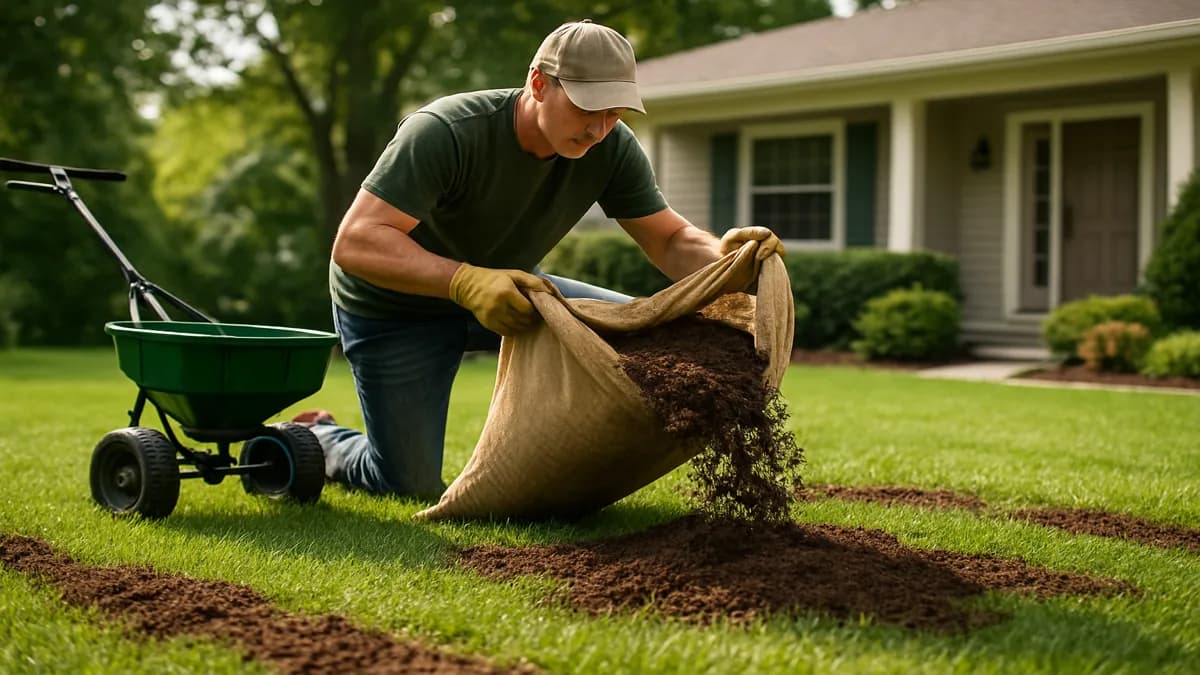
Topdressing Your Lawn: Real Advice for Healthier, Smoother Grass
Topdressing means spreading a thin layer of compost or soil over your lawn to fix bumps, improve soil, and help grass grow. The trick is never to bury the grass.
6 min read
Spotted something out of date or wrong? Tell us , we correct guides rather than leaving them to rot.