Liquid Aeration vs Core Aeration: Straight Answers for Real Lawns
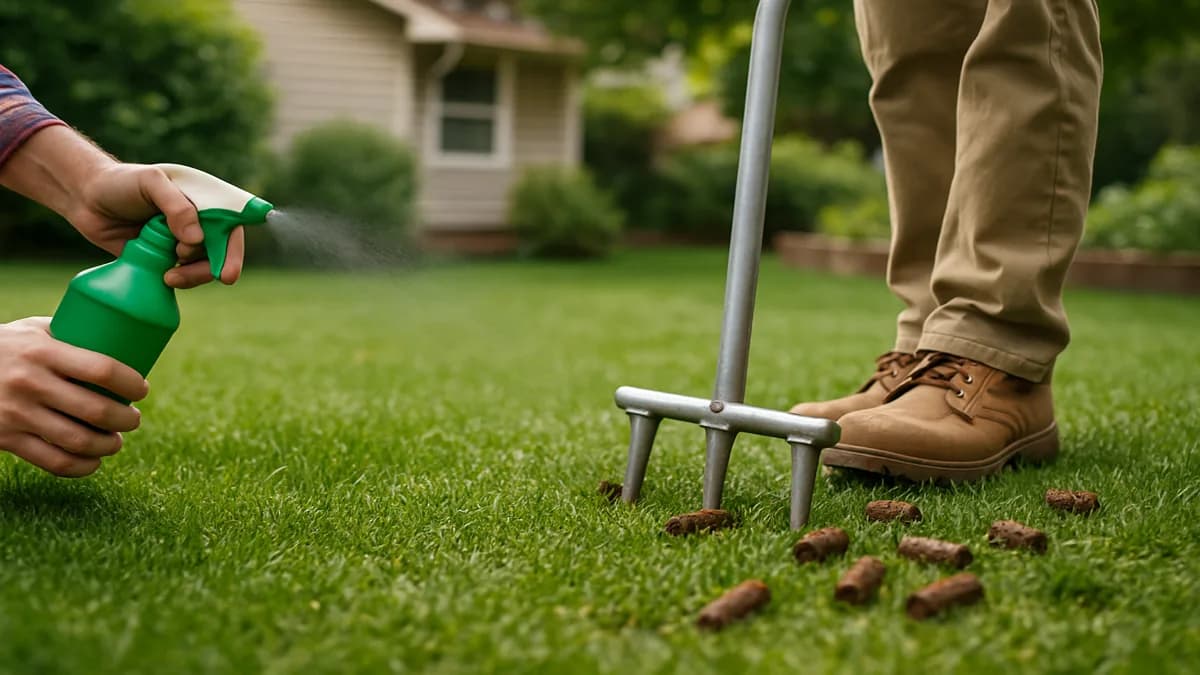
Liquid aeration and core aeration aren’t the same. Here’s what each does, where they work, and how to tell which will actually help your lawn.
On this page
- What Does Core Aeration Do?
- What Does Liquid Aeration Do?
- Side-by-Side: Core vs Liquid Aeration
- How to Tell If Your Lawn Needs Aeration
- The Screwdriver Test
- The Thatch Check
- How Often Should You Aerate?
- When to Aerate (Timing by Grass Type)
- How to Get the Most Out of Core Aeration
- Worked Example: Aerating and Topdressing a 5,000 sq ft Lawn
- Where Liquid Aeration Makes Sense (and Where It Doesn’t)
- Skip It If:
- Where People Mess Up
- Combining Both Methods
- Quick Comparison: When to Use Each
- Related Reading
You’re staring at a patchy, stubborn lawn. Maybe the soil feels hard, water runs off, or grass just won’t fill in. You’ve heard about liquid aeration and core aeration, but which one actually works,and which is just hype? Here’s what you need to know before you spend a dime or break a sweat.
On most lawns, core aeration is the only method that truly relieves compaction. Liquid aeration can help water soak in and may improve soil structure over time, but it won’t fix dense or trampled soil overnight. If you’re hoping for instant results on hard-packed ground, don’t waste your money on a bottle.
What Does Core Aeration Do? (opens in a new tab)
A core aerator uses hollow tines to pull out plugs of soil, usually half an inch wide and 2-3 inches deep. You’ll see thousands of little holes and messy plugs left on top. Here’s what you get:
- Immediate relief from compaction. Those holes let roots breathe and expand. If your soil is hard as concrete, this is what you need.
- Better water and fertilizer absorption. Water and nutrients get down to the root zone instead of running off.
- Breaks up thatch. The soil plugs introduce microbes that help decompose thatch, especially if you topdress afterward.
- Perfect for overseeding. New seed falls into the holes, making better contact with soil and improving germination.
What Does Liquid Aeration Do? (opens in a new tab)
Liquid aeration is a catch-all term for products you spray on your lawn. Most are made of:
- Surfactants: These help water soak into the soil instead of beading up and running off.
- Humic or fulvic acids: Organic materials that can encourage soil microbes and may help loosen soil over time.
- Sometimes enzymes or beneficial bacteria.
What usually happens is this: If your soil is just a little crusty or you have dry spots, liquid aeration can help water move in. But if you’re dealing with heavy clay, foot traffic, or years of compaction, it’s not a magic fix. You won’t see holes, and you won’t see instant results.
Side-by-Side: Core vs Liquid Aeration (opens in a new tab)
| Feature | Core Aeration | Liquid Aeration |
|---|---|---|
| How it works | Removes soil plugs | Sprayed to improve infiltration |
| Compaction relief | Immediate, physical | Minimal, gradual (if any) |
| Overseeding benefit | Excellent | None |
| Visible change | Plugs/holes for 1-2 weeks | No visible change |
| Equipment needed | Machine rental/service | Hose-end or backpack sprayer |
| Cost (per 5,000 sq ft) | $95-$180 (service), $40-$80 (DIY) | $50-$100 (service), $20-$40 (DIY) |
| Where it works | Most lawns, except steep slopes or lots of obstacles | Anywhere you can spray |
| Best for | Compacted, clay, high-traffic lawns, overseeding | Improving water penetration, dry/hydrophobic soils |
How to Tell If Your Lawn Needs Aeration (opens in a new tab)
Not every lawn needs aeration every year. Here’s how to check:
The Screwdriver Test (opens in a new tab)
Water your lawn well, then try to push a long screwdriver into the soil. If it slides in 6 inches (15 cm) with little effort, you’re probably fine. If you hit resistance at 2 inches (5 cm) or less, your soil is compacted.
The Thatch Check (opens in a new tab)
Cut out a small wedge of turf about 3 inches (8 cm) deep. Look for a brown, spongy layer between the green grass and the soil. Less than half an inch (1.3 cm) is normal. More than that, and water and nutrients can’t reach the roots,core aeration and topdressing will help.
How Often Should You Aerate? (opens in a new tab)
| Lawn Type | Aeration Frequency |
|---|---|
| Heavy clay | Every year |
| High-traffic (kids, pets, cars) | Every year |
| New construction (disturbed soil) | Every year for 2-3 years |
| Average loam, normal use | Every 2-3 years |
| Sandy, low-traffic | Rarely, if ever |
When to Aerate (Timing by Grass Type) (opens in a new tab)
- Cool-season grasses (fescue, bluegrass, rye): Early fall is best. Spring is possible, but you risk bringing up weed seeds.
- Warm-season grasses (Bermuda, zoysia, St. Augustine): Late spring to early summer, once the grass is fully greened up.
Never aerate dormant or heat-stressed grass. Soil should be moist, not soggy.
How to Get the Most Out of Core Aeration (opens in a new tab)
Water the lawn a day or two before
Moist soil lets the aerator pull deep, clean plugs. If the soil is dry, you’ll barely scratch the surface.Mark sprinkler heads and shallow utilities
Use flags or paint to avoid breaking anything expensive.Make two passes at right angles
This gives you more holes per square foot, which is what compacted lawns really need.Overseed right after aeration
The holes are perfect for seed-to-soil contact. Don’t wait,holes close up fast.Topdress with compost or fine soil
A quarter-inch (0.6 cm) layer brushed into holes improves soil structure and feeds microbes.Leave the plugs
They’ll break down in a week or two, adding nutrients back to your lawn.
Worked Example: Aerating and Topdressing a 5,000 sq ft Lawn (opens in a new tab)
Let’s say you have a 5,000 sq ft lawn with compacted clay. You rent a core aerator for $60. You also want to topdress with 1/4 inch of compost:
- 5,000 sq ft × 0.021 ft (1/4 inch) ≈ 105 cubic feet, or about 3.9 cubic yards.
- Bulk compost runs $35-$50 per cubic yard, so budget $140-$200 for material.
- Total DIY cost: $200-$260 for a full aeration and topdressing job. A pro service will run $250-$400 for the same area.
Where Liquid Aeration Makes Sense (and Where It Doesn’t) (opens in a new tab)
Skip It If: (opens in a new tab)
If your soil is compacted from years of foot traffic, heavy clay, or construction, liquid aeration won’t cut it. You’ll just be watering the top inch. Save your money for a real core aeration.
Where People Mess Up (opens in a new tab)
A lot of folks think liquid aeration will fix everything in one pass. It won’t. It’s a slow helper, not a substitute for actual holes. If you use it, think of it as a supplement,not a replacement.
Combining Both Methods (opens in a new tab)
Some homeowners core aerate every year or two, then use liquid aeration in between to help water soak in, especially during dry spells. That’s fine, but don’t expect miracles from the liquid stuff alone.
Quick Comparison: When to Use Each (opens in a new tab)
| Situation | Core Aeration | Liquid Aeration |
|---|---|---|
| Compacted clay soil | ✓ | |
| High-traffic areas | ✓ | |
| Dry/hydrophobic patches | ✓ | |
| Steep slopes or lots of obstacles | ✓ | |
| Overseeding | ✓ | |
| Routine maintenance (no compaction) | ✓ |
Related Reading (opens in a new tab)
Frequently asked questions
Calculators for this job
Compost Calculator
Compost gets applied far thinner than mulch or soil, and the right depth depends entirely on the job. Enter your area and pick the application to get volume, bags, and cost.
OpenLawn Area Calculator
Almost every other lawn number depends on this one. Break your yard into simple shapes, subtract the parts that aren't grass, and get a square footage you can use for seed, fertilizer, and quotes.
OpenLawn Care Cost Calculator
Build a service plan and see what it costs per visit, per month, and per year. Mowing usually accounts for most of the total, and lawn size matters less than people expect.
OpenKeep reading
Topdressing Your Lawn: Real Advice for Healthier, Smoother Grass
Topdressing means spreading a thin layer of compost or soil over your lawn to fix bumps, improve soil, and help grass grow. The trick is never to bury the grass.
6 min read
How Often Should You Overseed a Lawn?
Overseeding isn’t a yearly chore for everyone. Here’s how to decide if, when, and how much to overseed,plus the steps that actually matter.
7 min read
Starter Fertilizer for New Grass: What Most Homeowners Get Wrong
Starter fertilizer can jumpstart new grass, but using it wrong wastes money or breaks the law. Here’s what to know before you spread.
6 min read
Spotted something out of date or wrong? Tell us , we correct guides rather than leaving them to rot.