Fixing Mole Tunnels, Mounds, and Bare Spots in Your Lawn
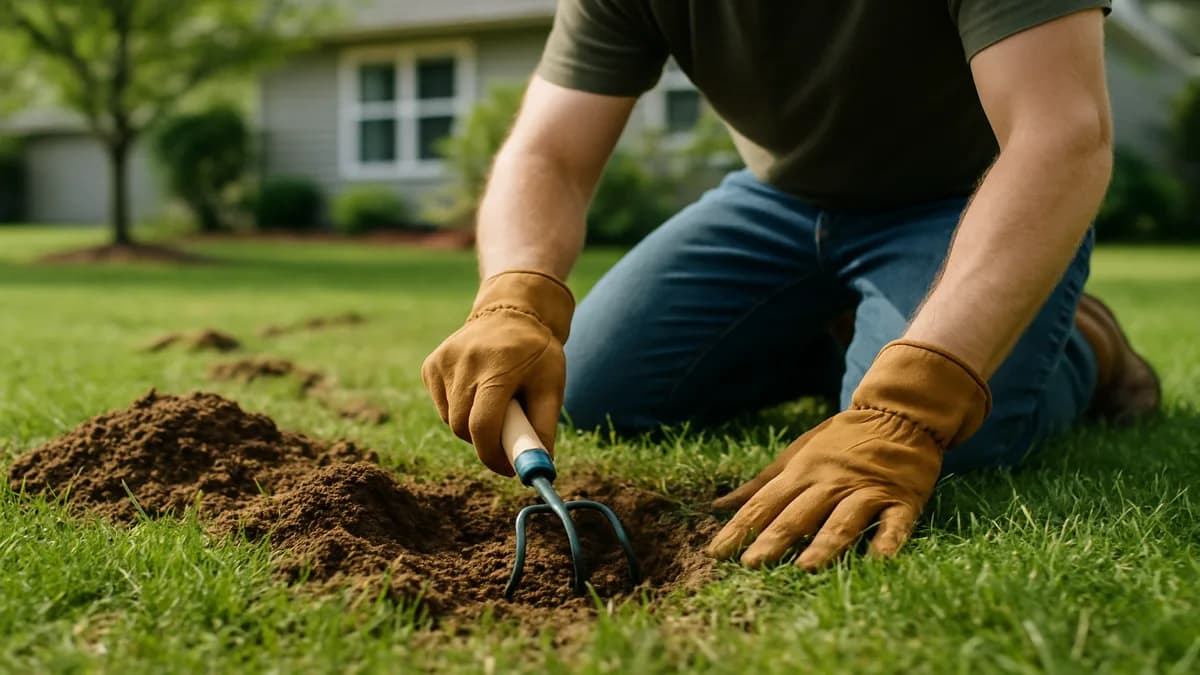
Mole tunnels and mounds are ugly, but you can fix them. Learn how to level, reseed, and prevent future damage,without making it worse.
On this page
- What Mole Damage Looks Like (and What It Isn’t)
- Step-by-Step: How to Repair Mole Damage
- Worked Example: Leveling and Reseeding After Moles
- When to Repair: Timing by Grass Type
- Leveling a Bumpy Lawn After Moles
- Skip-It Scenario: When You Can Ignore Minor Mole Damage
- Where People Mess Up: Common Mistakes
- Treatment Options: Getting Rid of Moles
- Preventing Future Mole Problems
- Measuring and Planning Repairs
- Related Resources
If you’re staring at a lawn full of raised tunnels, fresh mounds, and ugly bare spots, you’re probably wondering: Can I fix this myself, or is it a lost cause? Good news,most mole damage looks worse than it is. With the right steps, you can get your yard back to normal without spending a fortune or tearing up the whole lawn.
What Mole Damage Looks Like (and What It Isn’t) (opens in a new tab)
Moles are after earthworms and insects, not your grass. Their tunneling leaves three main problems:
- Raised tunnels (surface ridges): These run just under the sod. The grass above is usually alive but roots are disturbed.
- Mole mounds (volcanoes): Piles of loose soil, usually 6-12 inches (15-30 cm) across. Grass underneath is buried and will die if not uncovered.
- Soft spots or sunken areas: Where deeper tunnels collapse, the surface may feel spongy or sink underfoot.
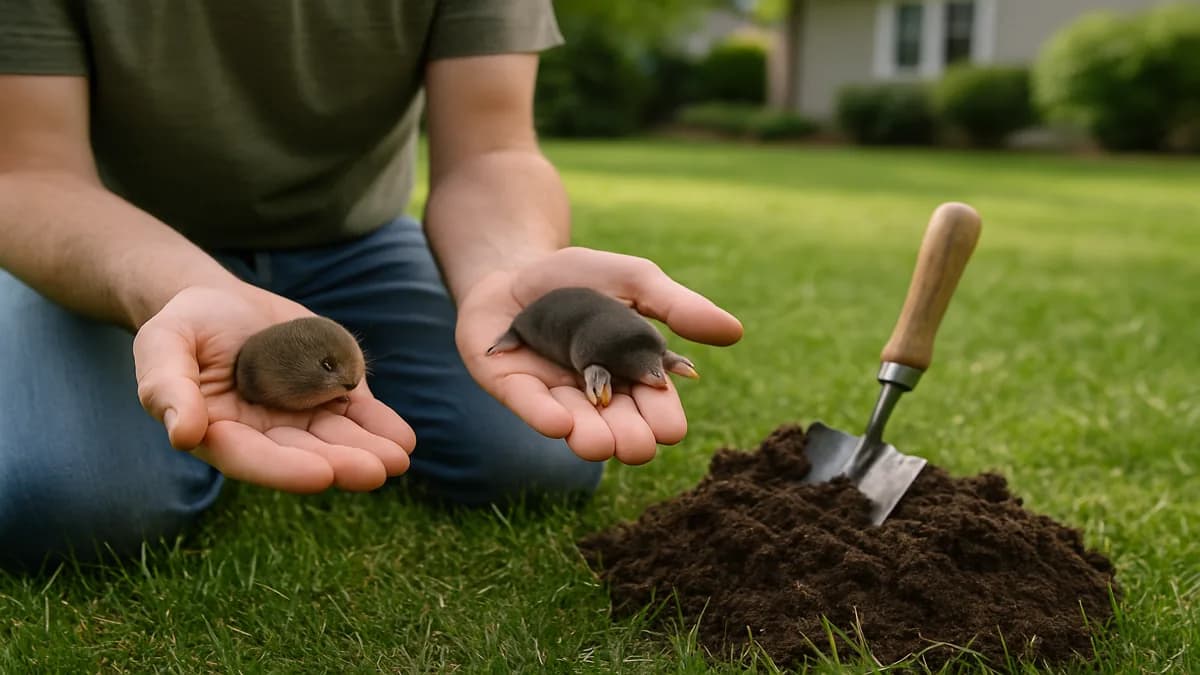
But not every tunnel is a mole. Voles, pocket gophers, and even ground squirrels can make a mess too. Here’s how to tell them apart:
| Pest | Tunnels/Ridges | Mounds | Plant Damage | Soil Type Preference |
|---|---|---|---|---|
| Mole | Yes | Volcano, round | Rare (roots disturbed) | Moist, loose |
| Vole | No (surface runways) | No | Yes (roots, bark, bulbs) | Any |
| Gopher | No | Fan-shaped, plugged | Yes (roots, plants pulled down) | Clay, loam |
If you see chewed bark, missing bulbs, or plants dying, check out Voles vs. Moles: How to Tell the Difference.
Step-by-Step: How to Repair Mole Damage (opens in a new tab)
Make sure the mole is gone
Flatten a section of tunnel and check after 24 hours. If it pops back up, the mole is still active. Trap or remove it before you start repairs.
Spread out mole mounds
Use a rake to thinly spread the mound soil over nearby grass, or collect it to fill low spots. Don’t leave mounds in place,they’ll smother the turf underneath.
Wait for the right soil moisture
Repair when soil is moist but not soggy. A day after rain or watering is best. Dry soil crumbles, saturated soil compacts poorly.
Flatten tunnels and ridges
Walk along the tunnels with your full weight, or use a lawn roller. The goal is to press roots back into contact with the soil, not to crush the lawn.
Water the area well
After flattening, water deeply to help roots re-establish. This speeds recovery.
Fill low spots
After a week or two, fill any depressions with topsoil or compost,no more than ½ inch (1.25 cm) at a time, so grass blades still poke through.
Reseed bare patches
Where mounds sat or turf was torn, lightly rake the soil and overseed. Keep the area moist until new grass fills in.
Worked Example: Leveling and Reseeding After Moles (opens in a new tab)
Say you have 200 square feet of tunnels and mounds to fix. Here’s what you’ll need:
- Topsoil: To fill low spots, ½ inch deep over 200 sq ft = about 0.3 cubic yards (8 bags at 40 lbs each)
- Grass seed: For overseeding, cool-season lawns use 3-5 lbs per 1,000 sq ft. For 200 sq ft, you’ll need about 1 lb.
- Cost: Topsoil ($20-$40), seed ($5-$10), plus a little starter fertilizer if you want.
When to Repair: Timing by Grass Type (opens in a new tab)
- Cool-season lawns (fescue, bluegrass, rye): Early fall is best for reseeding and leveling. Spring is second-best.
- Warm-season lawns (bermuda, zoysia, St. Augustine): Late spring to early summer, once grass is actively growing.
- Winter or dormant lawns: Flatten tunnels as soon as soil is workable, but wait to reseed or topdress until growth resumes.
| Grass Type | Best Repair Time | Overseed Rate (per 1,000 sq ft) | Recovery Speed |
|---|---|---|---|
| Perennial ryegrass | Early fall, spring | 5-9 lbs | Fast (2-4 wks) |
| Tall fescue | Early fall, spring | 6-8 lbs | Moderate |
| Kentucky bluegrass | Early fall | 2-3 lbs | Slow (4-8 wks) |
| Zoysiagrass | Late spring/early summer | 1-2 lbs (plugs/sod better) | Slow |
For more on grass types, see Perennial Ryegrass or Zoysiagrass.
Leveling a Bumpy Lawn After Moles (opens in a new tab)
If your lawn is full of dips and humps, topdressing is your friend. Here’s how:
- Spread up to ½ inch of screened topsoil or compost over the area.
- Work it in with a rake so grass blades show through.
- Water well. Repeat every 4-6 weeks during the growing season until the lawn is level.
- Overseed thin spots as you go.
Trying to fix everything in one go with thick soil will kill your grass. Patience pays off.
For more detail, see Guide to Topdressing Lawn Grass.
Skip-It Scenario: When You Can Ignore Minor Mole Damage (opens in a new tab)
If you only have a few shallow tunnels and the grass is still green, you can sometimes skip repairs. Just flatten the ridges with your feet and water well. The grass will usually recover on its own in a few weeks. Don’t bother reseeding unless you see bare soil.
Where People Mess Up: Common Mistakes (opens in a new tab)
- Adding too much soil at once: Anything over ½ inch will smother grass. I’ve seen folks dump a whole bag on a mound and end up with a dead patch.
- Not removing the mole first: If you don’t get rid of the culprit, you’ll be stuck in a loop of repairs.
- Skipping watering: Pressed-down grass needs water to re-root. Dry soil slows recovery.
- Using the wrong seed: Match your seed to your existing lawn. Don’t overseed Kentucky bluegrass with rye unless you want a patchwork look.
Treatment Options: Getting Rid of Moles (opens in a new tab)
| Method | Pros | Cons | Cost | Lasting? |
|---|---|---|---|---|
| Trapping | Most effective, quick | Labor, learning curve | $20-$50 | Yes (if done right) |
| Castor oil repellent | Easy, safe | Temporary, needs reapplying | $10-$30 | No |
| Poison baits | Sometimes works | Risk to pets/wildlife, regulated | $10-$20 | Sometimes |
| Home remedies | Cheap | Rarely works, can harm soil | $0-$10 | No |
Preventing Future Mole Problems (opens in a new tab)
- Trapping: Still the gold standard. Scissor, harpoon, or choker-loop traps set on active tunnels work best.
- Repellents: Castor oil-based products sometimes help, but need frequent reapplication, especially after rain.
- Don’t bother with: Ultrasonic stakes, chewing gum, mothballs, broken glass, or human hair. These don’t work and can make things worse.
- Don’t treat for grubs unless you have a confirmed grub problem. Moles mostly eat earthworms, not grubs. Killing grubs won’t starve them out and may harm your soil.
Measuring and Planning Repairs (opens in a new tab)
Related Resources (opens in a new tab)
- How Often Should You Overseed Your Lawn?
- Guide to Topdressing Lawn Grass
- Best Shade Garden Plants
- Voles vs. Moles: How to Tell the Difference
- Perennial Ryegrass
- Zoysiagrass
If you’re still not sure what you’re dealing with, or your lawn is a total wreck, sometimes it’s worth calling a local pro. But for most yards, a little patience, the right timing, and a few bags of soil and seed will get you back to green in a month or two.
Frequently asked questions
Calculators for this job
Topsoil Calculator
Topsoil is heavy, roughly a ton per cubic yard, so knowing the weight matters as much as the volume. Enter your area and depth for yards, bags, and delivered tonnage.
OpenGrass Seed Calculator
Seeding rates differ by species by a factor of twenty, bermudagrass wants 1 lb per 1,000 sq ft, perennial ryegrass wants 8. Pick your grass and whether you're starting fresh or overseeding.
OpenLawn Area Calculator
Almost every other lawn number depends on this one. Break your yard into simple shapes, subtract the parts that aren't grass, and get a square footage you can use for seed, fertilizer, and quotes.
OpenKeep reading
Vole vs Mole: Spot the Difference and Stop the Damage
Moles and voles leave very different clues,and fixing the problem depends on knowing which is which. Here’s how to tell, what to do, and what to skip.
8 min read
How to Level a Bumpy Lawn: Topdress, Fill, or Regrade
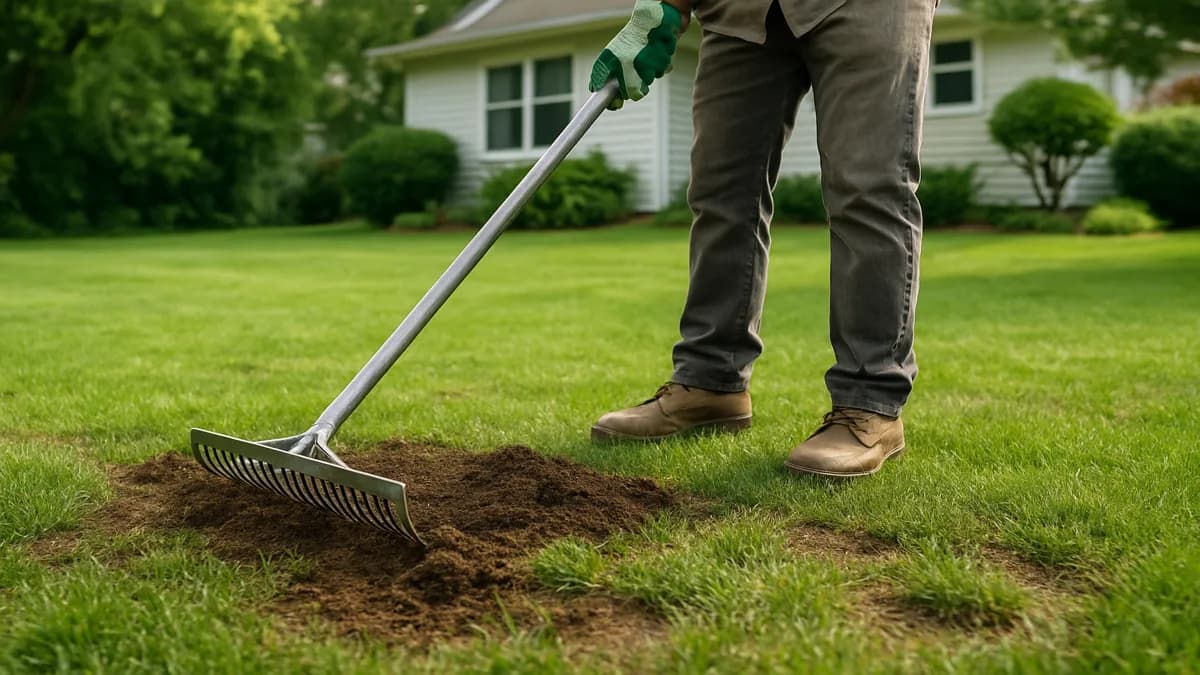
A bumpy lawn needs the right fix for the size and cause of the bumps. Small dips get topdressing. Bigger settled spots need turf lifted, filled, and reset.
8 min read
Topdressing Your Lawn: Real Advice for Healthier, Smoother Grass
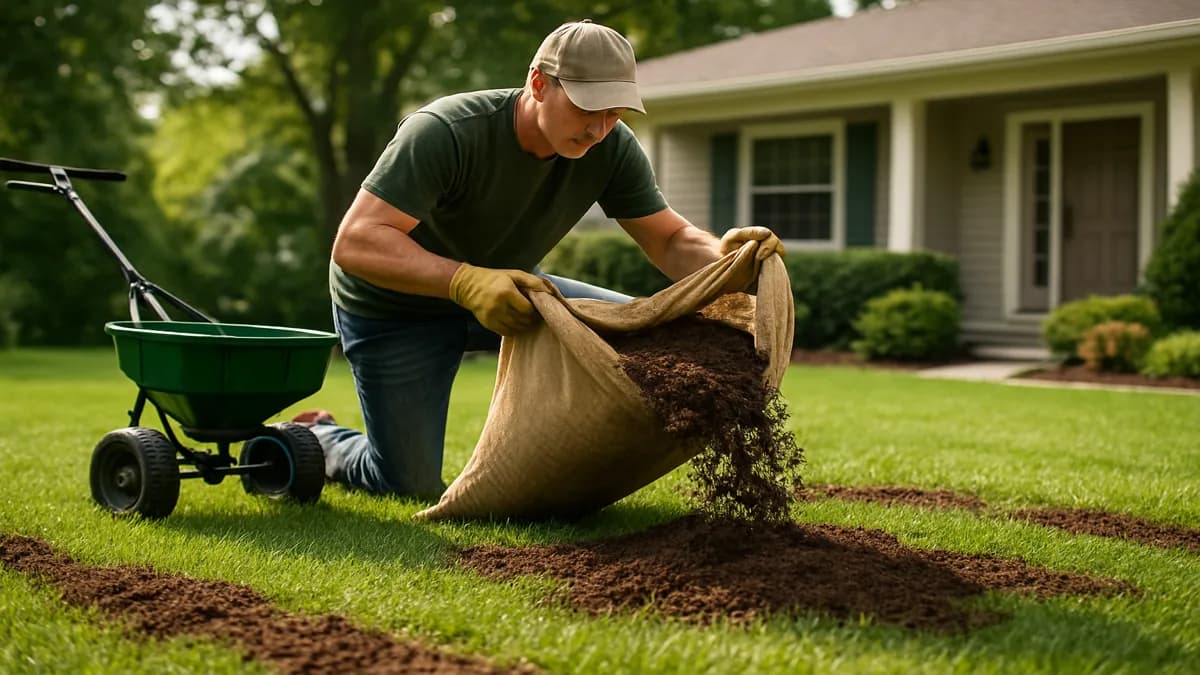
Topdressing means spreading a thin layer of compost or soil over your lawn to fix bumps, improve soil, and help grass grow. The trick is never to bury the grass.
6 min read
Spotted something out of date or wrong? Tell us , we correct guides rather than leaving them to rot.