How to Know If Your Grass Seed Is Still Worth Using
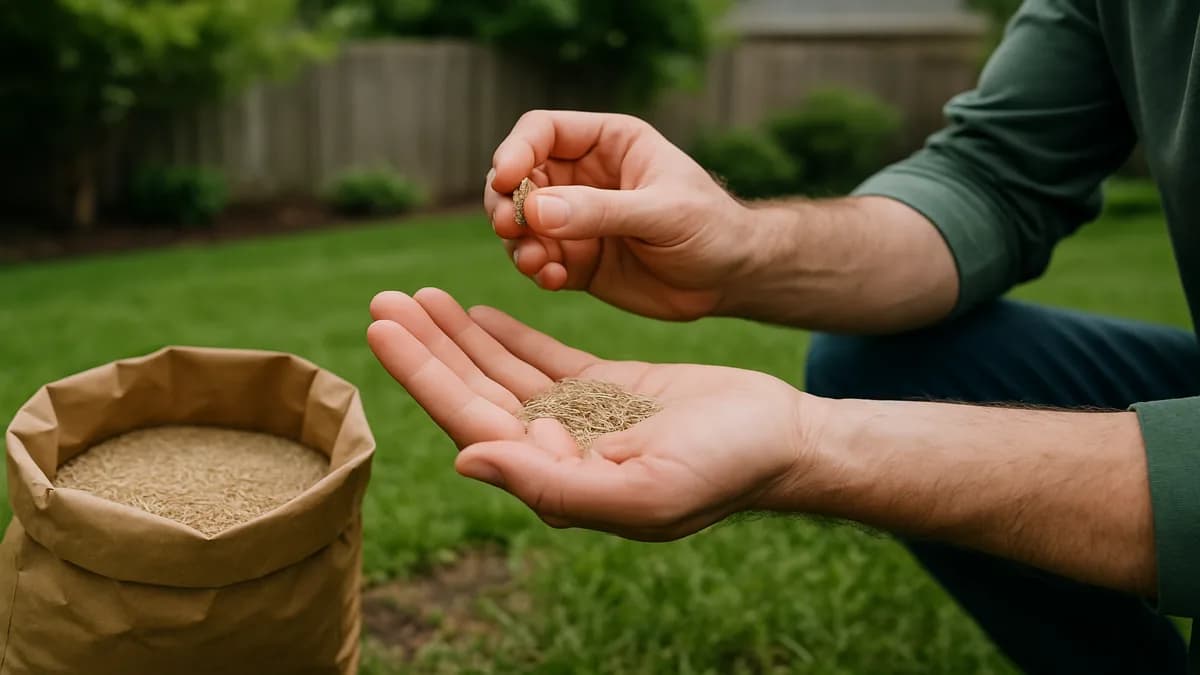
Grass seed loses its punch with time and poor storage. Here’s how to check if your old seed will still sprout, what the label really means, and when to just buy fresh.
On this page
- How Long Does Grass Seed Last?
- How to Read a Grass Seed Label (and What Matters)
- What Makes Grass Seed Go Bad?
- How to Test Grass Seed Germination at Home
- What Your Test Means
- How to Adjust Seeding Rate for Old Seed (With Real Math)
- How to Store Grass Seed So It Lasts
- Honest Skip-It Scenario
- Where People Mess Up With Old Grass Seed
- Worked Example: Calculating How Much Seed You Need
- Buying Grass Seed: Smarter Choices
- Signs Your Grass Seed Is Ruined
- Related Reading
You’ve got a half-full bag of grass seed sitting in the garage. It’s been there a year, maybe two. You’re wondering: can I still use this, or am I just feeding the birds? Here’s how to figure it out without wasting time or money.
Grass seed doesn’t “expire” like milk, but it definitely goes bad. The older it gets,and the worse it’s stored,the fewer seeds will sprout. Sometimes, you can save old seed by sowing extra. Sometimes, it’s not worth the hassle.
How Long Does Grass Seed Last? (opens in a new tab)
On most lawns, if you store grass seed in a sealed bag, in a cool, dry spot (think basement, not garage), you’ll get:
| Grass Type | Typical Shelf Life (years) | Notes on Storage |
|---|---|---|
| Tall Fescue | 3+ | Holds up well if kept dry |
| Perennial Ryegrass | 3+ | Reliable, but hates humidity |
| Kentucky Bluegrass | 2-3 | More sensitive to heat, dries out |
| Fine Fescue | 3 | Similar to tall fescue |
| Bermuda | 2-3 | Loses vigor quickly in heat |
| Zoysia | 2-3 | Store extra carefully |
| Bentgrass | 2 | Very sensitive, don’t risk old bags |
But if you left that bag in a hot shed or a damp garage, all bets are off. Mold, caking, or a musty smell? Toss it.
How to Read a Grass Seed Label (and What Matters) (opens in a new tab)
Every bag of grass seed sold in the US has a label with a bunch of numbers. Here’s what to look for:
- Test Date: Month/year the seed was last checked in a lab. Not an expiration date, but the older it is, the less likely you’ll get the listed germination. Try for seed tested within the last 12 months.
- Germination Percentage: How many seeds sprouted in the lab. 80-90% is normal for fresh lawn seed. Real-world rates are always lower.
Other lines that matter:
| Label Line | What It Means |
|---|---|
| Pure Seed (%) | Percent of bag that’s actual grass seed. Higher is better. |
| Inert Matter (%) | Chaff, coating, filler. Should be low,unless it’s coated seed. |
| Other Crop Seed | Should be near zero. You don’t want hay or grain in your lawn. |
| Weed Seed | Should say 0.00% or close. Avoid anything higher. |
| Noxious Weeds | Should say “none found.” If not, skip that bag. |
What Makes Grass Seed Go Bad? (opens in a new tab)
Three things kill grass seed faster than anything:
- Moisture: If the seed gets damp, it can sprout in the bag or rot. Even a humid garage can ruin it in a summer.
- Heat: High temps (above 90°F) speed up aging. Sheds and attics are the worst.
- Time: Even in perfect storage, seed loses vigor every year.
Some types,like ryegrass and tall fescue,hold up better than bluegrass or bentgrass. Coated seed is extra sensitive to humidity.
How to Test Grass Seed Germination at Home (opens in a new tab)
You don’t need fancy gear. Here’s what I tell folks at the shop:
Count out 20 seeds
Grab 20 seeds from the middle of your bag (not just the top). Each one is 5% for easy math.Dampen a paper towel
Lay the seeds on a damp (not soggy) paper towel. Fold it over them.Bag it up
Put the towel in a zip-top bag. Seal it, but leave a little air inside.Keep it warm
Set the bag somewhere warm (65-75°F), like on top of the fridge. Not in direct sun.Check daily
Peek in every day. If the towel dries out, mist it. Start checking for sprouts after 5 days (bluegrass can take 10-14 days).Count your sprouts
After 7-14 days, count how many seeds sprouted. Multiply by 5 for your percent germination.
What Your Test Means (opens in a new tab)
| Germination % | What To Do |
|---|---|
| 80-100% | Good as new. Use normal seeding rate. |
| 60-79% | Still usable. Bump up your seeding rate. |
| 40-59% | Only for rough spots; sow much heavier. |
| Below 40% | Don’t bother. Buy new seed. |
How to Adjust Seeding Rate for Old Seed (With Real Math) (opens in a new tab)
Let’s say your bag says 85% germination, but your test shows 60%. Here’s how to adjust:
- Divide old germination by new: 85 ÷ 60 ≈ 1.4
- Multiply your normal seeding rate by 1.4
Example:
- Normal overseed rate for tall fescue: 5 lbs per 1,000 sq ft
- With 60% viable seed: 5 × 1.4 = 7 lbs per 1,000 sq ft
If your seed is below 50% germination, you’re better off buying new. Doubling the rate just means you’re spreading twice as much filler and weed seed.
How to Store Grass Seed So It Lasts (opens in a new tab)
If you want your seed to last more than a season, do this:
Seal it tight
If the bag’s open, pour seed into a sealed plastic or metal container. Mice love grass seed.Keep it cool
Store in a basement, closet, or any spot that stays below 75°F year-round. Not in a garage or shed.Keep it dry
Humidity is the enemy. Avoid laundry rooms or anywhere damp.Keep it dark
Light degrades seed over time. Store in a dark place.Label it
Write the purchase date and germination percent on the container. You’ll forget by next year.
Don’t freeze grass seed. Home freezers cycle through defrost, which can cause condensation and ruin the seed.
Honest Skip-It Scenario (opens in a new tab)
If you find a bag of seed that’s been sitting open in a humid garage, or you see mold, clumps, or bugs,skip the test. It’s toast. Don’t waste your time or lawn.
Where People Mess Up With Old Grass Seed (opens in a new tab)
The most common mistake? Sowing old seed at the normal rate, then wondering why the lawn looks patchy. If you don’t test and adjust, you’ll get thin, weedy grass and have to start over.
Worked Example: Calculating How Much Seed You Need (opens in a new tab)
Let’s say you have 2,000 sq ft of lawn to overseed. Your seed tested at 70% germination (originally 90%). Normal overseed rate for perennial ryegrass is 5 lbs per 1,000 sq ft.
- Adjusted rate: 90 ÷ 70 ≈ 1.29
- 5 lbs × 1.29 ≈ 6.5 lbs per 1,000 sq ft
- For 2,000 sq ft: 6.5 × 2 = 13 lbs total
Buying Grass Seed: Smarter Choices (opens in a new tab)
- Only buy what you’ll use this season and maybe next. Extra seed is not a deal if it goes bad.
- Always check the test date and germination percent before buying. Don’t grab the dusty bag from the back of the shelf.
- Compare pure live seed, not just price per pound. Multiply pure seed % by germination % to see how much actual grass you’re getting.
- For new lawns or overseeding, see our guide on how often to overseed your lawn and starter fertilizer tips.
Signs Your Grass Seed Is Ruined (opens in a new tab)
Don’t even bother testing if you see:
- Mold or a strong musty smell
- Clumping, caking, or dampness
- Bugs or webbing in the bag
- Water stains or obvious tears in packaging
Just toss it. You’ll save yourself a headache.
Related Reading (opens in a new tab)
- How often should you overseed your lawn?
- Topdressing after seeding: does it help?
- DIY hydroseeding: is it worth it?
- Starter fertilizer: what to know before you spread
If you’re not sure, or your lawn is a mess, sometimes it’s cheaper and easier to start fresh with new seed. But if your old seed passes the test, go ahead and use it,just sow a little heavier and cross your fingers.
Frequently asked questions
Calculators for this job
Grass Seed Calculator
Seeding rates differ by species by a factor of twenty, bermudagrass wants 1 lb per 1,000 sq ft, perennial ryegrass wants 8. Pick your grass and whether you're starting fresh or overseeding.
OpenLawn Area Calculator
Almost every other lawn number depends on this one. Break your yard into simple shapes, subtract the parts that aren't grass, and get a square footage you can use for seed, fertilizer, and quotes.
OpenKeep reading
How Often Should You Overseed a Lawn?
Overseeding isn’t a yearly chore for everyone. Here’s how to decide if, when, and how much to overseed,plus the steps that actually matter.
7 min read
Starter Fertilizer for New Grass: What Most Homeowners Get Wrong
Starter fertilizer can jumpstart new grass, but using it wrong wastes money or breaks the law. Here’s what to know before you spread.
6 min read
Topdressing Your Lawn: Real Advice for Healthier, Smoother Grass
Topdressing means spreading a thin layer of compost or soil over your lawn to fix bumps, improve soil, and help grass grow. The trick is never to bury the grass.
6 min read
Spotted something out of date or wrong? Tell us , we correct guides rather than leaving them to rot.