Slow Release vs Quick Release Fertilizer: What Actually Matters for Your Lawn
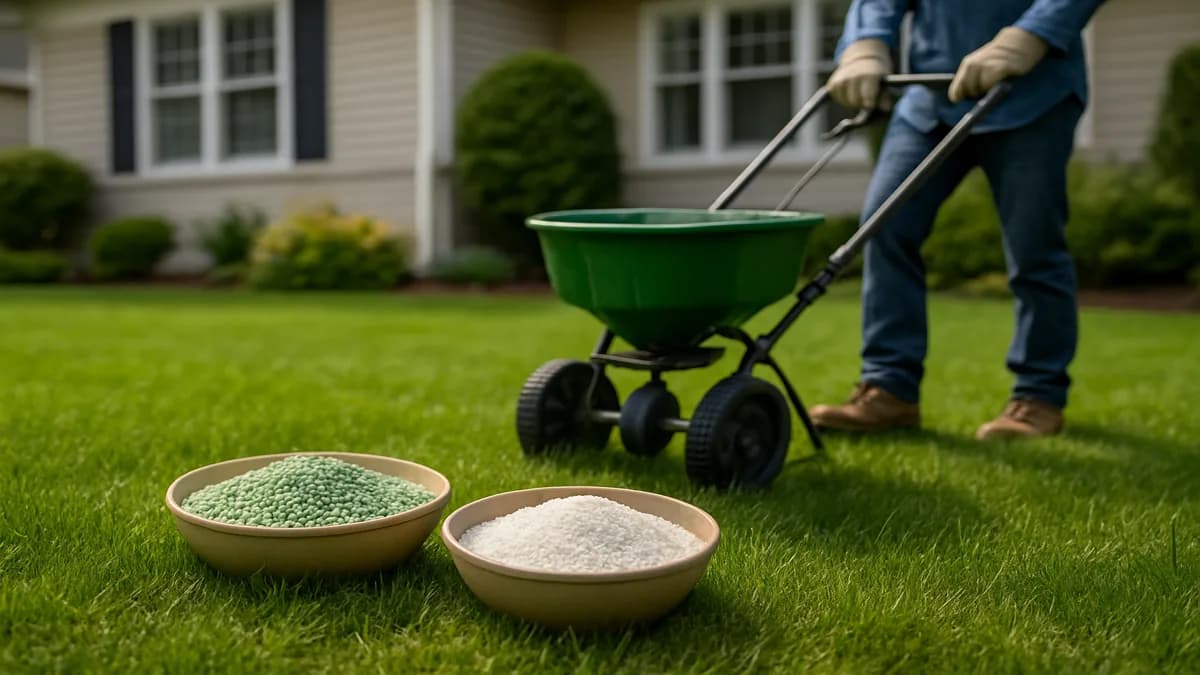
Slow release fertilizer feeds your lawn for weeks with less risk. Quick release acts fast but can burn and fades quickly. Here’s how to choose and apply the right one.
On this page
- What Is Slow Release Fertilizer?
- Quick Release vs Slow Release: How They Work
- How to Read Fertilizer Labels (and Not Get Fooled)
- When to Use Slow Release vs Quick Release Fertilizer
- Application Timing and Rates
- Worked Example: How Much to Apply
- Common Mistake: Overdoing Quick Release
- Honest Skip-It Scenario: Don’t Use Slow Release on New Seed or Sod
- Organic vs Synthetic Slow Release
- Phosphorus: Know Your Local Rules
- How to Apply Fertilizer Safely
- More Lawn Fertilizer Tips
- Bottom Line
If you’re staring at fertilizer bags and wondering, “Do I need slow release or quick release for my lawn?”,you’re not alone. Most folks want a green lawn that stays healthy without burning or wasting money. Here’s how to choose the right fertilizer, avoid the usual mistakes, and get the results you want.
On most lawns, slow release nitrogen fertilizer is the go-to for steady growth and fewer headaches. Quick release is tempting if you want fast green-up, but it’s easy to overdo and doesn’t last. Let’s break down what actually matters.
What Is Slow Release Fertilizer? (opens in a new tab)
Slow release fertilizer is any product that releases nitrogen gradually instead of dumping it all at once. You’ll see it labeled as “water-insoluble nitrogen,” “coated urea,” or sometimes just “slowly available nitrogen.”
There are two main types:
- Coated synthetics: Urea or ammonium compounds wrapped in a sulfur or polymer shell. Water seeps in, dissolves the nitrogen, and it leaks out over 6-12 weeks. Think of it like a time-release pill for your lawn.
- Organic sources: Things like feather meal, alfalfa, or composted manure. Microbes in the soil break these down, so release depends on temperature and moisture. Cooler soil = slower release.
Quick Release vs Slow Release: How They Work (opens in a new tab)
Quick release fertilizers (like urea, ammonium sulfate, ammonium nitrate) dissolve fast and are available to grass roots within days. You’ll see a green-up in 3-7 days, but it fades in 2-4 weeks. The downside? Easy to burn your lawn if you apply too much or don’t water it in. Also, a good rain can wash it away before your grass uses it.
Slow release fertilizers feed your lawn gradually. You’ll wait 2-3 weeks for full green-up, but the effect lasts 6-12 weeks. Less chance of burning, less wasted nitrogen, fewer applications.
| Feature | Quick Release | Slow Release |
|---|---|---|
| Green-up speed | 3-7 days | 2-3 weeks |
| Lasts | 2-4 weeks | 6-12 weeks |
| Burn risk | High (limit to 0.5 lb N/1,000 sq ft) | Low (1 lb N/1,000 sq ft routine) |
| Nutrient loss risk | High (leaching/runoff) | Low |
| Growth pattern | Surge, uneven | Steady, even |
| Cost per lb N | Lower | Higher |
| Works in cold soil | Yes | Only coated types |
How to Read Fertilizer Labels (and Not Get Fooled) (opens in a new tab)
Grab any fertilizer bag and look for the “guaranteed analysis” panel. Here’s what matters:
- Water-soluble nitrogen: This is quick release.
- Water-insoluble nitrogen (WIN): This is slow release.
- Coated urea, sulfur-coated, polymer-coated: All slow release.
If the bag doesn’t mention any of these, assume it’s quick release.
A good blend for most lawns is at least 30-50% slow release nitrogen. Less than that, and you’re basically using quick release.
When to Use Slow Release vs Quick Release Fertilizer (opens in a new tab)
Here’s where people mess up: They grab whatever’s on sale or promises “instant green.” That’s not always what your lawn needs. Use this table to pick the right one for your situation.
| Situation | Best Choice | Why? |
|---|---|---|
| Routine feeding (spring/fall) | Slow release | Steady growth, fewer apps, less risk |
| Fast green-up before a party | Quick release | Immediate results (but short-lived) |
| Early spring (cool soil) | Coated slow release or quick release | Organics won’t work in cold soil |
| Late fall (cool-season grass) | Slow release or quick release | Both can help with winter storage |
| After overseeding | Quick release | Seedlings need fast-available nitrogen |
| Hot, dry summer | Slow release (half rate) | Less burn risk, always water in |
| Fixing yellow spots | Quick release (spot treat) | Fast correction |
Application Timing and Rates (opens in a new tab)
- Slow release: 1 lb nitrogen per 1,000 sq ft per application. Space feedings 6-12 weeks apart.
- Quick release: Never more than 0.5 lb nitrogen per 1,000 sq ft at once. Lasts 2-4 weeks.
- Organic slow release: Lower N content, so you’ll need more product by weight. Release depends on soil warmth and microbes.
Worked Example: How Much to Apply (opens in a new tab)
Say you have a 4,000 sq ft lawn and a 28-0-3 fertilizer with 50% slow release nitrogen.
- You want 1 lb N per 1,000 sq ft: 4 × 1 = 4 lbs N needed.
- Fertilizer is 28% N: 4 lbs ÷ 0.28 = 14.3 lbs fertilizer.
- Of that, 7.15 lbs is slow release N, 7.15 lbs is quick release N.
- Spread 14.3 lbs evenly, then water in.
If you used a pure quick release product (like urea, 46-0-0), you’d only apply 0.5 lb N per 1,000 sq ft: 2 lbs N total = 4.3 lbs urea for 4,000 sq ft. More than that and you risk burning.
Common Mistake: Overdoing Quick Release (opens in a new tab)
What usually happens is someone sees yellow grass and dumps a heavy dose of quick release fertilizer. The grass might green up, but you’ll often get burnt patches, surge growth, or wasted fertilizer that runs off in the next rain. Stick to the label rate. More is not better.
Honest Skip-It Scenario: Don’t Use Slow Release on New Seed or Sod (opens in a new tab)
If you’re starting a new lawn from seed or sod, skip slow release. Young grass needs nutrients right away. Use a starter fertilizer with quick release nitrogen and a bit of phosphorus (if allowed). See 9 FAQs About Applying Starter Fertilizer to Your Lawn.
Organic vs Synthetic Slow Release (opens in a new tab)
- Organic slow release: Compost, feather meal, alfalfa, blood meal, etc. Good for soil health, but low N content (like 5-3-3) and release is slow and weather-dependent.
- Coated urea (synthetic): Predictable, higher N content (20-40%), works in cooler soil. Costs more per bag, but you use less often.
For topdressing with compost, see Guide to Topdressing Lawn Grass.
Phosphorus: Know Your Local Rules (opens in a new tab)
Many states ban phosphorus in lawn fertilizer unless you have a soil test showing a deficiency. Always check the bag and your state’s rules before buying. For more on fertilizer numbers, see Fertilizer Numbers: What They Mean.
How to Apply Fertilizer Safely (opens in a new tab)
Measure your lawn area
Don’t guess. Use a tape, wheel, or online map tool to get square footage. Overestimating leads to over-fertilizing.Calibrate your spreader
Each spreader is different. Weigh out a known amount, spread over a marked area, and adjust settings as needed.Stick to label rates
For slow release, 1 lb N per 1,000 sq ft. For quick release, 0.5 lb N per 1,000 sq ft. Never more in one go.Water in after application
Apply 1/4 inch of water to move fertilizer off the blades and into the soil. This prevents burning and starts the release process.Sweep off hard surfaces
Fertilizer on driveways or sidewalks will wash into storm drains. Sweep it back onto the lawn.
More Lawn Fertilizer Tips (opens in a new tab)
- Don’t fertilize a drought-stressed or dormant lawn. Wait until it’s actively growing and watered.
- For natural weed control, see Corn Gluten Meal: Natural Weed and Feed.
- If you’re overseeding, use a quick release starter. For timing, see How Often to Overseed Lawn.
- If you have a mess of leaves, clean up before fertilizing: Best Ways to Clean Up Leaves in Your Yard.
- Fighting dandelions? See How to Get Rid of Dandelions.
Bottom Line (opens in a new tab)
For most lawns, slow release nitrogen fertilizer is the safest, lowest-maintenance choice. It feeds steadily, reduces burn risk, and means fewer trips with the spreader. Quick release has its place,mainly for fast fixes or new lawns,but use it carefully. Always read the label, measure your lawn, and water in after every application. That’s how you keep your grass green without headaches.
Frequently asked questions
Calculators for this job
Fertilizer Calculator
Turf guidance is written in pounds of nitrogen per 1,000 sq ft, but fertilizer is sold as a percentage analysis. This converts between them for any bag you have, enter the three numbers on the front.
OpenLawn Area Calculator
Almost every other lawn number depends on this one. Break your yard into simple shapes, subtract the parts that aren't grass, and get a square footage you can use for seed, fertilizer, and quotes.
OpenCompost Calculator
Compost gets applied far thinner than mulch or soil, and the right depth depends entirely on the job. Enter your area and pick the application to get volume, bags, and cost.
OpenKeep reading
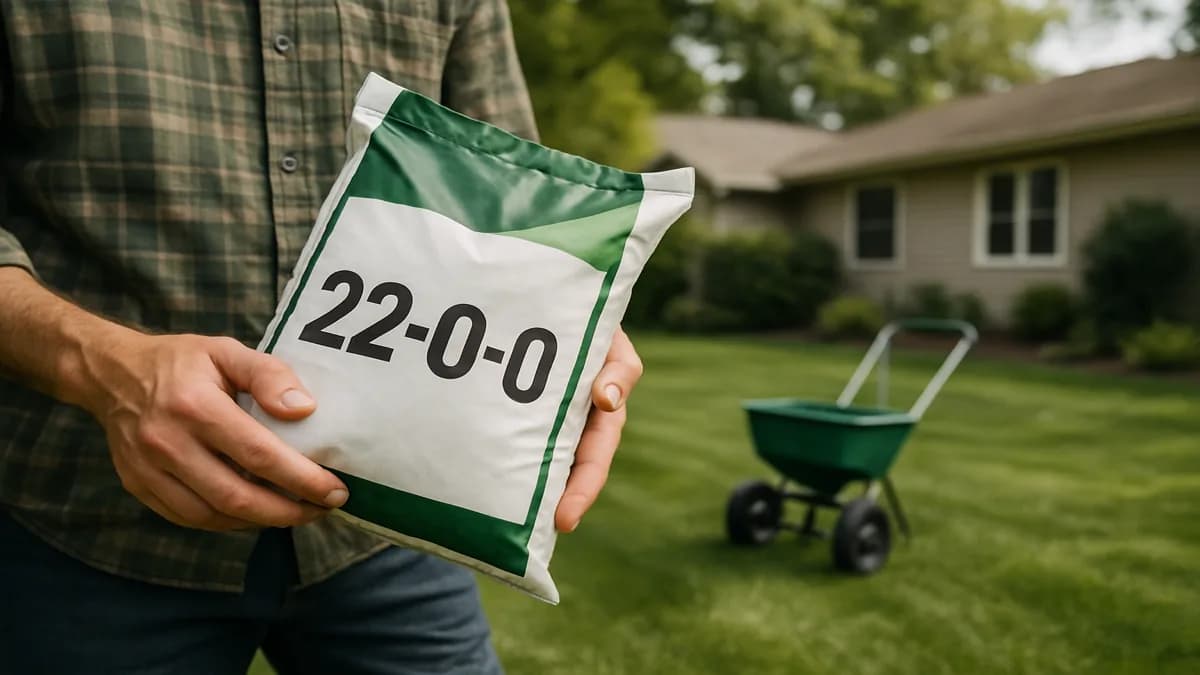
What Fertilizer Numbers Really Mean (NPK and Lawn Fertilizer Math)
Wondering what those fertilizer numbers mean? Here’s how to read NPK ratios, why phosphorus is often zero, and how to figure out the right amount for your grass.
7 min read
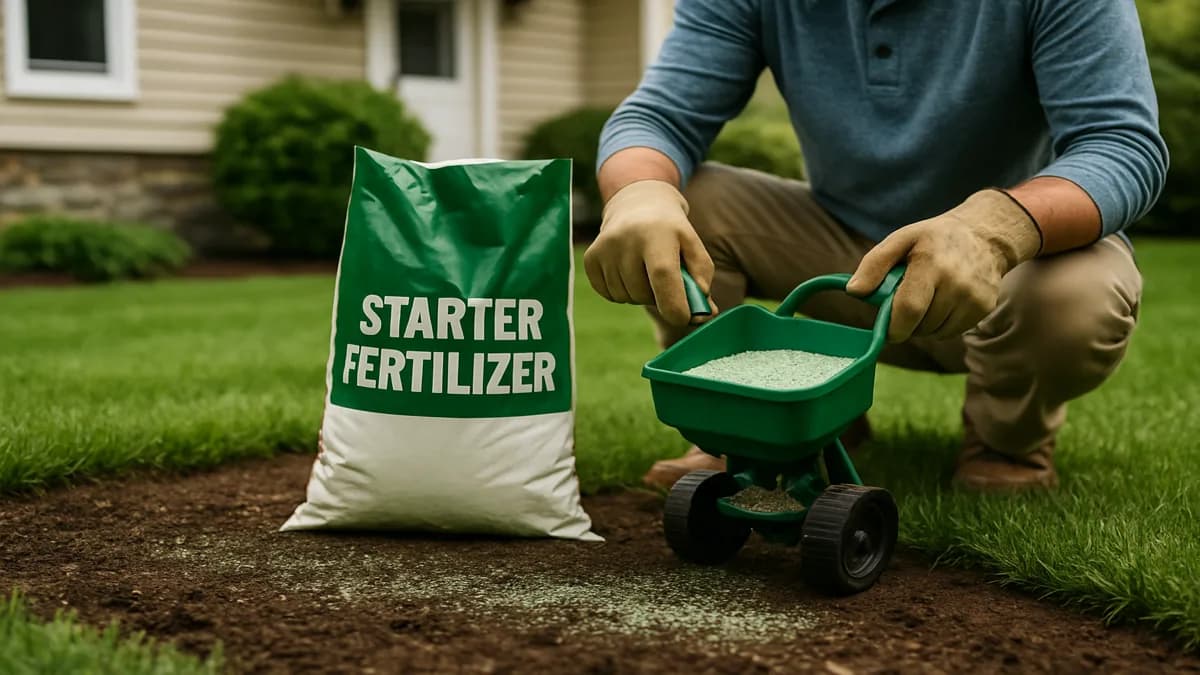
Starter Fertilizer for New Grass: What Most Homeowners Get Wrong
Starter fertilizer can jumpstart new grass, but using it wrong wastes money or breaks the law. Here’s what to know before you spread.
6 min read
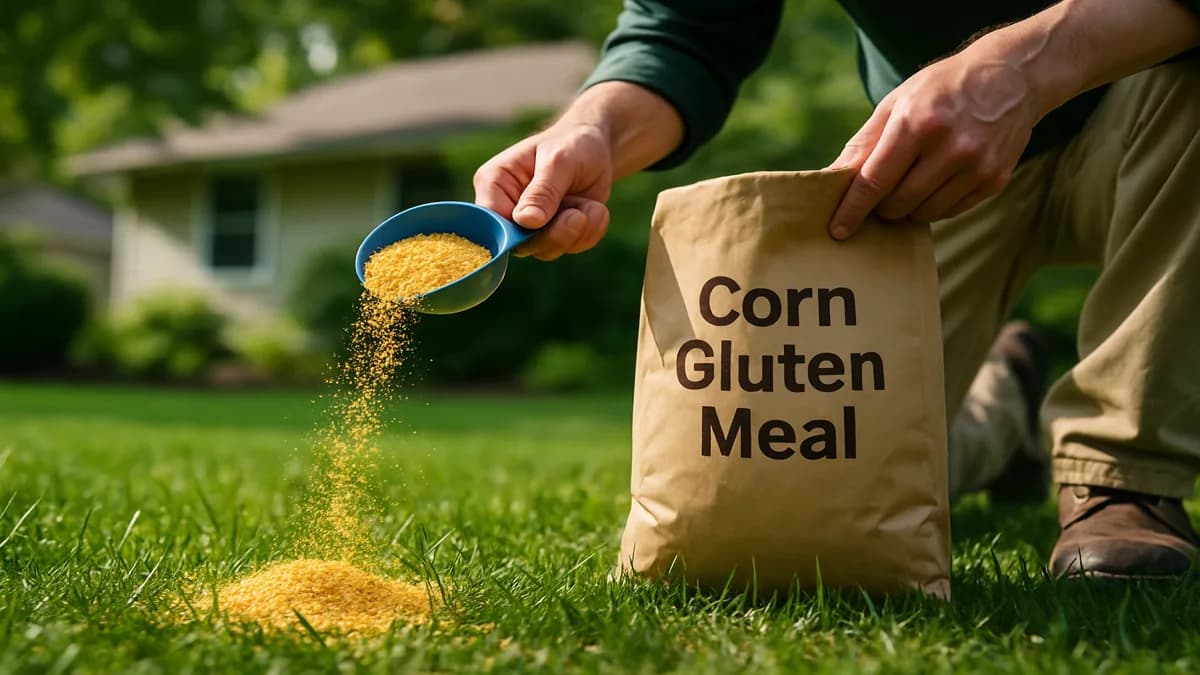
Corn Gluten Meal for Lawns: Honest Results, Rates, and When to Skip It
Corn gluten meal offers some weed suppression and a hefty nitrogen boost, but it’s pricey, inconsistent, and not for every lawn. Here’s what works, what doesn’t, and how to avoid wasting your money.
7 min read
Spotted something out of date or wrong? Tell us , we correct guides rather than leaving them to rot.