Drought Tolerant Lawn Care During Water Restrictions
A drought plan is not the same as a perfect green lawn plan. Learn when to water for survival, when to let grass go brown, and what work to skip.
On this page
- Start With the Restriction, Not the Lawn
- Decide: Green Lawn or Survival Lawn
- Cool-Season vs Warm-Season Dormancy
- Survival Watering Math
- Worked Example: One Legal Watering Day
- Mowing During Drought
- Fertilizer: Skip Nitrogen Until Recovery
- Rain Barrels and Captured Water
- When to Let It Go Brown
- When to Skip Drought Lawn Care Projects
- Common Drought Mistakes
- Recovery After Rain Returns
Drought tolerant lawn care during water restrictions means protecting crowns and roots, not forcing perfect color. Measure your lawn area, follow your city or water utility rules, water deeply only when allowed, mow high, stop nitrogen on drought-stressed turf, and decide early whether the goal is green color or survival until rain returns.
Assumptions for this guide: you have an established US lawn, local watering rules may limit days or times, and you are planning with ranges because grass type, soil depth, heat, slope, and shade change the answer. This is not advice for brand-new seed or sod.
Start With the Restriction, Not the Lawn (opens in a new tab)
Municipal watering rules decide what is possible before lawn preference enters the conversation. Some rules allow two watering days per week. Some allow hand watering only. Some ban irrigation but allow watering newly planted landscapes for a short establishment period. Read your city, county, HOA, or water utility notice directly.
The EPA WaterSense outdoor water guidance (opens in a new tab) is useful for water-saving habits, but local rules still win. If your town says no irrigation between 10 a.m. and 6 p.m., that is your operating window. If your town allows only odd-even address watering, build the lawn plan around those days.
| Rule type | What it usually changes | Lawn care move |
|---|---|---|
| Time-of-day limit | Morning or evening only | Use early morning if allowed |
| Day-of-week limit | Fewer irrigation chances | Apply deeper measured cycles |
| Hand-watering allowance | Spot care possible | Save high-value patches first |
| New planting exception | Seed or sod may qualify | Keep paperwork and follow dates |
| Full outdoor ban | No sprinkler use | Let turf go dormant and protect it from traffic |
For sprinkler setup, nozzle choices, and coverage problems, pair this plan with types of sprinklers. A leaky head or misting rotor can waste most of your allowed runtime.
Decide: Green Lawn or Survival Lawn (opens in a new tab)
A green lawn during drought costs more water than a survival lawn. There is no trick that keeps cool-season turf dark green through heat with almost no water. The honest choice is whether to keep a smaller priority area green, such as the front strip or play area, or let the whole lawn brown out and protect it from damage.
| Goal | What you do | What you accept |
|---|---|---|
| Keep selected turf green | Water within legal limits to meet part of the weekly need | Higher water use and more monitoring |
| Keep crowns alive | Occasional deep survival watering if allowed | Brown color and slower recovery |
| Let it fully rest | No irrigation during a ban | Some thinning, especially on shallow soil |
| Renovate later | Save water now, repair in fall or spring | Seed, compost, or sod cost later |
The normal established-lawn target is explained in how often to water your lawn. During restrictions, use that as a reference point, not a promise. If the legal allowance is below the normal target, the lawn may go off-color or dormant.
Cool-Season vs Warm-Season Dormancy (opens in a new tab)
Cool-season grasses such as tall fescue, Kentucky bluegrass, and perennial ryegrass often struggle most in hot, dry summer weather. They may turn straw-colored and stop growing. That is dormancy, not automatic death. Damage risk rises when drought stretches on, soil is shallow, traffic continues, or the crown dries completely.
Warm-season grasses such as bermudagrass and zoysiagrass usually tolerate summer heat better when they are healthy and established. They can still thin under severe drought, compacted soil, shade stress, or mowing too low. Their main growth season is warm weather, so a summer drought can still interrupt recovery.
| Grass group | Drought response | Practical care |
|---|---|---|
| Tall fescue | Wilts, browns, may thin in extreme heat | Mow high, reduce traffic, water deeply if legal |
| Kentucky bluegrass | Can go dormant and spread later by rhizomes | Protect crowns, expect patchy recovery |
| Perennial ryegrass | Fast color loss, limited spreading | Plan for overseeding if it thins |
| Bermudagrass | Better heat tolerance in full sun | Avoid scalping and heavy nitrogen during stress |
| Zoysiagrass | Slow-growing, can brown under drought | Keep mowing steady and avoid recovery pressure |
Use bermudagrass, tall fescue, or zoysiagrass if you need species-specific expectations before deciding how much brown you can tolerate.
Survival Watering Math (opens in a new tab)
Survival watering is a planning range, not a magic number. The point is to wet the root zone enough to keep crowns alive when full irrigation is not allowed. If rules allow one deep watering every couple of weeks, that may help more than several tiny surface sprinkles.
The basic water volume formula is:
Gallons = lawn square feet x inches of water x 0.623
That 0.623 conversion is standard irrigation math for applying 1 inch of water over 1 square foot. The hard part is not the formula. The hard part is staying inside local rules and getting water into soil instead of down the gutter.
Worked Example: One Legal Watering Day (opens in a new tab)
Say you have 4,000 square feet of established tall fescue, but your city allows one irrigation day per week before 10 a.m. You decide to protect only 2,000 square feet near the house and let the rest go dormant.
Your planning target for the protected area is 0.5 inch this week because the lawn is in survival mode, not full-color mode.
2,000 sq ft x 0.5 in x 0.623 = 623 gallons
If your sprinkler test shows one zone applies about 0.25 inch in 25 minutes, you need roughly two 25-minute cycles on that protected area. On clay or slopes, split those into cycle-and-soak blocks, such as 12 minutes, wait 30 to 60 minutes, then repeat. If rain gives you 0.3 inch, reduce the irrigation goal instead of watering by habit.
Mowing During Drought (opens in a new tab)
Mow only when the grass is growing enough to need it. Cutting a dormant lawn because Saturday is mowing day does not help. It opens leaf tissue, adds traffic, and can scalp high spots.
Keep your mower near the upper end of the safe range for your grass type. Taller leaf blades shade soil and support deeper roots. The exact range varies, so use the lawn mowing height by grass type guide rather than copying a neighbor with different turf.
Fertilizer: Skip Nitrogen Until Recovery (opens in a new tab)
Do not push drought-stressed turf with nitrogen. Fertilizer encourages growth, and growth needs water. On dormant or wilted grass, that can increase stress and waste product. It also raises runoff risk if a storm hits dry, hard soil.
If you have not tested soil recently, wait for recovery and start with how to soil test your lawn. After rain returns and grass resumes steady growth, use a normal seasonal plan from the lawn fertilizer schedule. Labels and local phosphorus rules still apply.
Rain Barrels and Captured Water (opens in a new tab)
Rainwater can help containers, beds, and small turf patches, but it rarely supplies a whole lawn through drought. A single barrel empties fast when applied across thousands of square feet. It is still useful for hand-watering a new tree, a small repair, or a heat-stressed strip near pavement.
Check local rules before building a collection system. The state-by-state overview on rainwater harvesting guidelines is a starting point, but your city and HOA may add details.
When to Let It Go Brown (opens in a new tab)
Let the lawn go brown when restrictions cannot support color, the lawn is established, and you can keep traffic off it. This is often the right choice for cool-season lawns in summer heat. Brown does not mean abandoned. It means you are choosing dormancy over illegal watering or shallow stress watering.
Keep people, pets, and parked cars off dormant turf. Avoid herbicides unless the label clearly allows use under the current temperature and drought conditions. Mark irrigation heads so they are not damaged while the lawn is brown and hard to read.
When to Skip Drought Lawn Care Projects (opens in a new tab)
Skip seeding, broad fertilizing, dethatching, aerating, and major weed control when you cannot water the recovery period. These jobs ask the lawn to grow, heal, or germinate. Drought asks it to conserve energy.
Spot safety work is different. Fix a broken sprinkler head, remove a trip hazard, or hand-water a new tree if allowed. Cosmetic improvement can wait until weather and rules support it.
Common Drought Mistakes (opens in a new tab)
The biggest mistake is spending limited water on the whole lawn so lightly that no area gets useful moisture. Pick priority zones instead. A smaller area watered deeply beats a large area misted badly.
Other common mistakes include fertilizing brown turf, mowing on schedule instead of growth, watering at noon, ignoring runoff on clay, and treating every brown patch as drought. Grubs, disease, dog urine, and sprinkler gaps can all look like dry grass from the porch.
Recovery After Rain Returns (opens in a new tab)
When rain and cooler weather return, wait for growth before judging the lawn. Some areas green up in days. Thin sections may need overseeding, especially cool-season ryegrass or stressed tall fescue. Resume mowing only after active growth, then feed lightly only when soil moisture and the season line up.
Drought tolerant lawn care is mostly restraint: measure, obey the rules, protect crowns, and skip the jobs that ask dry grass to perform. The reward is not a flawless lawn in August. It is a lawn that still has enough life to recover when the weather changes.
Frequently asked questions
Calculators for this job
Irrigation Calculator
Find out how much water your lawn or garden actually needs each week, in both inches and gallons, and how to split it across the week for your soil type.
OpenLawn Area Calculator
Almost every other lawn number depends on this one. Break your yard into simple shapes, subtract the parts that aren't grass, and get a square footage you can use for seed, fertilizer, and quotes.
OpenFertilizer Calculator
Turf guidance is written in pounds of nitrogen per 1,000 sq ft, but fertilizer is sold as a percentage analysis. This converts between them for any bag you have, enter the three numbers on the front.
OpenKeep reading
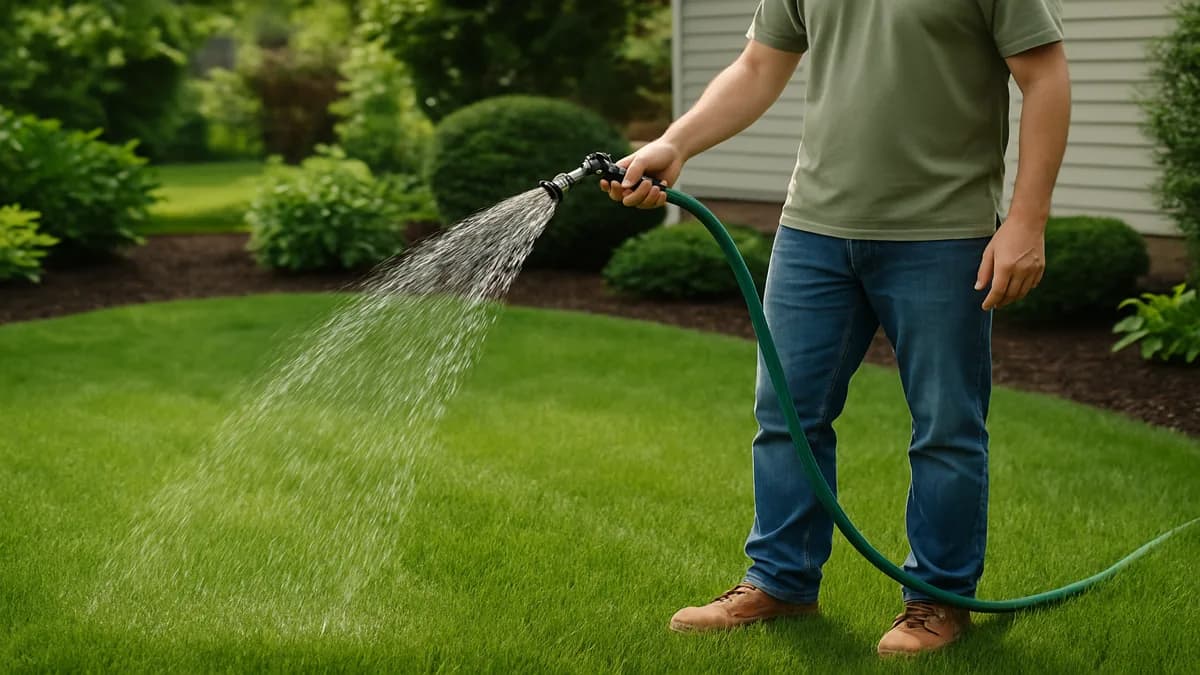
How Often Should You Water Your Lawn?
Most established lawns need about 1 to 1.5 inches of water per week including rain. Water deep and infrequent, not a little every day.
6 min read
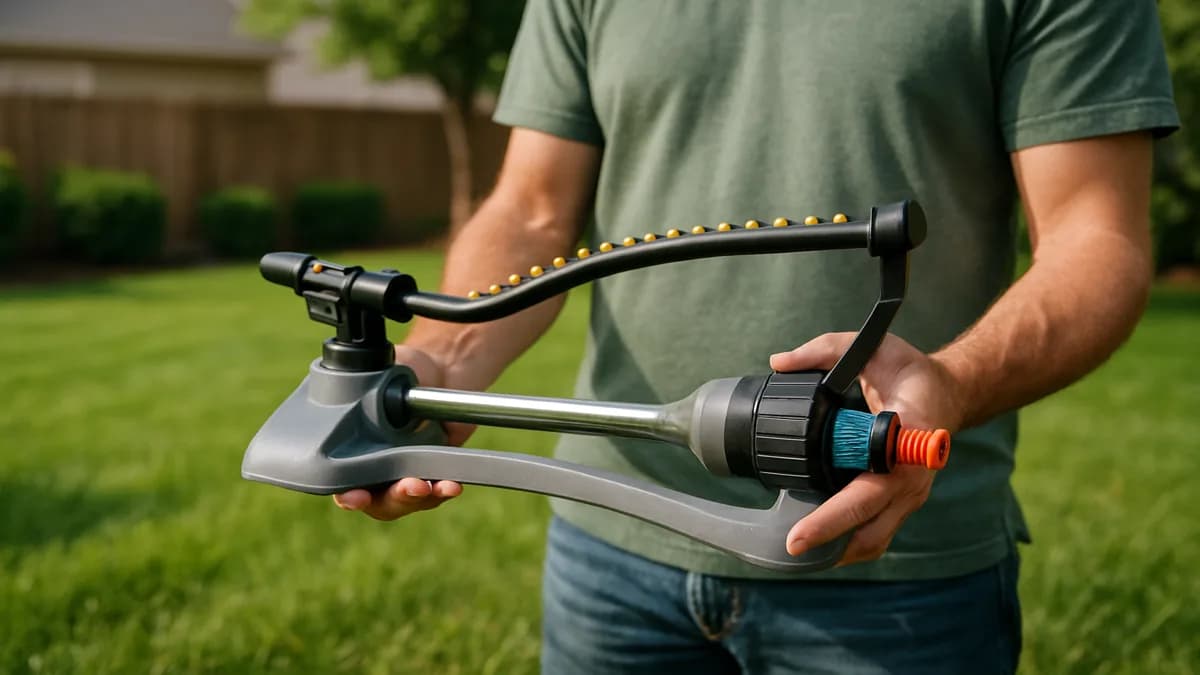
Types of Sprinklers: What Works, What Doesn’t, and Why
Choosing a sprinkler isn’t about the fanciest box,it's matching precipitation rate and coverage to your lawn and soil. Here’s how to get it right.
7 min read
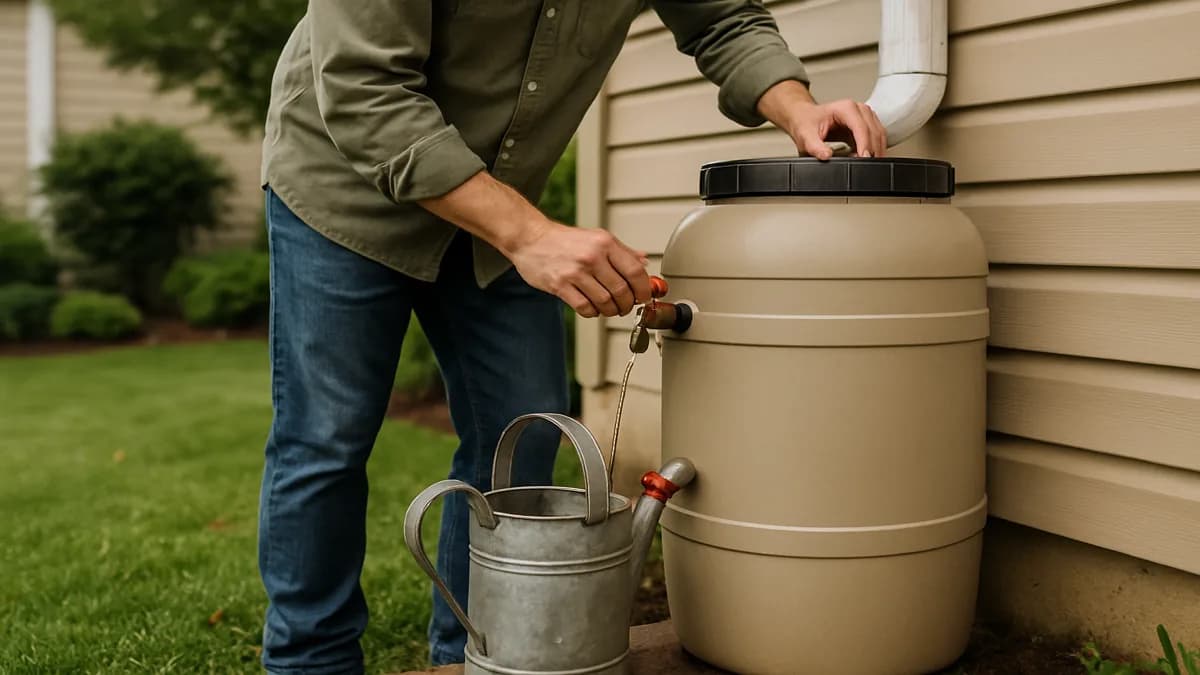
Rainwater Collection Laws: What’s Legal, What’s Not, and Where People Mess Up
Rainwater collection is legal in all 50 states, but the rules and incentives are all over the map. Here’s what actually matters for homeowners.
7 min read
Spotted something out of date or wrong? Tell us , we correct guides rather than leaving them to rot.