How Often Should You Water Your Lawn?
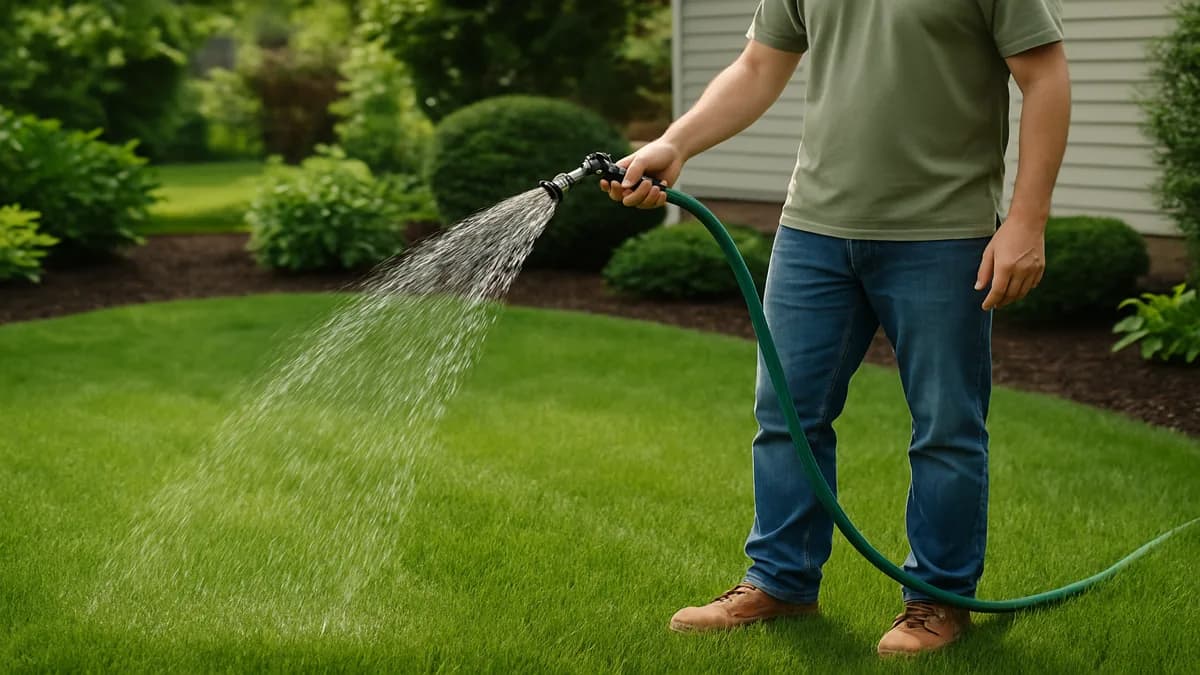
Most established lawns need about 1 to 1.5 inches of water per week including rain. Water deep and infrequent, not a little every day.
On this page
- The Weekly Inch Rule
- How Often by Season
- Best Time of Day
- How to Measure What You Apply
- Signs You Are Under- or Overwatering
- New Seed and New Sod Are Different
- Cultural Partners That Cut Water Waste
- Worked Example
- Cycle-and-Soak for Slopes and Clay
- Smart Controllers and Rain Sensors
- Drought Rules and Temporary Dormancy
- Brown Patch and Night Watering
- Hose-End vs In-Ground Reality Check
- Mistakes to Drop
- Quick Schedule Template (Established Lawn)
- Wind, Slope, and Evaporation Losses
- Weekend Traveler Schedule
Established lawns want a weekly moisture budget, not a daily mist. The standard homeowner target is about 1 to 1.5 inches of water per week, counting rainfall, applied in deep cycles so roots chase moisture downward (Penn State turf guidance cited widely for this benchmark (opens in a new tab); similar ranges appear across extension and turf education materials).
The Weekly Inch Rule (opens in a new tab)
Think in inches, not minutes.
| Goal | What it means |
|---|---|
| 1.0–1.5 in / week | Typical established-lawn target in mild to warm weather |
| Including rain | Subtract what the gauge caught |
| Deep soak | Wet the root zone several inches down |
| Infrequent cycles | Usually 1 to 3 sessions per week in summer, not daily |
Sandy soils drain faster and may need shorter gaps between waterings. Clay holds water longer but accepts it slowly; use cycle-and-soak so water infiltrates instead of running off.
How Often by Season (opens in a new tab)
| Season | Cool-season lawns | Warm-season lawns |
|---|---|---|
| Spring | Often 0–1 supplemental day/week if rain is steady | Light after green-up if dry |
| Summer | 2–3 deep sessions totaling ~1–1.5 in | 1–2 deep sessions; many warm-season grasses handle slightly less than thirsty cool-season turf |
| Fall | Drop toward rainfall-only when cool | Taper as growth slows |
| Winter | Rarely, except arid climates or evergreen southern turf | Usually none on dormant brown grass |
Hot, windy weeks push demand up. A cool rainy June may need zero irrigation.
Best Time of Day (opens in a new tab)
Water in the early morning. Midday loses more to evaporation. Late-night watering leaves leaves wet for hours and can favor disease. If morning is impossible, early evening is a distant second, and only if foliage can dry before night.
How to Measure What You Apply (opens in a new tab)
Set out straight-sided cans
Place several across the zone pattern.Run a normal cycle
Note the clock time.Measure depth
Average the cans. That is your inches for that runtime.Scale to the weekly target
If 20 minutes gave 0.5 inch, you know how to build a 1-inch week.
For head spacing and run-time design, use the sprinkler calculator and the types of sprinklers guide.
Signs You Are Under- or Overwatering (opens in a new tab)
| Symptom | Possible water issue | Next check |
|---|---|---|
| Footprints stay pressed | Underwatering / wilt | Probe soil moisture |
| Bluish-gray cast | Drought stress | Water deeply, then watch recovery |
| Mushrooms, slime, sour smell | Chronic wetness | Cut runtime, check drainage |
| Soft, always wet surface | Overwatering | Stretch intervals |
| Yellow patches after hot days | Mixed causes | See yellow grass guide |
New Seed and New Sod Are Different (opens in a new tab)
This page is for established turf. Brand-new seed needs frequent surface moisture. New sod needs a tight early schedule until roots knit. Use watering schedule for new sod instead of the weekly inch rule.
Cultural Partners That Cut Water Waste (opens in a new tab)
- Mow high within your grass’s range (mowing height guide)
- Aerate compacted soils so water infiltrates
- Fix broken heads and mixed-precipitation zones
- Accept temporary summer dormancy on cool-season lawns if local rules or drought make full green impractical
Worked Example (opens in a new tab)
A 4,000 sq ft tall fescue lawn in July. Rain gauge shows 0.4 inch for the week. Target 1.2 inches.
- Need about 0.8 inch from irrigation.
- Can test shows rotors apply 0.4 inch in 30 minutes.
- Run two 30-minute cycles on nonconsecutive mornings.
- Skip a cycle if a storm adds another half inch midweek.
Cycle-and-Soak for Slopes and Clay (opens in a new tab)
If water runs into the street before the soil accepts an inch, split the runtime:
- Run 10–15 minutes
- Wait 30–60 minutes
- Run again
- Repeat until the weekly inch is met
This is still “deep and infrequent” in total inches. You are simply matching application rate to infiltration rate.
Smart Controllers and Rain Sensors (opens in a new tab)
A timer that ignores rainfall will overwater. Rain sensors, soil-moisture sensors, or weather-based controllers help, but only if zones are designed correctly. Mixed head types on one zone (rotors plus fixed sprays) make even runtimes impossible. Fix hardware before blaming the schedule. See types of sprinklers.
Drought Rules and Temporary Dormancy (opens in a new tab)
During municipal watering restrictions, cool-season lawns may go straw-colored and dormant. Crowns can survive if soil is not bone-dry for extreme stretches. A light survival watering allowed by local rules beats illegal deep schedules. When rains return, recovery mowing and modest fertility help more than panic nitrogen during the ban.
Brown Patch and Night Watering (opens in a new tab)
Warm, humid nights plus wet leaves favor some fungal diseases. Morning irrigation that lets foliage dry is part of cultural disease management. If circular patches appear in humid weather, do not automatically add more water. Check the yellow grass diagnostic and local disease guidance.
Hose-End vs In-Ground Reality Check (opens in a new tab)
Hose-end sprinklers can still hit the weekly inch if you measure. They fail when people “water until it looks wet” and leave dry corners. In-ground systems fail when heads are misaligned or precipitation rates differ across a zone. Measurement beats equipment brand.
Mistakes to Drop (opens in a new tab)
- Daily five-minute sprinkles
- Watering at noon because that is when you notice wilt
- Ignoring rainfall
- Using the new-sod schedule on a ten-year-old lawn
- Assuming every brown patch is drought (check grubs and disease)
- Running every zone the same minutes despite different head types
- Watering sidewalks and then calling the lawn thirsty
Quick Schedule Template (Established Lawn) (opens in a new tab)
| Step | Action |
|---|---|
| 1 | Set weekly inch target (start near 1–1.5) |
| 2 | Read rain gauge |
| 3 | Irrigate the deficit in 1–3 morning sessions |
| 4 | Probe soil; adjust next week |
| 5 | Raise mowing height in heat |
Wind, Slope, and Evaporation Losses (opens in a new tab)
Windy afternoon watering can lose a surprising share of spray to evaporation and drift. Morning calm windows waste less. On slopes, place heads so you are not irrigating the gutter. If runoff starts before the soil is wet six inches down, use cycle-and-soak rather than turning up pressure.
Water for roots, not for the ritual of watching sprinklers. Inches per week, measured, beat minutes per day guessed.
Weekend Traveler Schedule (opens in a new tab)
If you are gone for a week in July, do not set daily misting. Program the same deep cycles you would run at home, preferably with a rain sensor. Ask a neighbor to check for broken heads. A single washed-out zone can burn a crescent that looks like disease when you return.
Also walk the lawn once after you get home: probe the driest corner, empty the rain gauge, and adjust the next week’s deficit. Consistency beats heroic catch-up watering that floods clay and still misses sandy hotspots.
Frequently asked questions
Calculators for this job
Irrigation Calculator
Find out how much water your lawn or garden actually needs each week, in both inches and gallons, and how to split it across the week for your soil type.
OpenSprinkler Calculator
Work out how many heads your area needs, how far apart they go, how long to run them, and how many zones your available flow supports. Spray heads and rotors need completely different run times, this shows why.
OpenLawn Area Calculator
Almost every other lawn number depends on this one. Break your yard into simple shapes, subtract the parts that aren't grass, and get a square footage you can use for seed, fertilizer, and quotes.
OpenKeep reading
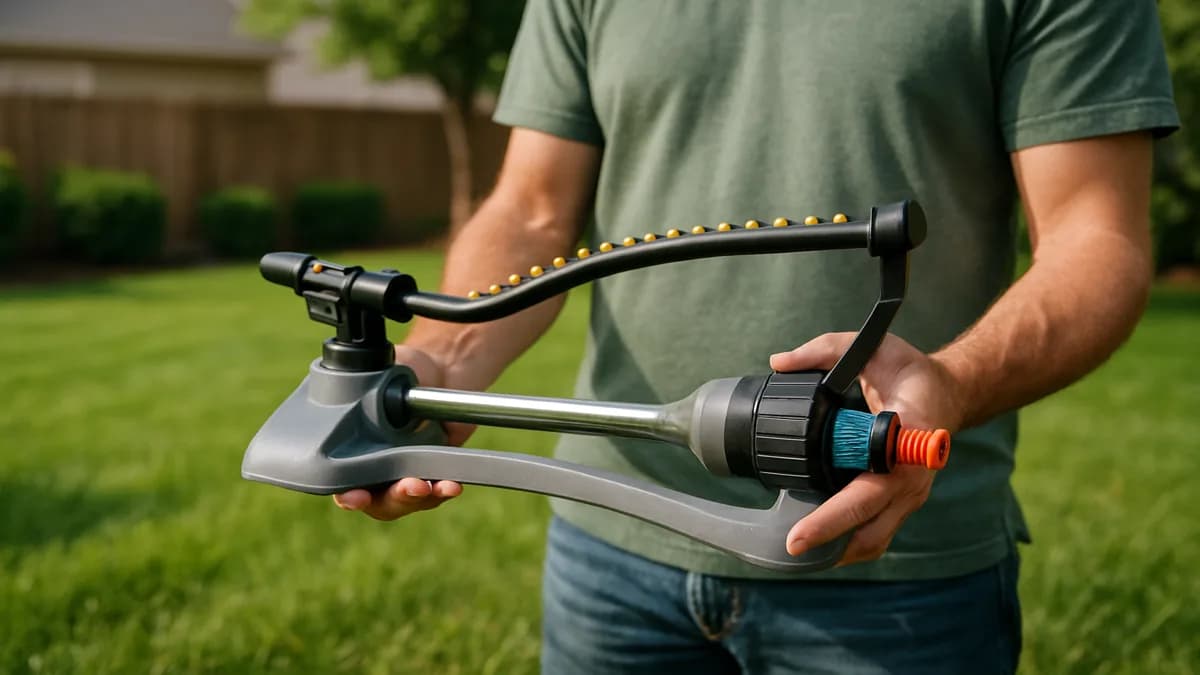
Types of Sprinklers: What Works, What Doesn’t, and Why
Choosing a sprinkler isn’t about the fanciest box,it's matching precipitation rate and coverage to your lawn and soil. Here’s how to get it right.
7 min read
Drought Tolerant Lawn Care During Water Restrictions
A drought plan is not the same as a perfect green lawn plan. Learn when to water for survival, when to let grass go brown, and what work to skip.
8 min read
How to Winterize a Sprinkler System Without Cracking Pipes
Winterizing a sprinkler system is about removing trapped water before it freezes. The right method depends on your climate, system design, and backflow setup.
8 min read
Spotted something out of date or wrong? Tell us , we correct guides rather than leaving them to rot.