Tall Fescue: The Cool-Season Workhorse for Real Yards
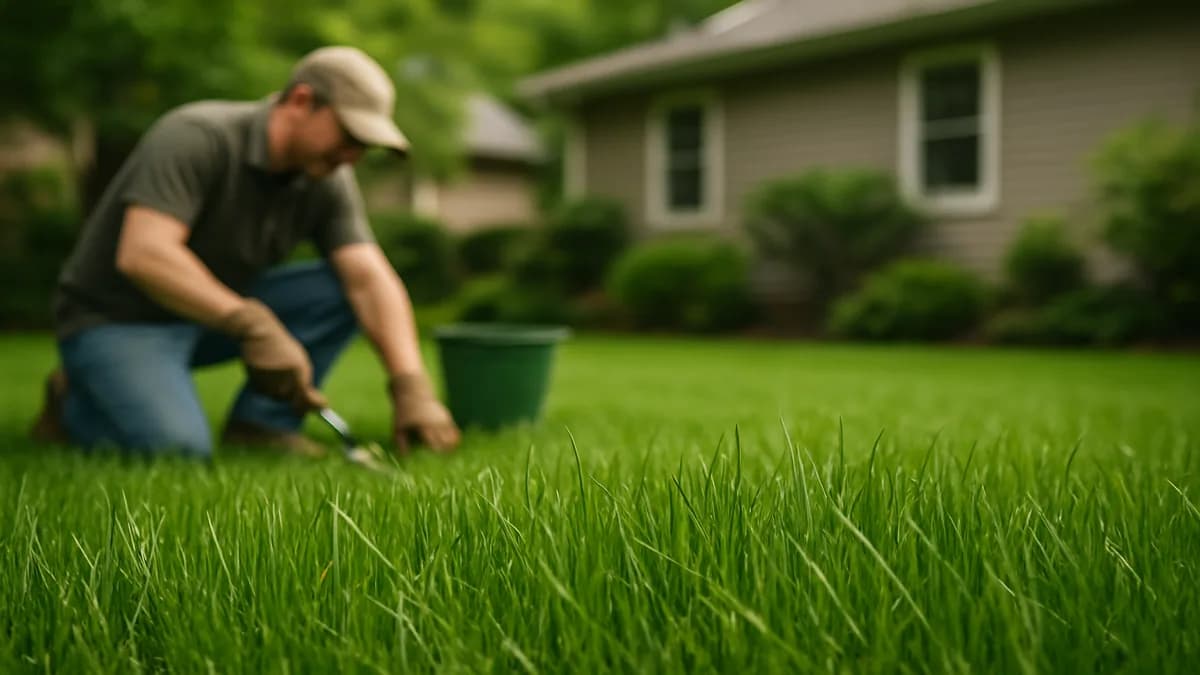
Tall fescue is a practical cool-season grass for transition-zone lawns, but it grows in bunches and needs overseeding to stay thick.
On this page
- Tall Fescue Traits at a Glance
- Where Tall Fescue Works Best
- Tall Fescue Pros and Cons
- Tall Fescue vs. Kentucky Bluegrass
- How Much Tall Fescue Seed Do You Need?
- Best Time to Plant Tall Fescue
- Tall Fescue Timing Table
- Tall Fescue Care: Mowing, Watering, and Fertilizer
- Overseeding Tall Fescue
- Common Mistakes With Tall Fescue
- When to Skip Tall Fescue
- Bottom Line
Tall fescue is the practical cool-season grass for homeowners who need a lawn that can handle summer heat, kids, dogs, some shade, and less irrigation than Kentucky bluegrass often needs. It is not perfect. Tall fescue grows mostly in bunches, so thin spots stay thin until you overseed them.
If you live in the transition zone or a cooler region with hot summers, tall fescue is often the safest cool-season choice. It stays greener under stress than many cool-season grasses, but it still needs fall seeding, sharp mowing, and sensible watering to look good year after year.
Tall Fescue Traits at a Glance (opens in a new tab)
Tall fescue is a cool-season grass, so its best growth happens in spring and fall. Modern turf-type tall fescues are finer, darker, and better suited to lawns than older pasture-type fescues, but they still repair slowly.
| Trait | Tall Fescue Reality |
|---|---|
| Season | Cool-season grass |
| Best climate | Transition zone, Midwest, Mid-Atlantic, parts of the Northeast |
| Growth habit | Mostly bunch-type |
| Spread and repair | Limited compared with bluegrass or bermudagrass |
| Sun need | Full sun to moderate shade |
| Shade tolerance | Moderate |
| Drought tolerance | Good for a cool-season grass |
| Typical mowing height | 3-4 inches |
| Best planting window | Late summer to early fall |
It may not knit itself together the way Kentucky bluegrass does, and it will not race across a yard like bermudagrass, but it holds up well when summers are hot and watering is limited.
Where Tall Fescue Works Best (opens in a new tab)
Tall fescue fits the middle of the country especially well. In the transition zone, warm-season grasses can go brown for a long winter and cool-season grasses can struggle in summer. Tall fescue sits between those problems better than most.
| Region or Yard Type | Fit for Tall Fescue | Notes |
|---|---|---|
| Transition zone | Excellent | Often the default cool-season choice |
| Mid-Atlantic | Excellent | Handles summer stress better than bluegrass |
| Midwest | Good | Works well, but winter and disease pressure vary |
| Northeast | Good | Often blended with bluegrass and ryegrass |
| Deep South | Poor to mixed | Summer heat is usually too much for permanent lawns |
| Moderate shade | Good | Better than Bermuda or bluegrass, not a deep-shade fix |
| Heavy traffic | Good | Durable, but bare spots need reseeding |
If your sunny yard is in a hot-summer state but you dislike the winter brown of warm-season grasses such as zoysiagrass or bermudagrass, tall fescue deserves a hard look. If your yard is mostly full sun in the Deep South, warm-season grasses usually make more sense.
Tall Fescue Pros and Cons (opens in a new tab)
Tall fescue’s biggest advantage is stress tolerance. Its deeper root system helps it hang on through dry stretches better than Kentucky bluegrass, and its moderate shade tolerance helps in mixed yards with open lawn, fences, and scattered trees.
Its biggest weakness is the bunch-type growth habit. A bare divot or dead patch does not fill in quickly from surrounding plants. You either wait for clumps to widen slowly or you add seed.
Compared with perennial ryegrass, tall fescue is slower to germinate but tougher in heat and drought.
Tall Fescue vs. Kentucky Bluegrass (opens in a new tab)
Many cool-season seed mixes combine tall fescue, Kentucky bluegrass, and perennial ryegrass because each brings something different: heat tolerance, spreading repair, or fast germination.
| Feature | Tall Fescue | Kentucky Bluegrass |
|---|---|---|
| Growth habit | Bunch-type, limited spreading | Spreads by rhizomes |
| Drought tolerance | Better for most home lawns | Often needs more water |
| Self-repair | Limited | Good when healthy |
| Shade tolerance | Moderate | Low to moderate |
| Establishment speed | Moderate | Slow |
| Best use | Durable transition-zone lawns | Cooler, irrigated lawns and blends |
If you want self-repair, bluegrass has the edge. If you want summer toughness with fewer inputs, tall fescue often wins.
How Much Tall Fescue Seed Do You Need? (opens in a new tab)
Tall fescue is usually planted from seed. Sod exists in some markets, but seeding is common and practical. Use the seed tag first because coating, blend, germination percentage, and cultivar change the bag rate.
As a general planning range, many tall fescue labels call for about 6-8 pounds per 1,000 square feet for a new lawn and about 3-4 pounds per 1,000 square feet for overseeding.
Here is the math for overseeding a 4,000 square foot tall fescue lawn at 4 pounds per 1,000 square feet:
4,000 sq ft ÷ 1,000 = 4
4 x 4 lbs = 16 lbs of seed
For a new lawn at 7 pounds per 1,000 square feet, the same area would need about 28 pounds. Add a little for edges and overlap, but do not treat extra seed as insurance. Crowded seedlings compete for light and water.
If you are deciding between DIY and hiring the job out, compare material expectations with lawn seeding prices. Seeding cost depends heavily on prep, soil repair, grading, and whether the existing lawn must be removed.
Best Time to Plant Tall Fescue (opens in a new tab)
Late summer to early fall is the best window for tall fescue in most cool-season and transition-zone lawns. Soil is still warm, nights are cooler, weeds slow down, and seedlings get fall plus spring to root before summer stress.
Spring seeding can work for repairs, but it is harder. Spring seedlings are young when heat, drought, crabgrass, and disease pressure arrive. If you seed in spring, keep expectations modest and plan to touch up again in fall.
Tall Fescue Timing Table (opens in a new tab)
The tall fescue calendar is built around fall establishment and summer stress management.
| Task | Best Timing | Practical Notes |
|---|---|---|
| New seeding | Late summer to early fall | Best balance of warm soil and cooler air |
| Overseeding | Late summer to early fall | Seed thin areas before they become bare soil |
| Spring repairs | Early spring | Useful for patches, but summer survival is harder |
| Mowing | Spring and fall active growth | Keep most lawns at 3-4 inches |
| Fertilizing | Fall and spring | Avoid pushing lush growth during heat stress |
| Core aeration | Early fall | Pair with overseeding when soil is compacted |
| Watering | As needed during dry spells | Deep, less frequent watering is better than daily sprinkles |
For long-term planning, use how often to overseed your lawn to decide whether your lawn needs yearly touch-ups or a lighter schedule.
Tall Fescue Care: Mowing, Watering, and Fertilizer (opens in a new tab)
Tall fescue should usually be mowed high: 3 to 4 inches. Taller mowing shades soil, protects crowns, and helps the lawn handle heat. Cutting it short weakens the grass and exposes soil to weeds.
LawnStarter’s mowing height by grass type guide is worth bookmarking if you manage mixed turf. Tall fescue, perennial ryegrass, zoysia, and Bermuda do not want the same mower setting.
Water tall fescue deeply and less often once established. During hot, dry weather, it may slow down or go off color. Shallow, frequent watering encourages shallow roots and disease. For a practical irrigation rhythm, see how often to water your lawn.
Fertilizer should match the season and the soil. Fall is the most important feeding period for most tall fescue lawns. Spring fertilizer can help, but too much nitrogen heading into summer can create soft growth that struggles with heat and disease.
Use the year-round lawn fertilizer schedule to keep feedings in the right season. Soil tests should guide phosphorus and potassium, and local phosphorus rules may apply.
Overseeding Tall Fescue (opens in a new tab)
Overseeding is normal maintenance for tall fescue because bunch grasses do not fill gaps fast. A lawn can look good in May, thin out during a brutal summer, then need seed in September. That is the growth habit.
Before overseeding, mow lower than usual, remove clippings, rake out debris, and make sure seed can touch soil. Core aeration helps compacted soil. Keep the seedbed moist until seedlings establish, then shift toward deeper watering.
If you are installing sod instead of seed in a damaged area, use the sod price guide to understand cost ranges and read how to care for new sod before you water or mow it.
Common Mistakes With Tall Fescue (opens in a new tab)
The first mistake is mowing too short. Tall fescue is not Bermuda. Scalping it in summer can cook crowns, invite weeds, and make irrigation problems worse.
The second mistake is waiting too long to overseed. Because tall fescue does not spread aggressively, a few thin spots in June can become bare soil by fall.
The third mistake is buying old-style coarse fescue when you want a lawn. Look for turf-type tall fescue on the seed label. Pasture-type seed is not the right choice for a front yard lawn.
When to Skip Tall Fescue (opens in a new tab)
Skip tall fescue if you want a grass that spreads aggressively to repair itself. Kentucky bluegrass, bermudagrass, or zoysiagrass may fit that goal better. Also skip tall fescue in deep shade where moderate shade tolerance is not enough.
In the hottest parts of the Deep South, tall fescue often becomes a seasonal struggle. You may keep it alive with irrigation and careful timing, but a warm-season grass will usually make more sense for full-sun lawns.
Bottom Line (opens in a new tab)
Tall fescue is a strong, practical cool-season lawn grass for homeowners who need heat tolerance, moderate shade tolerance, and a durable surface without constant summer pampering. Its main catch is simple: it grows in bunches, so thin lawns need overseeding.
Measure your lawn, seed in early fall when possible, mow high, water deeply, and feed mostly when the grass is actively growing. Do that, and tall fescue can be one of the most forgiving lawn choices in the tough middle of the country.
Frequently asked questions
Calculators for this job
Grass Seed Calculator
Seeding rates differ by species by a factor of twenty, bermudagrass wants 1 lb per 1,000 sq ft, perennial ryegrass wants 8. Pick your grass and whether you're starting fresh or overseeding.
OpenFertilizer Calculator
Turf guidance is written in pounds of nitrogen per 1,000 sq ft, but fertilizer is sold as a percentage analysis. This converts between them for any bag you have, enter the three numbers on the front.
OpenLawn Area Calculator
Almost every other lawn number depends on this one. Break your yard into simple shapes, subtract the parts that aren't grass, and get a square footage you can use for seed, fertilizer, and quotes.
OpenKeep reading
Perennial Ryegrass: Fast Green-Up, Smart Uses, and Where It Falls Short
Perennial ryegrass seed is your shortcut to a green lawn,if you use it right. Here’s how to seed, blend, and care for it, plus where it works and where it fizzles.
7 min read
Zoysiagrass: What to Know Before You Plant (and How to Keep It Happy)
Zoysiagrass makes a thick, weed-fighting lawn but takes patience and goes brown for months. Here’s how to plant, care for, and decide if zoysia fits your yard.
7 min read
How Often Should You Overseed a Lawn?
Overseeding isn’t a yearly chore for everyone. Here’s how to decide if, when, and how much to overseed,plus the steps that actually matter.
7 min read
Spotted something out of date or wrong? Tell us , we correct guides rather than leaving them to rot.