Types of Sprinklers: What Works, What Doesn’t, and Why
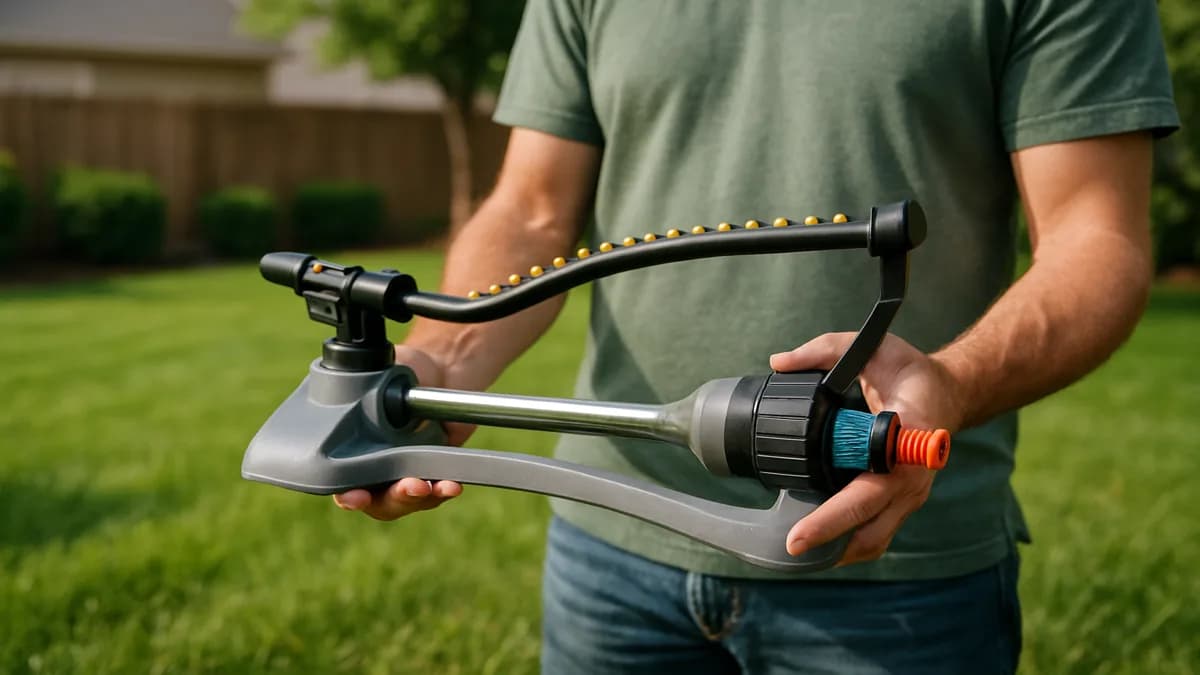
Choosing a sprinkler isn’t about the fanciest box,it's matching precipitation rate and coverage to your lawn and soil. Here’s how to get it right.
On this page
- The Main Types of Lawn Sprinklers (and Where They Shine)
- In-Ground Sprinkler Heads
- Above-Ground (Hose-End) Sprinklers
- Comparing Sprinkler Options for Common Lawns
- Worked Example: Planning Sprinklers for a 4,000 Sq Ft Lawn
- Where Most People Mess Up: Mixing Head Types
- How to Measure Your Sprinkler’s Real Output
- Watering Tips That Actually Work
- When to Skip an In-Ground Sprinkler System
- Above-Ground vs. In-Ground: Quick Comparison
- Sprinkler Head Spacing: Don’t Just Guess
- Rotor vs. Spray Sprinkler: Which for My Lawn?
- Honest Skip-It Scenario
- Summary
You’re probably here because you’re tired of dry patches, soggy spots, or dragging hoses around. Or maybe you’re planning a new system and don’t want to waste money on the wrong sprinklers. Here’s the bottom line: The right sprinkler is the one that matches your lawn’s shape, size, and soil,and delivers water at a rate your ground can actually absorb.
The Main Types of Lawn Sprinklers (and Where They Shine) (opens in a new tab)
In-Ground Sprinkler Heads (opens in a new tab)
Fixed Spray Heads (opens in a new tab)
- Coverage: 4-15 ft radius
- Precipitation rate: 1.2-2.0 in/hr
- Best for: Small lawns, tight curves, narrow strips, flower beds
These pop up, spray a fixed fan-shaped pattern, and shut off. They water fast,too fast for heavy clay or slopes unless you use short cycles. Good for precise edges. On most lawns, folks overwater with these because they don’t realize how quickly they soak the soil.
Gear-Driven Rotors (opens in a new tab)
- Coverage: 18-45 ft radius
- Precipitation rate: 0.3-0.7 in/hr
- Best for: Medium to large open lawns
Rotors send out a single stream that sweeps back and forth. They cover more ground with fewer heads and water slowly enough for most soils to keep up. Downside: You’ll need to run them longer, usually 45-90 minutes per zone. People often under-water because an hour seems like overkill, but that’s what it takes.
Rotary Nozzles (Multi-Stream Rotors) (opens in a new tab)
- Coverage: 13-24 ft radius
- Precipitation rate: 0.4-0.8 in/hr
- Best for: Medium areas, slopes, windy spots, retrofitting old spray systems
These screw onto spray bodies but shoot multiple rotating streams. The bigger droplets resist wind and reduce runoff. If you’ve got an old spray system that puddles or washes out, swap in rotary nozzles.
Impact Sprinklers (Pop-Up or Above-Ground) (opens in a new tab)
- Coverage: 20-50 ft radius
- Precipitation rate: 0.3-0.8 in/hr
- Best for: Large areas, well water, dirty water, rural lawns
The classic “ch-ch-ch” sprinkler. Tough, cheap, and handle grit better than rotors. They’re noisy and not as pretty, but they last forever. I’ve seen these run for decades on well water where gear rotors clog up.
| Sprinkler Type | Coverage Radius (ft) | Precipitation Rate (in/hr) | Minutes for 0.5" Water |
|---|---|---|---|
| Fixed Spray | 4-15 | 1.2-2.0 | 15-25 |
| Rotary Nozzle | 13-24 | 0.4-0.8 | 38-75 |
| Gear Rotor | 18-45 | 0.3-0.7 | 43-100 |
| Impact | 20-50 | 0.3-0.8 | 38-100 |
Above-Ground (Hose-End) Sprinklers (opens in a new tab)
Oscillating Sprinklers (opens in a new tab)
- Best for: Small to medium rectangular lawns
- Pros: Even coverage, cheap, easy to set up
- Cons: Wind blows fine droplets, can overwater clay or slopes
The classic bar that waves back and forth. Good for rectangles. Not great if your lawn is oddly shaped or windy.
Impact Sprinklers on Sled or Spike (opens in a new tab)
- Best for: Big, open lawns, wind-prone spots
- Pros: Long throw, coarse droplets
- Cons: Heavy, noisy, not for small lawns
Whirling/Rotary Sprinklers (opens in a new tab)
- Best for: Small patches
- Pros: Cheap, simple
- Cons: Uneven,soaks near the sprinkler, barely wets the edges
Stationary Sprinklers (opens in a new tab)
- Best for: Tiny areas, seedbeds
- Pros: Gentle, good for new grass
- Cons: Small coverage, easy to forget and flood one spot
Traveling Sprinklers (opens in a new tab)
- Best for: Large lawns without in-ground systems
- Pros: Moves itself, covers big areas
- Cons: Expensive ($60-$100+), needs good water pressure, can get stuck
Soaker Hoses & Drip Lines (opens in a new tab)
- Best for: Beds, shrubs, vegetable gardens
- Pros: Little evaporation, keeps leaves dry
- Cons: Not for turf,uneven, patchy results
Comparing Sprinkler Options for Common Lawns (opens in a new tab)
| Lawn Situation | Sprinkler Type Recommendation |
|---|---|
| Small, simple lawn | Oscillating or stationary sprinkler |
| Large, open lawn | Gear rotor, impact, or traveling |
| Narrow strips/edges | Fixed spray with strip nozzle |
| Slopes or heavy clay | Rotary nozzle or gear rotor (low rate) |
| Windy area | Impact or rotary nozzle |
| Beds and shrubs | Drip or soaker hose |
| New seed or sod | Stationary or gentle spray |
Worked Example: Planning Sprinklers for a 4,000 Sq Ft Lawn (opens in a new tab)
Let’s say you have a 4,000 sq ft (about 62 x 65 ft) lawn, mostly open, on loam soil. You want gear-driven rotors.
- Rotor radius: 25 ft (covers roughly 2,000 sq ft per head, but you need overlap)
- Head-to-head spacing: Place heads 25 ft apart, so every spot gets coverage from at least two heads
- You’ll need at least 6 heads to cover all corners and sides
- Precipitation rate: 0.5 in/hr
- To apply 1 inch/week, run each zone for 2 hours total (split into two 1-hour sessions)
Where Most People Mess Up: Mixing Head Types (opens in a new tab)
Don’t put spray heads and rotors on the same zone. Spray heads dump water 2-3 times faster than rotors. If you mix them, you’ll drown one area and starve the other. I see this all the time on DIY jobs and old systems. If you’re stuck with a mixed zone, replace heads so they all match precipitation rate.
How to Measure Your Sprinkler’s Real Output (opens in a new tab)
Manufacturer numbers are best-case. Your actual output depends on pressure, spacing, and wear. Here’s how to check:
Set out catch cans
Use tuna cans or any straight-sided containers all over the zone, including near heads and at the far edges.
Run the system for 15 minutes
Time it. Don’t guess.
Measure the water in each can
Use a ruler. Write down each number. If some cans have half as much as others, you’ve got a coverage problem.
Calculate your precipitation rate
Average the depths, multiply by 4 for inches per hour. That’s your real-world rate. Divide your target watering depth by this number to get run time.
If you see big differences between cans, check your spacing or nozzle selection. In windy areas, you might need to space heads closer than the package says (try 50-55% of throw diameter).
Watering Tips That Actually Work (opens in a new tab)
- Water early (4-9 am) to cut evaporation and disease
- Most lawns need about 1 inch per week (25 mm)
- Water deep, not daily. Two sessions a week is plenty for most grass
- On clay, use cycle-and-soak: run for 10-15 minutes, let it soak in, then run again
- Subtract rainfall from your watering schedule,don’t double up
- For new sod or seed, keep soil moist but not soggy. See How to Care for New Sod
When to Skip an In-Ground Sprinkler System (opens in a new tab)
If your lawn is tiny, weirdly shaped, or you don’t want to dig up your yard, skip the in-ground system. Hose-end sprinklers are cheaper, easier, and plenty good for small spaces. Save your money for something else.
Above-Ground vs. In-Ground: Quick Comparison (opens in a new tab)
| Feature | Above-Ground Sprinklers | In-Ground Systems |
|---|---|---|
| Cost | $15-$150 | $1,500-$4,000+ |
| Setup | 5-30 minutes | Several days, digging |
| Coverage control | Move by hand | Precise, automated |
| Maintenance | Easy, replace as needed | More parts to fix |
| Best for | Small/medium lawns | Large, complex lawns |
Sprinkler Head Spacing: Don’t Just Guess (opens in a new tab)
Always plan for head-to-head coverage. That means the spray from one head should reach the next. If you space too far apart, you’ll get dry rings and green donuts. Too close, and you waste water. Use the manufacturer’s chart, but in wind-prone areas, tighten up the spacing by 10-20%.
Rotor vs. Spray Sprinkler: Which for My Lawn? (opens in a new tab)
- Rotors: Best for big, open areas. Lower precipitation rate, less runoff, but longer run times.
- Spray heads: Best for small, tight spaces. High precipitation rate, but can cause puddling on clay or slopes.
- Don’t mix them on the same zone.
For more on how watering ties into healthy grass, see Fertilizer Numbers: What They Mean and How Often to Overseed Lawn.
Honest Skip-It Scenario (opens in a new tab)
If you rent, move often, or just don’t care about a perfect lawn, skip the fancy sprinklers. A $20 oscillating sprinkler and a timer will keep grass alive. Don’t overthink it.
Summary (opens in a new tab)
Pick a sprinkler for your yard,not your neighbor’s. Match precipitation rate to your soil, use head-to-head spacing, and don’t mix head types. Measure your real output with catch cans, adjust for rain, and water deep,not every day. That’s how you get a green lawn without wasting water or money.
For more practical tips, check out Guide to Topdressing Lawn Grass and Best Ways to Clean Up Leaves in Your Yard.
Frequently asked questions
Calculators for this job
Sprinkler Calculator
Work out how many heads your area needs, how far apart they go, how long to run them, and how many zones your available flow supports. Spray heads and rotors need completely different run times, this shows why.
OpenIrrigation Calculator
Find out how much water your lawn or garden actually needs each week, in both inches and gallons, and how to split it across the week for your soil type.
OpenLawn Area Calculator
Almost every other lawn number depends on this one. Break your yard into simple shapes, subtract the parts that aren't grass, and get a square footage you can use for seed, fertilizer, and quotes.
OpenKeep reading
How to Winterize a Sprinkler System Without Cracking Pipes
Winterizing a sprinkler system is about removing trapped water before it freezes. The right method depends on your climate, system design, and backflow setup.
8 min read
How Often Should You Water Your Lawn?
Most established lawns need about 1 to 1.5 inches of water per week including rain. Water deep and infrequent, not a little every day.
6 min read
New Sod Care: Watering, Mowing, and Fertilizing Without Wasting Money
New sod is thirsty and fragile. Here’s the watering schedule, mowing timing, and fertilizing tips that actually work in U.S. lawns.
7 min read
Spotted something out of date or wrong? Tell us , we correct guides rather than leaving them to rot.