Zoysiagrass: What to Know Before You Plant (and How to Keep It Happy)
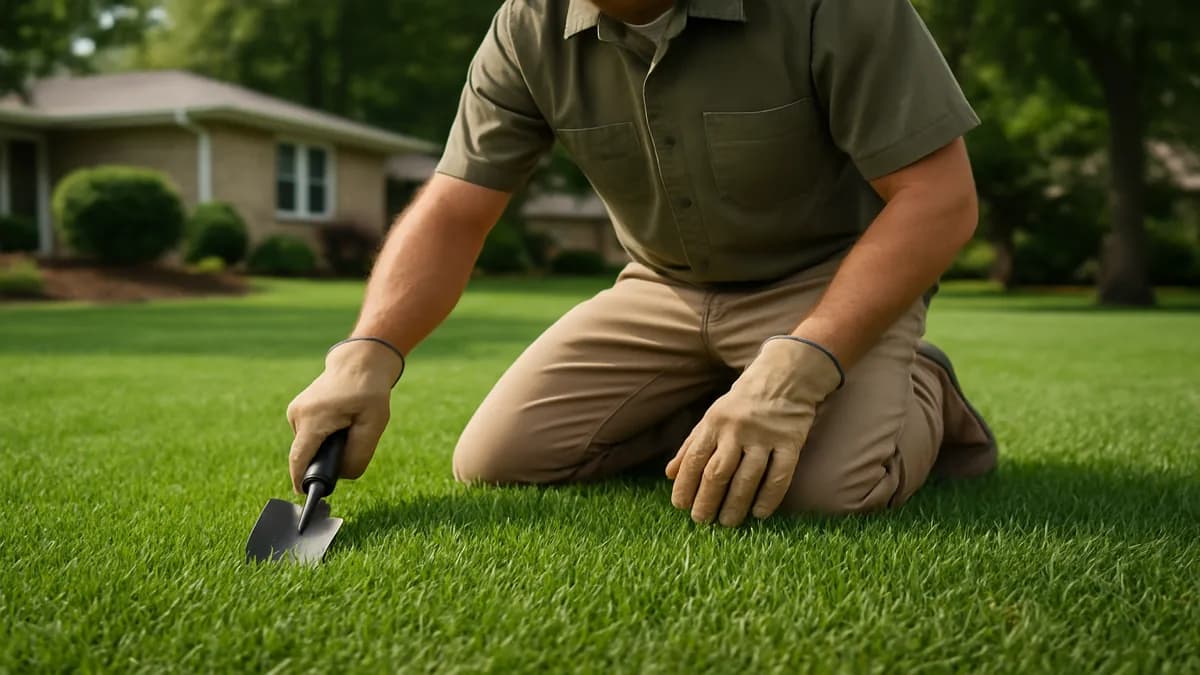
Zoysiagrass makes a thick, weed-fighting lawn but takes patience and goes brown for months. Here’s how to plant, care for, and decide if zoysia fits your yard.
On this page
- Where Zoysiagrass Actually Works (and Where It Doesn’t)
- Zoysiagrass Pros and Cons,No Sugarcoating
- Zoysiagrass Varieties: Which One Fits Your Yard?
- How to Start a Zoysiagrass Lawn: Plugs, Sod, or Seed?
- Plugs: The Patient Person’s Choice
- Sod: Fastest, Priciest, Most Satisfying
- Seed: Only for the Patient and Budget-Minded
- Zoysiagrass Care: What’s Different?
- Mowing
- Fertilizing
- Watering
- Thatch: The Sneaky Problem
- Zoysiagrass Dormancy: Why It Goes Brown and What You Can Do
- Should You Plant Zoysiagrass?
- Worked Example: Planting a 2,000 sq ft Zoysia Plug Lawn
- When to Do What: Zoysiagrass Timing Table
- Related Reading
If you’re eyeing zoysiagrass, you’re probably after a thick, weed-fighting lawn that handles heat and drought. But here’s the catch: zoysia is slow to fill in, and in much of the country, it’ll be brown for half the year. Most folks today are deciding if the trade-offs are worth it, or if their yard is even a good fit for zoysia.
Let’s get you a straight answer before you spend a dime or a weekend planting plugs.
Where Zoysiagrass Actually Works (and Where It Doesn’t) (opens in a new tab)
Zoysia is a warm-season grass, happiest in USDA zones 6-11. It’s the most cold-tolerant of the warm-season bunch, which is why you see it all over the transition zone (think Oklahoma, Tennessee, Virginia). But it’s not magic: north of zone 6, it just doesn’t thrive.
| Region/Zone | Zoysia Performance | Dormancy (Brown) Season |
|---|---|---|
| Deep South (Zones 8-11) | Excellent | 2-3 months (Dec-Feb) |
| Transition Zone (6-7) | Good, slow spring greenup | 5-7 months (Oct-Apr) |
| Mid-Atlantic (Zone 6) | Marginal, slow to fill in | 6+ months |
| Upper Midwest/Northeast | Poor, not recommended | 7+ months |
| Pacific Northwest | Struggles, too cool | Dormant most of year |
| Desert Southwest | Good if irrigated | Dormancy varies |
Zoysia needs 4-6 hours of direct sun daily. It tolerates more shade than bermudagrass, but not as much as tall fescue. If your yard is mostly shade, skip zoysia and look at shade-tolerant cool-season grasses or groundcovers. See our best shade garden plants.
Zoysiagrass Pros and Cons,No Sugarcoating (opens in a new tab)
| What Zoysia Does Well | Where Zoysia Struggles |
|---|---|
| Thick, weed-resistant turf | Slowest to establish (1-3 years from plugs) |
| Handles heat and drought | Long brown dormant season in most areas |
| Tolerates some shade | Needs 4+ hours sun, not for deep shade |
| Moderate foot traffic OK | Recovers slowly from damage |
| Lower fertilizer needs than many | Builds thatch quickly |
| Few serious pests | Tough stems dull mower blades fast |
Zoysiagrass Varieties: Which One Fits Your Yard? (opens in a new tab)
- 'Meyer': The classic for the transition zone. Coarse blade, best cold tolerance, usually sold as sod or plugs.
- 'Emerald': Fine-bladed, looks great, but slower and less cold-hardy.
- 'Zeon': Fine texture, better shade tolerance, popular in the South.
- 'Zenith' and 'Compadre': The main seeded types. Coarser, slower, but cheaper for big areas.
- 'El Toro': Faster to fill in, handles cold, but not as fine-textured.
If you’re after a fine, golf-course look, go for sod or plugs of 'Emerald' or 'Zeon'. For big spaces on a budget, seeded types are the only real option, but don’t expect a perfect carpet.
How to Start a Zoysiagrass Lawn: Plugs, Sod, or Seed? (opens in a new tab)
Plugs: The Patient Person’s Choice (opens in a new tab)
Plugs are little squares (2-3 inches) of zoysia sod you plant in a grid. The grass spreads sideways to fill in. This is the most common DIY method because it’s cheaper than sod, but it’s slow.
| Plug Spacing | Plugs per 1,000 sq ft | Time to Full Coverage |
|---|---|---|
| 6 inches | ~4,000 | 1 growing season |
| 12 inches | ~1,000 | 1-2 growing seasons |
| 18 inches | ~440 | 2-3 growing seasons |
Tighter spacing = faster coverage, higher cost, less weeding. Most folks go with 12-inch spacing for balance.
Prep the soil right
Kill off all existing grass and weeds. Loosen and level the soil. Plugging into old turf is a waste of time,zoysia won’t outcompete established grass.
Plant when it’s warm
Late spring to early summer, when soil is 65°F or warmer. Too early, and plugs just sit there.
Set plugs level with the soil
If they stick up, they dry out. Too deep, they rot. Level is best.
Water daily for 2-3 weeks
Keep plugs moist until they root. After that, water less often but more deeply.
Stay on top of weeds
Bare spots between plugs are a weed magnet. Hand-pull, mulch, or use pre-emergent herbicide until the zoysia fills in.
Sod: Fastest, Priciest, Most Satisfying (opens in a new tab)
Sod gives you a finished zoysia lawn overnight. It costs more than plugs or seed, but you skip the ugly fill-in phase.
- Plant in late spring or early summer.
- Water daily for two weeks, then back off as roots grow.
- Don’t walk or mow until it’s well-rooted (about a month).
Seed: Only for the Patient and Budget-Minded (opens in a new tab)
Zoysia seed is cheap up front, but it’s slow and often patchy. Only a few varieties are available as seed, and they’re coarser than sod types.
- Use 1-2 lbs per 1,000 sq ft.
- Germination: 2-4 weeks, but full coverage takes years.
- Needs warm soil (70°F+), good moisture, and weed control.
Zoysiagrass Care: What’s Different? (opens in a new tab)
Mowing (opens in a new tab)
- Mow at 1 to 2.5 inches. Fine types ('Emerald', 'Zeon') look best at 1-1.5 inches.
- Mow weekly during the growing season.
- Zoysia’s tough stems dull mower blades fast. Sharpen more often than you would for fescue or bluegrass.
- Reel mowers give the cleanest cut, but a sharp rotary mower is fine for most lawns.
Fertilizing (opens in a new tab)
- Use 2-4 lbs of nitrogen per 1,000 sq ft per year, split into 2-4 feedings.
- Only fertilize when the grass is green and growing (late spring through summer). Never fertilize dormant or just-greening zoysia.
Watering (opens in a new tab)
- Once established, zoysia needs about 1 inch of water per week (from rain or irrigation).
- Water deeply and less often. Zoysia can handle drought by going dormant, then greens up when watered again.
Thatch: The Sneaky Problem (opens in a new tab)
Zoysia builds up thatch faster than most grasses. Thatch is that spongy, brown layer between the soil and green blades. Too much (over 0.5 inch) blocks water and nutrients.
- Check thatch every year. If it’s over 0.5 inch, core aerate and topdress with compost.
- If it’s over 1 inch, dethatch with a vertical mower in early summer,only when the grass is actively growing.
Zoysiagrass Dormancy: Why It Goes Brown and What You Can Do (opens in a new tab)
Zoysia turns brown and goes dormant when soil temps dip below 55°F. In the Deep South, that’s just a couple of months. In the transition zone, it’s easily six months or more.
The grass isn’t dead,it’s just waiting for warm weather. If you can’t stand a brown lawn that long, you have three options:
- Overseed with perennial ryegrass in fall for winter green. It’ll die off in summer heat, but can slow zoysia’s spring green-up.
- Spray on a turf colorant (basically green dye) for a fake-green look.
- Accept the brown. Dormant zoysia is tidy and uniform, not patchy like some cool-season lawns.
Should You Plant Zoysiagrass? (opens in a new tab)
Zoysia is a good fit if:
- You want a thick, weed-resistant lawn.
- You live in zone 6 or warmer and don’t mind brown grass for months.
- You’re patient (plugs/seed) or willing to pay for sod.
Skip zoysia if:
- You want a green lawn all year without extra work.
- You need a quick, cheap lawn.
- Your yard is mostly shade.
- You’re north of zone 6. It just won’t thrive.
If you need a cool-season option, check out perennial ryegrass.
Worked Example: Planting a 2,000 sq ft Zoysia Plug Lawn (opens in a new tab)
Let’s say you want to plant plugs at 12-inch spacing:
- 1,000 plugs per 1,000 sq ft = 2,000 plugs total
- Plugs cost about $0.50 each retail
- Total plug cost: 2,000 x $0.50 = $1,000
- Time to full coverage: 1-2 growing seasons
- Water daily for 3 weeks, then less often
- Weed between plugs until the lawn fills in
If you want instant results, zoysia sod runs $0.50-$0.75 per sq ft. For 2,000 sq ft, that’s $1,000-$1,500, but you get a lawn right away.
When to Do What: Zoysiagrass Timing Table (opens in a new tab)
| Task | Best Timing (Zones 6-8) | Notes |
|---|---|---|
| Plant plugs/sod | Late spring-early summer | Soil 65°F+ |
| Seed | Late spring-early summer | Soil 70°F+ |
| Fertilize | Late spring-late summer | Never when dormant |
| Mow | Weekly, May-Sept | 1-2.5 in. height |
| Core aerate/dethatch | Late spring-early summer | Only when actively growing |
| Overseed ryegrass | Early fall | For winter green |
Related Reading (opens in a new tab)
Frequently asked questions
Calculators for this job
Grass Seed Calculator
Seeding rates differ by species by a factor of twenty, bermudagrass wants 1 lb per 1,000 sq ft, perennial ryegrass wants 8. Pick your grass and whether you're starting fresh or overseeding.
OpenSod Calculator
Enter your lawn area to get square feet, individual pieces, and pallets, plus the cut allowance you'll actually need. Sod is perishable, so ordering short means a second delivery fee.
OpenFertilizer Calculator
Turf guidance is written in pounds of nitrogen per 1,000 sq ft, but fertilizer is sold as a percentage analysis. This converts between them for any bag you have, enter the three numbers on the front.
OpenKeep reading
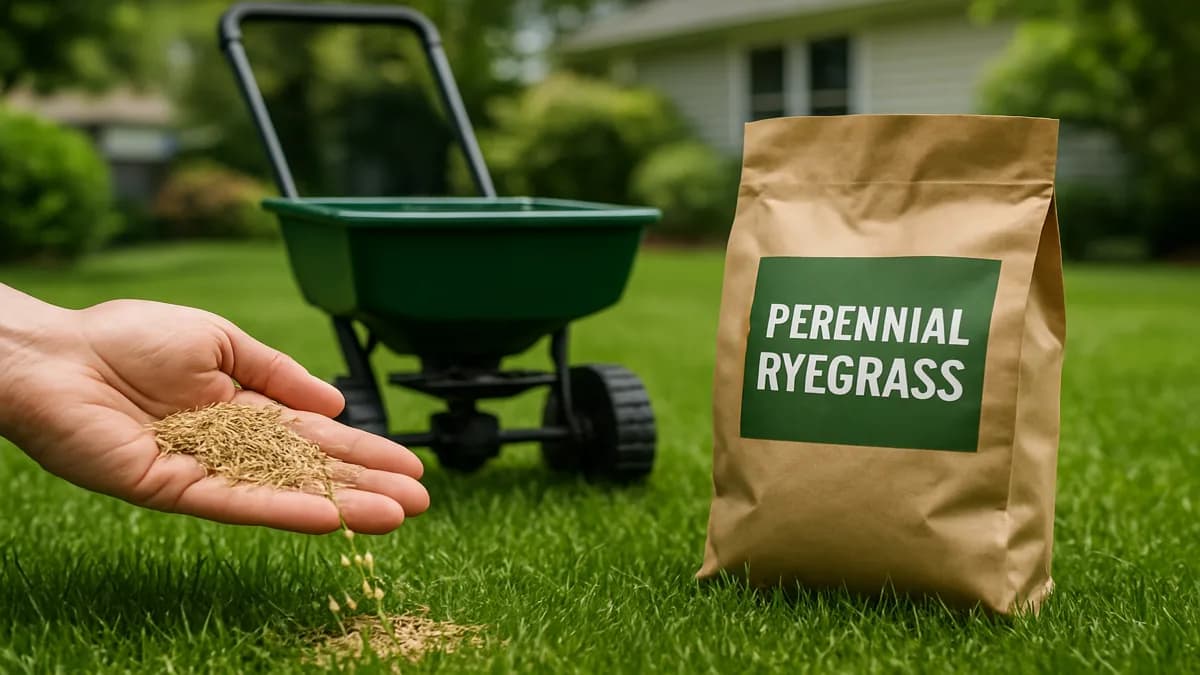
Perennial Ryegrass: Fast Green-Up, Smart Uses, and Where It Falls Short
Perennial ryegrass seed is your shortcut to a green lawn,if you use it right. Here’s how to seed, blend, and care for it, plus where it works and where it fizzles.
7 min read
Bermudagrass: Best Uses, Planting Choices, and Care That Actually Works
Bermudagrass is a tough warm-season lawn grass for sunny yards, sports areas, and hot climates. Here is where it shines, where it fails, and how to manage it.
9 min read
Tall Fescue: The Cool-Season Workhorse for Real Yards
Tall fescue is a practical cool-season grass for transition-zone lawns, but it grows in bunches and needs overseeding to stay thick.
9 min read
Spotted something out of date or wrong? Tell us , we correct guides rather than leaving them to rot.