New Sod Care: Watering, Mowing, and Fertilizing Without Wasting Money
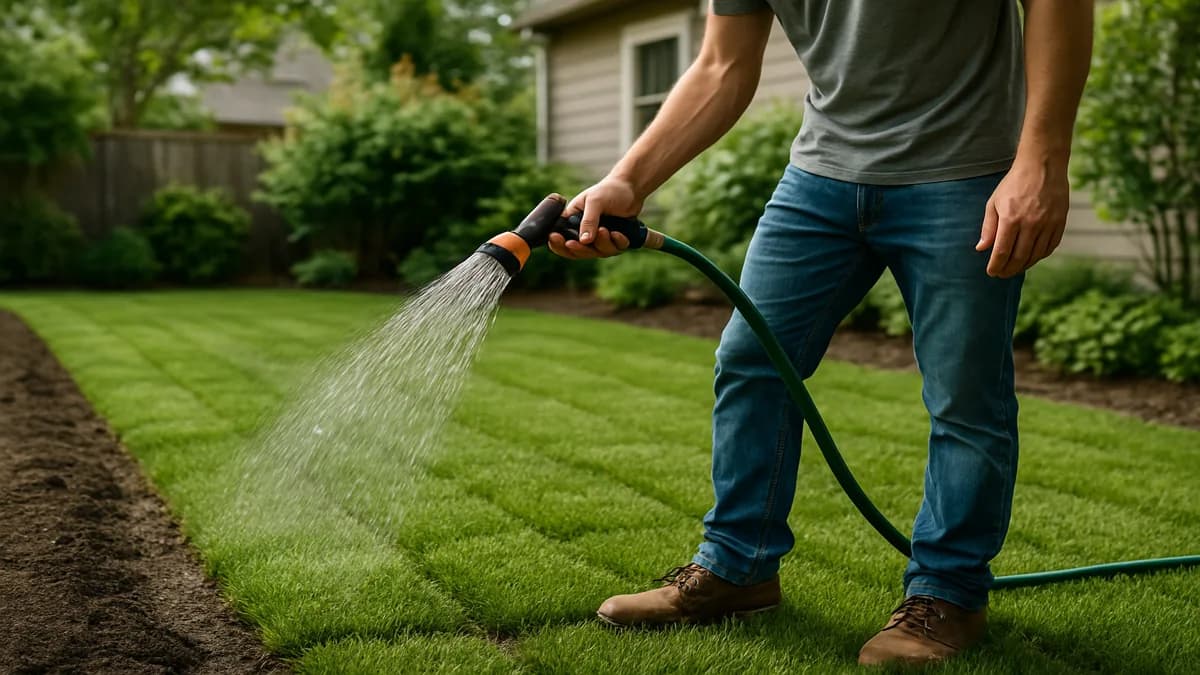
New sod is thirsty and fragile. Here’s the watering schedule, mowing timing, and fertilizing tips that actually work in U.S. lawns.
On this page
- Before You Lay Sod: Prep Makes or Breaks It
- Laying Sod: Timing and Details
- Watering Schedule for New Sod: Week by Week
- How to Tell If You’re Watering Enough (or Too Much)
- Keep Off the Grass (for Now)
- When to Mow New Sod
- Fertilizing New Sod: Timing and Rates
- Worked Example: Watering a 2,000-Sq-Ft Lawn in Week 1
- What to Expect: Week-by-Week Sod Progress
- Honest Skip-It Scenario: Don’t Fertilize Again Right Away
- Where People Mess Up: Never Tapering Off Watering
- Comparing Grass Types: Rooting and Watering Needs
- More Tips and Next Steps
You just spent a chunk of change on new sod. Now you’re staring at a patchwork of green and wondering: How much water does this stuff need? How soon can I mow? And what’s the fastest way to ruin it? Here’s the real-world watering schedule for new sod, plus what to do (and not do) for mowing and fertilizing in the first month.
On most lawns, the first two weeks are all about water,without drowning the roots. If you get this wrong, you’ll see yellow patches, seams that shrink, or entire sections die off. Let’s get it right the first time.
Before You Lay Sod: Prep Makes or Breaks It (opens in a new tab)
Don’t even think about rolling out sod on hard, dry, or weedy soil. What usually happens is the roots never take, and you’re left with a patchy mess. Here’s what to do before the truck arrives:
Clear and Level
Rip out all old grass, weeds, and debris. Grade the soil so water drains away from buildings. Leave the surface about 1 inch below driveways and sidewalks so the sod sits flush, not proud or sunken.
Loosen the Soil
Sod roots can’t punch through hardpan. Till or core aerate the top 3-4 inches (7-10 cm). If you skip this, you’ll regret it.
Add Topsoil if Needed
If your soil is thin or rocky, add 4-6 inches (10-15 cm) of good topsoil. Rake smooth and lightly firm.
Starter Fertilizer (If Allowed)
Mix a phosphorus-rich starter fertilizer into the topsoil before sod goes down. Check your state’s rules,some restrict phosphorus. Surface fertilizer after sod is much less effective.
Pre-Moisten the Soil
Water the prepared soil thoroughly the day before sod arrives. Laying sod on dry dirt is a rookie mistake that leads to poor rooting.
Laying Sod: Timing and Details (opens in a new tab)
Sod is perishable. Lay it the same day it arrives,especially in summer. Stacked sod heats up fast and can rot within 24 hours.
- Start along the longest straight edge (driveway, fence).
- Stagger seams like bricks. No long lines.
- Butt edges tightly,no gaps, no overlaps.
- Use a sharp knife for curves and obstacles.
- Roll the sod lightly to press roots into soil.
- On slopes, lay sod across the slope and use sod staples if needed.
Watering Schedule for New Sod: Week by Week (opens in a new tab)
Here’s what works for most U.S. lawns. Adjust for hot, windy, or shady spots.
| Week | Watering Frequency | Amount per Watering | What’s Happening |
|---|---|---|---|
| Day 1 | Immediately after laying | Soak 1-2 inches deep | Sod settles, roots touch moist soil |
| Days 1-7 | 2-3 times daily | Light, keep top 1 inch moist | Sod survives on surface moisture |
| Days 8-14 | Once daily | About 1/2 inch | Roots start to reach soil |
| Days 15-21 | Every other day | 3/4 inch | Roots push deeper |
| Days 22-28 | Twice weekly | 1/2-3/4 inch each time | Transition to normal schedule |
| Week 5+ | 1-2 times weekly | 1 inch total per week | Treat as established lawn |
How to Tell If You’re Watering Enough (or Too Much) (opens in a new tab)
- Lift a corner of sod. The soil underneath should be moist,not muddy, not dusty.
- If it’s dry, increase frequency or amount.
- If it’s squishy or you see puddles, cut back.
- Yellow or curling edges? Usually underwatering.
- Sod that smells sour or feels slimy? Overwatering.
Keep Off the Grass (for Now) (opens in a new tab)
Stay off new sod for at least 2 weeks. Footprints crush roots before they anchor. If you need to cross, lay down a wide board to spread your weight. Keep pets and kids off for 3-4 weeks if you can.
When to Mow New Sod (opens in a new tab)
- Wait until the sod resists a gentle tug (usually 10-14 days).
- Let it grow about a third taller than your target height before the first mow.
- Mow only when the grass is dry.
- Set the mower high and never cut more than a third of the blade at once.
- Use a sharp blade. Dull blades tear new grass.
- Bag clippings for the first couple mows,less stress, fewer clumps.
Fertilizing New Sod: Timing and Rates (opens in a new tab)
- If you used a starter fertilizer before laying sod, wait 4-6 weeks before fertilizing again.
- If you didn’t, apply a starter fertilizer as soon as possible after installation (but water it in well).
- After 4-6 weeks, use a balanced fertilizer that fits your grass type. Check the bag for rates and follow label instructions,don’t wing it.
- Many states restrict phosphorus, so check local rules before applying.
Worked Example: Watering a 2,000-Sq-Ft Lawn in Week 1 (opens in a new tab)
Say you have 2,000 sq ft (about 186 sq m) of new sod. For the first week, you need to keep the top inch moist with 2-3 waterings per day.
- Each watering should deliver about 1/3 inch of water (enough to moisten, not flood).
- 1/3 inch × 2,000 sq ft = roughly 415 gallons per watering (1 inch = 1,246 gallons per 2,000 sq ft).
- So, 3 waterings × 415 gallons = 1,245 gallons per day.
Check your sprinkler output with a tuna can or rain gauge, and adjust time as needed. Don’t just set and forget.
What to Expect: Week-by-Week Sod Progress (opens in a new tab)
| Time Frame | What You’ll See |
|---|---|
| Days 1-3 | Grass may look stressed or bluish |
| Week 1 | Color improves, but no rooting yet |
| Week 2 | Sod resists a gentle tug; growth resumes |
| Weeks 3-4 | First mow; seams start to disappear |
| Weeks 4-6 | Roots several inches deep; seams gone |
| Week 8+ | Treat as established lawn |
Some yellowing at seams is normal early on. If the whole lawn turns yellow, check your watering.
Honest Skip-It Scenario: Don’t Fertilize Again Right Away (opens in a new tab)
If you already used a starter fertilizer before laying sod, skip the urge to fertilize again for at least a month. Over-fertilizing too soon can burn roots and waste money. Wait until the sod is rooted and growing.
Where People Mess Up: Never Tapering Off Watering (opens in a new tab)
The most common mistake I see: Homeowners keep watering new sod 2-3 times a day for weeks. The grass looks great,until the first hot spell, when it collapses. Shallow roots can’t handle drought. After two weeks, start watering less often but more deeply. That’s how you build a tough lawn.
Comparing Grass Types: Rooting and Watering Needs (opens in a new tab)
| Grass Type | Rooting Speed | Watering Needs (Weeks 1-2) | Notes |
|---|---|---|---|
| Kentucky bluegrass | Slow (2-3 wks) | Needs frequent, light water | Watch for shrinkage |
| Tall fescue | Medium (1-2 wks) | Slightly less frequent | Deeper roots once established |
| Zoysiagrass | Slow (2-3 wks) | Needs warmth, steady water | Don’t overwater in shade |
| Bermudagrass | Fast (1 wk) | Handles heat, dries faster | Needs more water in sun |
More Tips and Next Steps (opens in a new tab)
- See types of sprinklers for the best watering tools.
- Read 9 FAQs about applying starter fertilizer before you fertilize.
- Learn what fertilizer numbers mean to avoid burning your new grass.
- If your sod is bumpy or uneven, check out topdressing your lawn after it’s established.
If you’re still stuck or your sod looks rough, don’t wait,ask your local extension office or a real garden center for help. New sod is expensive. Treat it right from day one.
Frequently asked questions
Calculators for this job
Sod Calculator
Enter your lawn area to get square feet, individual pieces, and pallets, plus the cut allowance you'll actually need. Sod is perishable, so ordering short means a second delivery fee.
OpenIrrigation Calculator
Find out how much water your lawn or garden actually needs each week, in both inches and gallons, and how to split it across the week for your soil type.
OpenFertilizer Calculator
Turf guidance is written in pounds of nitrogen per 1,000 sq ft, but fertilizer is sold as a percentage analysis. This converts between them for any bag you have, enter the three numbers on the front.
OpenKeep reading
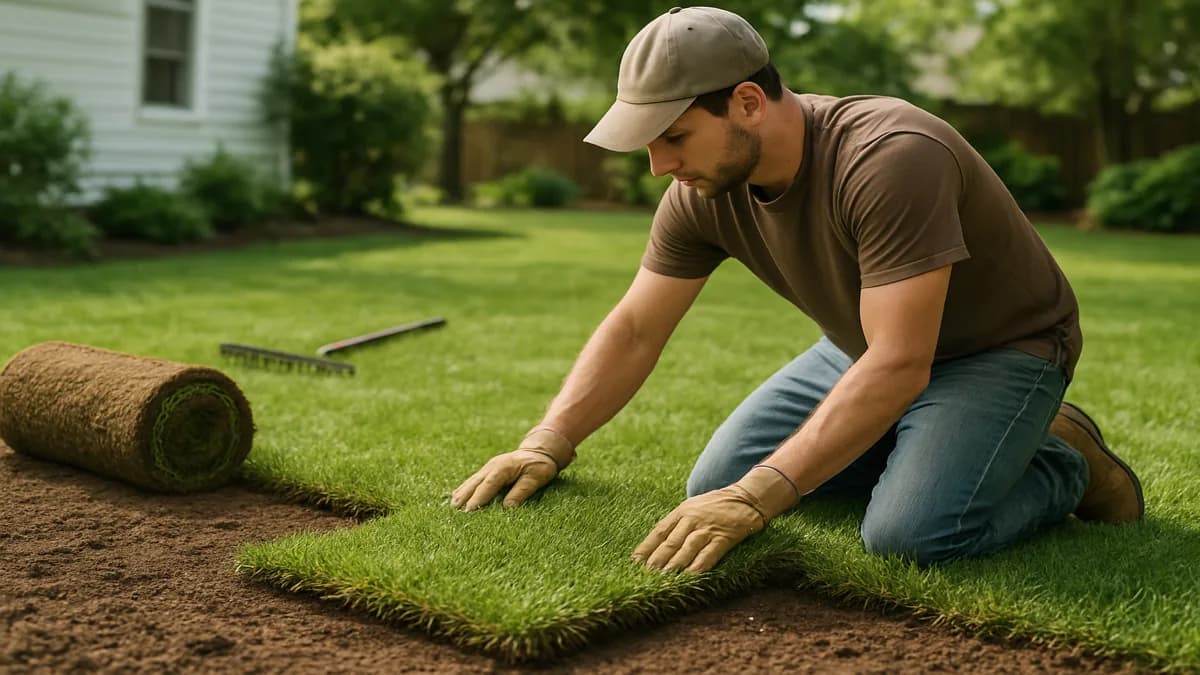
How to Install Sod So It Roots Instead of Shrinking
Sod succeeds when the soil is ready before the pallet arrives. Measure first, fix grade, lay tight staggered rows, roll once, and water on schedule.
9 min read
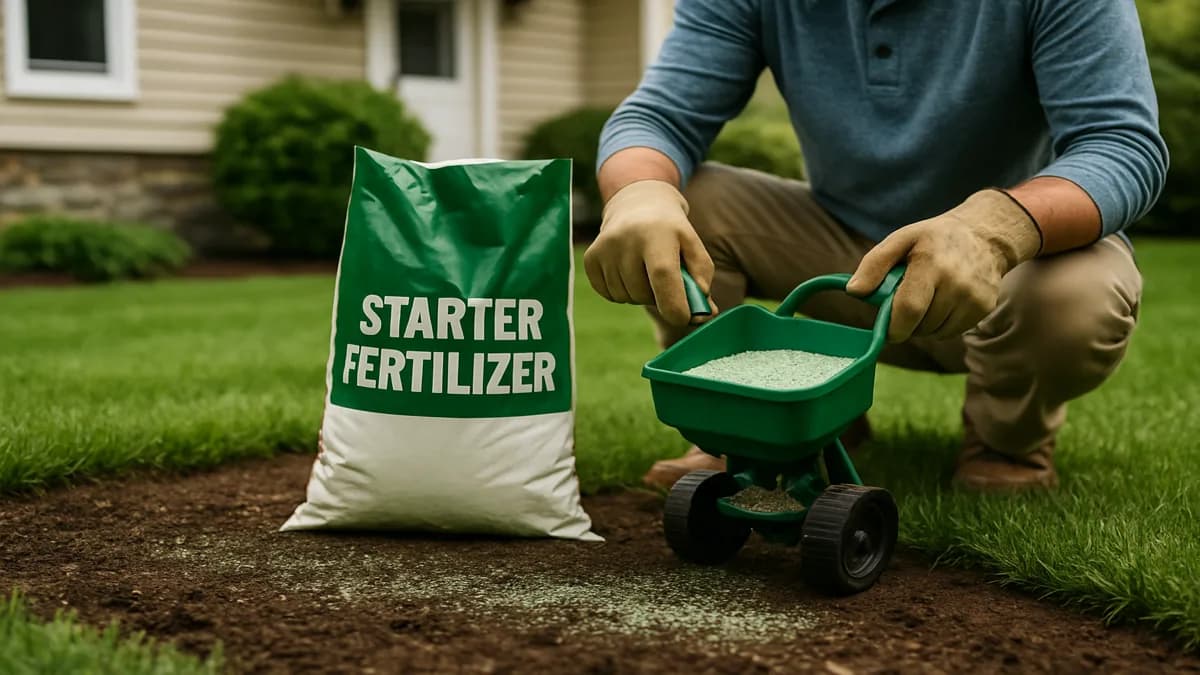
Starter Fertilizer for New Grass: What Most Homeowners Get Wrong
Starter fertilizer can jumpstart new grass, but using it wrong wastes money or breaks the law. Here’s what to know before you spread.
6 min read
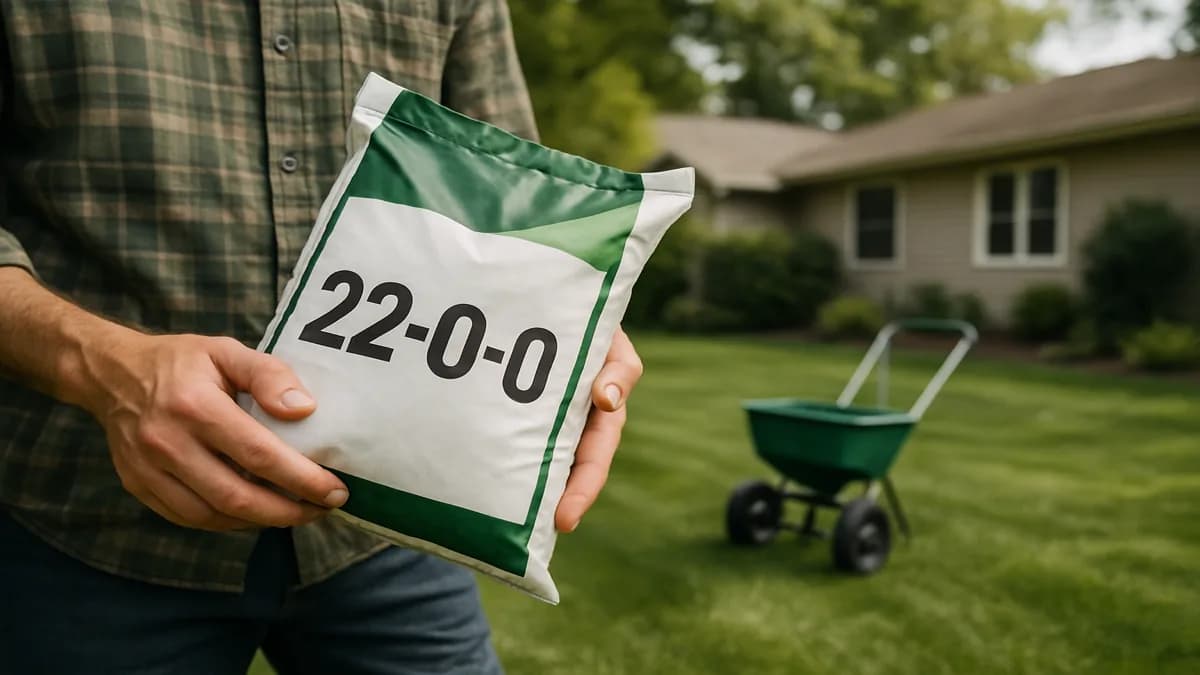
What Fertilizer Numbers Really Mean (NPK and Lawn Fertilizer Math)
Wondering what those fertilizer numbers mean? Here’s how to read NPK ratios, why phosphorus is often zero, and how to figure out the right amount for your grass.
7 min read
Spotted something out of date or wrong? Tell us , we correct guides rather than leaving them to rot.