Perennial Ryegrass: Fast Green-Up, Smart Uses, and Where It Falls Short
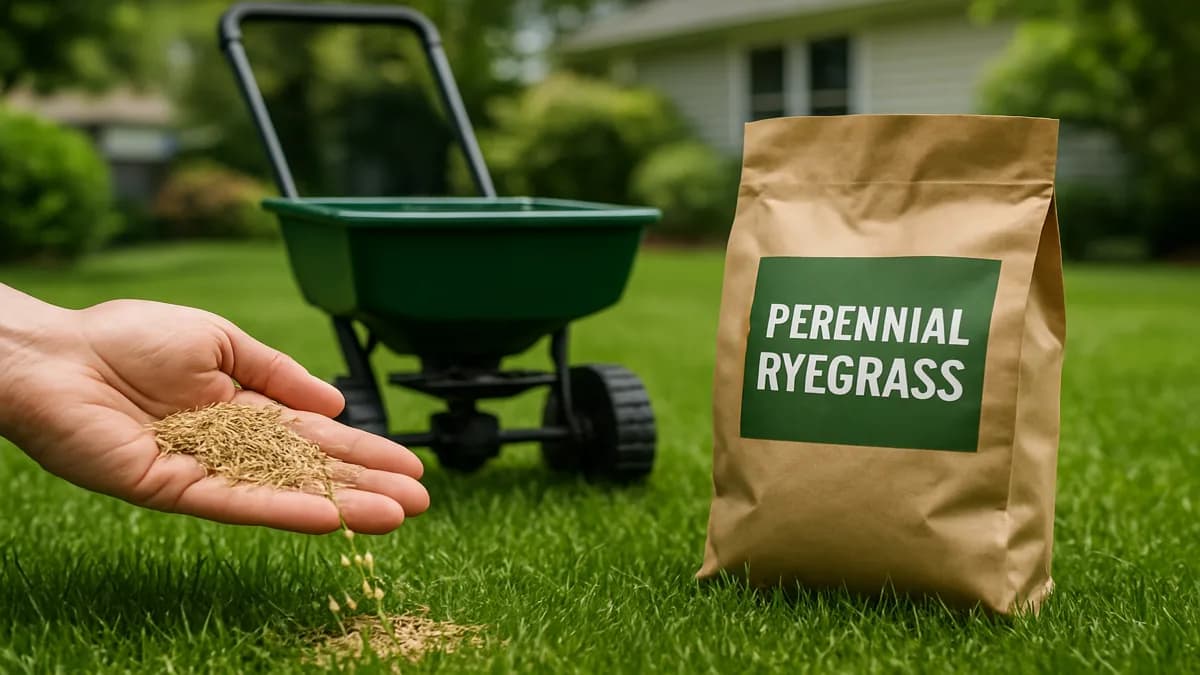
Perennial ryegrass seed is your shortcut to a green lawn,if you use it right. Here’s how to seed, blend, and care for it, plus where it works and where it fizzles.
On this page
- Where Perennial Ryegrass Shines,and Where It Doesn’t
- Perennial Ryegrass: Pros, Cons, and Honest Limits
- How Much Perennial Ryegrass Seed Should You Use?
- Ryegrass Blends: Why Most Lawns Use Them
- Winter Overseeding: Ryegrass for Green Lawns in the South
- Perennial Ryegrass Lawn Care: The Basics
- Perennial vs. Annual Ryegrass: Don’t Get Fooled
- Common Mistake: Seeding Too Late or Too Heavy
- Skip-It Scenario: Pure Ryegrass in Hot, Humid Climates
- Ryegrass Timing: When to Seed, Fertilize, and Mow
- Related Advice
- Bottom Line
You’re here because you want a green lawn,fast. Maybe you’re patching bare spots, overseeding for winter color, or just tired of waiting a month for bluegrass to sprout. Perennial ryegrass seed is the speed demon of cool-season grasses, but it’s not a miracle fix for every yard. Here’s what actually works, what to skip, and how to get your money’s worth.
Where Perennial Ryegrass Shines,and Where It Doesn’t (opens in a new tab)
Perennial ryegrass is at home in cool, damp, mild-summer regions. Think Seattle, Portland, or the foggy Northeast coast. In the rest of the country, it’s usually a supporting actor, not the star. Here’s how it stacks up by region:
| Region | Ryegrass as Main Lawn | Ryegrass in Blends | Winter Overseeding |
|---|---|---|---|
| Pacific Northwest | Yes | Yes | Rare |
| Coastal Northeast | Yes | Yes | Rare |
| Upper Midwest | Risky (winterkill) | Yes | Sometimes |
| Transition Zone (KS, MO, VA) | No | Yes (with bluegrass/fescue) | Yes (over Bermuda) |
| Deep South | No | No | Yes (over Bermuda) |
| Desert Southwest | No | No | Yes (over Bermuda) |
Skip it if you’re hoping for a year-round ryegrass lawn in the Deep South, Texas, or anywhere summers are hot and humid. Ryegrass just can’t take the heat or the diseases that come with it. Use it there only for winter color over dormant Bermuda.
Perennial Ryegrass: Pros, Cons, and Honest Limits (opens in a new tab)
What it does well:
- Germinates in 5-10 days (sometimes less with warm soil and steady moisture)
- Handles heavy use,sports fields, play yards, dog runs
- Fine texture and rich green color with improved varieties
- Stays green longer into fall than bluegrass or fescue
Where it falls short:
- Grows in bunches, not runners: won’t fill bare spots on its own
- Shallow roots mean it struggles in drought or summer heat
- Not as cold-hardy as bluegrass or fine fescue
- Prone to brown patch and gray leaf spot in muggy weather
How Much Perennial Ryegrass Seed Should You Use? (opens in a new tab)
This is where people mess up: they grab a bag, dump it on, and wonder why the lawn gets patchy or chokes out. Seed rates matter,a lot.
| Use Case | Pounds per 1,000 sq ft | Notes |
|---|---|---|
| New ryegrass lawn | 6-9 | Go heavier for fast cover |
| Overseeding existing cool-season grass | 4-6 | Use lower rate for blends |
| Winter overseeding dormant Bermuda | 5-10 | Higher rate = denser winter lawn |
| Ryegrass in a blend | 1-3 (part of mix) | Usually 20-30% of total weight |
Ryegrass seed is bigger than bluegrass or fescue, so you’ll need more pounds per area. Don’t guess,measure your lawn and do the math.
Worked Example: Let’s say you have a 3,000 sq ft front yard in the Pacific Northwest and want a pure ryegrass lawn. Use 8 lbs per 1,000 sq ft:
3,000 sq ft ÷ 1,000 = 3 3 × 8 lbs = 24 lbs of seed
Buy a 25-lb bag and you’re set. If you’re overseeding, drop to 5 lbs per 1,000 sq ft (15 lbs total).
Ryegrass Blends: Why Most Lawns Use Them (opens in a new tab)
Most cool-season lawns aren’t pure ryegrass. Here’s why:
- Ryegrass gives instant green, but bluegrass spreads to fill gaps
- Fine fescue handles shade and drought better
- Blends balance speed, color, and toughness
A typical mix for the Midwest or Northeast is 20-30% ryegrass by weight, with the rest bluegrass and/or fescue. Don’t be fooled by the bag: ryegrass seed is heavy, so 30% by weight is fewer ryegrass plants than you’d think.
Winter Overseeding: Ryegrass for Green Lawns in the South (opens in a new tab)
If you live where bermudagrass goes brown in winter (think Georgia, Texas, Arizona), perennial ryegrass is the go-to for a green winter lawn. Here’s how it’s done:
Time it right
Seed when nighttime temps drop below 65°F (18°C) but before the first frost. Usually late September to early November.Scalp the Bermuda
Mow Bermuda as low as possible (about 0.5-1 inch), bag clippings, and remove debris. This gives seed a fighting chance.Seed at 5-10 lbs per 1,000 sq ft
Go heavier for golf-course green, lighter for easier spring transition.Water lightly and often
Keep soil moist (not soggy) until germination. After that, water deeper but less often.Transition in spring
As Bermuda wakes up, mow ryegrass short and reduce water to help Bermuda take over.
Perennial Ryegrass Lawn Care: The Basics (opens in a new tab)
Mowing:
- Keep ryegrass at 1.5-2.5 inches tall. Taller in summer for less stress.
- Mow weekly (sometimes more in spring/fall). Sharp blades are a must,ryegrass tears easily.
Watering:
- Needs about 1 inch per week (rain + irrigation). In hot, dry spells, you’ll need to supplement or expect thinning.
Fertilizing:
- Apply 2-4 lbs nitrogen per 1,000 sq ft per year, split into 2-4 feedings. Go easy in summer,too much N invites disease.
- Watch for local phosphorus bans; use a starter fertilizer only if your soil test says you need it.
Disease Watch:
- Brown patch and gray leaf spot love hot, humid weather. Water early, mow high, and skip summer nitrogen.
- Red thread shows up in cool, damp springs,usually a sign you need more nitrogen.
Perennial vs. Annual Ryegrass: Don’t Get Fooled (opens in a new tab)
They look similar as seedlings, but annual ryegrass is a different beast. It’s cheap and fast, but dies after one season, leaving you with bare patches.
| Feature | Perennial Ryegrass | Annual Ryegrass |
|---|---|---|
| Lifespan | 2+ years (with care) | Dies after one season |
| Texture | Fine, soft | Coarse, light green |
| Cost | Moderate | Very cheap |
| Lawn use | Yes | No (except temp cover) |
| Used in blends? | Yes | Only low-end mixes |
Check the seed tag before you buy. If you see “annual ryegrass” or “Lolium multiflorum,” put it back unless you want a temporary fix.
Common Mistake: Seeding Too Late or Too Heavy (opens in a new tab)
What usually happens is folks wait until late fall, toss down too much seed, and end up with patchy, disease-prone grass. Ryegrass needs warm soil (above 50°F) to sprout fast. If you seed too late, it sits and rots or barely grows before winter.
Don’t double the rate thinking you’ll get a thicker lawn. You’ll just waste seed and invite fungus.
Skip-It Scenario: Pure Ryegrass in Hot, Humid Climates (opens in a new tab)
If you’re in the Deep South or anywhere summers are muggy and nights stay warm, don’t bother with a pure perennial ryegrass lawn. It’ll look great in spring, then crash and burn by July. Use it only for winter overseeding, or blend with tougher grasses if you must.
Ryegrass Timing: When to Seed, Fertilize, and Mow (opens in a new tab)
| Task | Best Timing (Cool-Season Lawns) | Best Timing (Winter Overseeding) |
|---|---|---|
| Seeding | Late summer to early fall (Aug-Oct) | Fall (Sept-Nov) |
| First mowing | When grass hits 2.5-3 inches | When ryegrass reaches 2 inches |
| First fertilizer | 4-6 weeks after germination | 4-6 weeks after overseeding |
| Spring transition | N/A | March-April (mow low, reduce water) |
Related Advice (opens in a new tab)
Want to compare to other grasses? See Zoysiagrass basics. Need shade solutions? Try best shade garden plants. Curious about overseeding timing? Read how often to overseed your lawn. Wondering if your seed is still good? Check how to tell if grass seed is good. Prepping for winter? See how to winterize a garden.
Bottom Line (opens in a new tab)
Perennial ryegrass seed is your shortcut to a green, tough lawn,if you use it where it fits. It’s unbeatable for fast germination, repairs, and winter color, but it needs backup from bluegrass or fescue for year-round lawns in most of the U.S. Measure your lawn, use the right rate, and don’t expect it to fill in on its own. That’s the honest scoop, straight from the garden center.
Frequently asked questions
Calculators for this job
Grass Seed Calculator
Seeding rates differ by species by a factor of twenty, bermudagrass wants 1 lb per 1,000 sq ft, perennial ryegrass wants 8. Pick your grass and whether you're starting fresh or overseeding.
OpenLawn Area Calculator
Almost every other lawn number depends on this one. Break your yard into simple shapes, subtract the parts that aren't grass, and get a square footage you can use for seed, fertilizer, and quotes.
OpenFertilizer Calculator
Turf guidance is written in pounds of nitrogen per 1,000 sq ft, but fertilizer is sold as a percentage analysis. This converts between them for any bag you have, enter the three numbers on the front.
OpenKeep reading
Zoysiagrass: What to Know Before You Plant (and How to Keep It Happy)
Zoysiagrass makes a thick, weed-fighting lawn but takes patience and goes brown for months. Here’s how to plant, care for, and decide if zoysia fits your yard.
7 min read
How Often Should You Overseed a Lawn?
Overseeding isn’t a yearly chore for everyone. Here’s how to decide if, when, and how much to overseed,plus the steps that actually matter.
7 min read
How to Know If Your Grass Seed Is Still Worth Using
Grass seed loses its punch with time and poor storage. Here’s how to check if your old seed will still sprout, what the label really means, and when to just buy fresh.
7 min read
Spotted something out of date or wrong? Tell us , we correct guides rather than leaving them to rot.