Vole vs Mole: Spot the Difference and Stop the Damage
Moles and voles leave very different clues,and fixing the problem depends on knowing which is which. Here’s how to tell, what to do, and what to skip.
On this page
- Quick ID: Mole or Vole? (And Why It Matters)
- What Each Pest Looks Like (If You Ever See Them)
- Damage: What to Look For in Your Lawn and Garden
- Mole Damage
- Vole Damage
- Vole vs Mole: Common Mistakes Homeowners Make
- How to Control Moles (If That’s Your Culprit)
- How to Control Voles (If That’s the Problem)
- Repairing the Damage
- For Mole Damage
- For Vole Damage
- Identification vs Lookalikes: Table
- Treatment Options: What Works and What’s a Waste
- When to Call a Pro
- Honest Skip-It Scenario
- Where People Mess Up
- Related Reading
- Summary Table: Which Pest, Which Fix?
You’re staring at torn-up grass, weird tunnels, or dying plants. Is it a mole or a vole? Here’s the blunt truth: If you guess wrong, you’ll waste time and money,because the fixes are totally different. Let’s sort it out fast so you can get your yard back.
Quick ID: Mole or Vole? (And Why It Matters) (opens in a new tab)
If you see raised, squishy tunnels in your lawn or volcano-shaped piles of dirt, that’s a mole. If you spot narrow, brown runways in the grass, little holes, or chewed bark at the base of shrubs, that’s a vole. Sometimes you get both,especially if you see tunnels and plants dying.
Why care? Moles rarely kill plants. Voles can wipe out young trees, shrubs, and bulbs. Treating for the wrong pest does nothing but empty your wallet.
| Feature | Moles | Voles |
|---|---|---|
| Animal type | Insect-eating mammal | Plant-eating rodent |
| Looks like | Gray, pointed nose, big feet | Chubby mouse, short tail |
| Tunnel type | Raised, soft, winding | Surface runways, shallow holes |
| Soil mounds | Yes, volcano-shaped | No |
| Plant damage | Rare | Common, can kill plants |
| Bark gnawing | No | Yes, base of trees/shrubs |
| Main food | Earthworms, grubs | Roots, bulbs, grass, bark |
What Each Pest Looks Like (If You Ever See Them) (opens in a new tab)
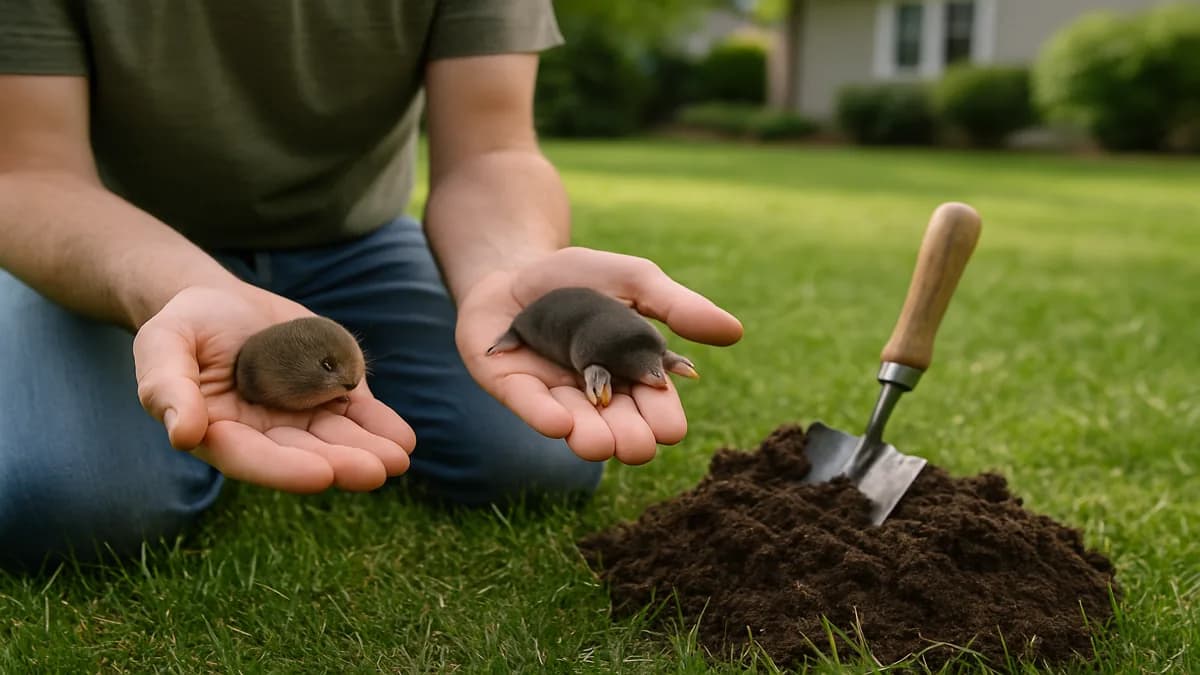
Mole: About 5-7 inches long, slate gray, paddle-shaped front feet, tiny eyes, no visible ears, long pointed snout. You’ll almost never see one above ground.
Vole: 4-6 inches long (including tail), looks like a chunky mouse with a blunt nose, short furry tail, small but visible eyes and ears. You might spot one scurrying along a runway.
Damage: What to Look For in Your Lawn and Garden (opens in a new tab)
Mole Damage (opens in a new tab)
- Raised, spongy tunnels just under the lawn surface
- Volcano-shaped mounds of loose dirt (especially in spring and fall)
- Grass flattened or yellowed along tunnels
- No chewed plants or bark
Vole Damage (opens in a new tab)
- Narrow (1-2 inch wide) surface runways, often with clipped grass
- Small holes (about golf ball size), no dirt mounds
- Bark chewed at the base of shrubs or young trees (sometimes all the way around)
- Plants or bulbs disappearing overnight
- Grass dying in streaks along runways
| Damage Sign | Moles | Voles | Both Possible? |
|---|---|---|---|
| Raised tunnels in lawn | Yes | No | No |
| Volcano-shaped soil mounds | Yes | No | No |
| Surface runways in grass | No | Yes | No |
| Small holes (no mound) | Rare | Yes | Sometimes |
| Chewed bark at base | No | Yes | No |
| Dead or missing bulbs | No | Yes | No |
| Dying plants | Rare | Yes | Sometimes |
Vole vs Mole: Common Mistakes Homeowners Make (opens in a new tab)
Mistake #1: Treating for moles when you really have voles (or vice versa). Mole traps and repellents do nothing for voles. Vole baits won’t touch moles.
Mistake #2: Ignoring the problem until spring. Voles do most of their damage under snow cover. If you wait, you might lose young trees or all your tulips.
Mistake #3: Using home remedies like chewing gum, mothballs, or ultrasonic spikes. I’ve seen folks spend hundreds on gadgets that don’t work. Don’t do that.
How to Control Moles (If That’s Your Culprit) (opens in a new tab)
Trapping is the only method that consistently works. Repellents and baits are hit-or-miss at best.
Find an active tunnel
Flatten a section of tunnel with your foot. If it’s raised again within 24 hours, it’s active. Only set traps on active runs.Set a trap correctly
Use a scissor, harpoon, or choker-loop trap. Follow the instructions. Collapse the tunnel roof slightly so the mole triggers the trap while fixing it.Check traps daily
Remove dead moles promptly. If nothing after 3 days, move the trap to a new spot.Be patient
One mole can make a mess over a big area. Once it’s gone, new moles may move in eventually, but not right away.
Skip-It Scenario: If the only problem is a few raised tunnels and your plants are fine, you can skip trapping. Just flatten the tunnels and mow as usual. Grass usually recovers.
How to Control Voles (If That’s the Problem) (opens in a new tab)
Voles are rodents, so you use rodent control tactics:
- Remove cover: Keep grass mowed short around trees and shrubs. Pull mulch back from trunks. Clear dense groundcover. Voles hate open spaces.
- Trunk guards: Wrap young tree trunks with 1/4-inch hardware cloth cylinders. Bury the bottom 2-3 inches, and make sure it extends above the snow line (usually 18-24 inches).
- Snap traps: Ordinary mouse traps baited with peanut butter, set perpendicular to runways. Place them under cover (a board or flowerpot) to avoid birds and pets.
- Predators: Encourage owls, hawks, and snakes. An owl box or a perch helps. Don’t use poison if you want to keep these helpers around.
- Protect bulbs: Plant bulbs in wire cages or choose daffodils (voles won’t eat them). Tulips and crocus are vole favorites,they’ll vanish if you don’t protect them.
Worked Example: You have 5 young apple trees, each with a trunk about 1 inch thick. Buy a 10-foot roll of 1/4-inch hardware cloth, 24 inches high. Cut it into 5 pieces, each 2 feet long. Form each into a cylinder, overlap the ends, and secure with wire. Bury the bottom 2 inches. Total cost: about $15-$20 for all 5 trees.
Repairing the Damage (opens in a new tab)
For Mole Damage (opens in a new tab)
- Flatten tunnels with your foot or a lawn roller when soil is moist
- Rake out soil mounds and spread the dirt evenly
- Reseed any bare spots
- Water the area to help grass recover
See also: How to repair mole damage in your yard
For Vole Damage (opens in a new tab)
- Rake and level surface runways
- Reseed if grass is dead
- For girdled trees or shrubs (bark chewed all the way around): There’s no reliable fix. If less than half the bark is gone, wrap with tree wrap and water well, but survival isn’t guaranteed.
Identification vs Lookalikes: Table (opens in a new tab)
| Sign or Symptom | Likely Pest | Could Be Something Else? |
|---|---|---|
| Raised tunnels, mounds | Mole | Pocket gopher (rare in lawns) |
| Surface runways in grass | Vole | Field mice, shrews (less common) |
| Chewed bark at base | Vole | Rabbits (look for bigger teeth marks) |
| Large soil piles, big holes | Gopher | Not mole or vole |
Treatment Options: What Works and What’s a Waste (opens in a new tab)
| Option | Moles Effective? | Voles Effective? | Cost | Risk/Downside |
|---|---|---|---|---|
| Trapping | Yes | Yes (snap traps) | $10-$30/trap | Labor, must check daily |
| Repellents (castor oil) | Sometimes | No | $15-$25 | Short-lived, rain washes away |
| Poison baits | Rarely | Sometimes | $10-$30 | Risk to pets, wildlife, kids |
| Hardware cloth guards | No | Yes | $3-$5/tree | Labor to install, must check yearly |
| Removing cover | No | Yes | Free | May not be practical everywhere |
| Owl boxes/predators | No | Yes (long-term) | $30-$100 | Not instant, needs habitat |
When to Call a Pro (opens in a new tab)
If you’ve set traps, cleaned up cover, and still have a mess,or if the damage is so bad you’re losing trees or whole flower beds,it’s time to call a pest control professional. They’ll know the right traps, baits, and legal rules for your area.
Honest Skip-It Scenario (opens in a new tab)
If you only see a few raised tunnels and your plants are untouched, you can skip the drama. Flatten the tunnels, rake out the mounds, and let the grass recover. Moles usually move on when food runs out.
Where People Mess Up (opens in a new tab)
What usually happens: Folks see tunnels, buy a bunch of repellents or home remedies, and wonder why nothing changes. Or they set traps on every tunnel, not just the active ones, and catch nothing. Save your money,focus on correct ID and proven methods.
Related Reading (opens in a new tab)
- How to repair mole damage in your yard
- How to use diatomaceous earth to treat fleas
- Why is my grass turning yellow?
- Perennial ryegrass: pros and cons
- Zoysiagrass: where it works best
Summary Table: Which Pest, Which Fix? (opens in a new tab)
| Problem | Likely Pest | Best Control | Repair Steps |
|---|---|---|---|
| Raised tunnels, no plant death | Mole | Trap or ignore | Flatten, reseed if needed |
| Surface runways, dead grass | Vole | Remove cover, trap | Rake, reseed |
| Chewed bark, dying shrubs | Vole | Trunk guards, trap | Replace if girdled |
| Both tunnels & plant death | Both | Treat voles first | Combo of above |
Frequently asked questions
Calculators for this job
Grass Seed Calculator
Seeding rates differ by species by a factor of twenty, bermudagrass wants 1 lb per 1,000 sq ft, perennial ryegrass wants 8. Pick your grass and whether you're starting fresh or overseeding.
OpenTopsoil Calculator
Topsoil is heavy, roughly a ton per cubic yard, so knowing the weight matters as much as the volume. Enter your area and depth for yards, bags, and delivered tonnage.
OpenLawn Area Calculator
Almost every other lawn number depends on this one. Break your yard into simple shapes, subtract the parts that aren't grass, and get a square footage you can use for seed, fertilizer, and quotes.
OpenKeep reading
Fixing Mole Tunnels, Mounds, and Bare Spots in Your Lawn
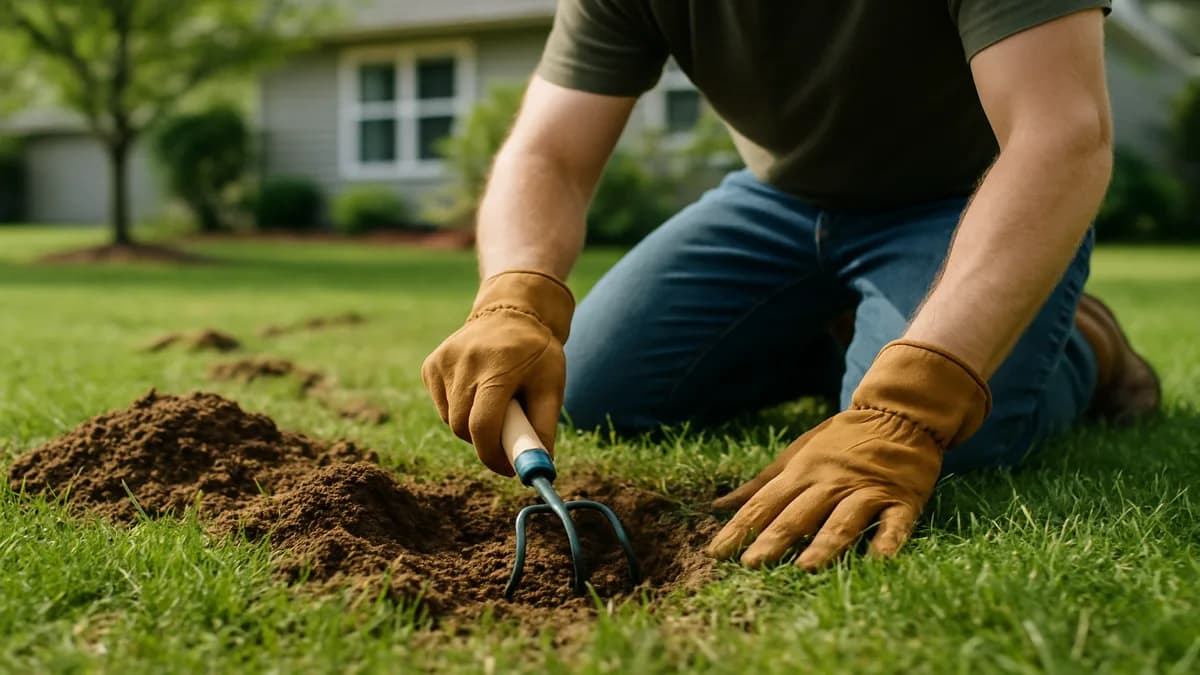
Mole tunnels and mounds are ugly, but you can fix them. Learn how to level, reseed, and prevent future damage,without making it worse.
6 min read
How to Actually Use Diatomaceous Earth to Treat Fleas
Diatomaceous earth can help control fleas if you use it right. Here’s how to apply it safely, where it works, and where people waste time.
6 min read
Yellow Grass in Your Lawn: What’s Wrong and How to Fix It
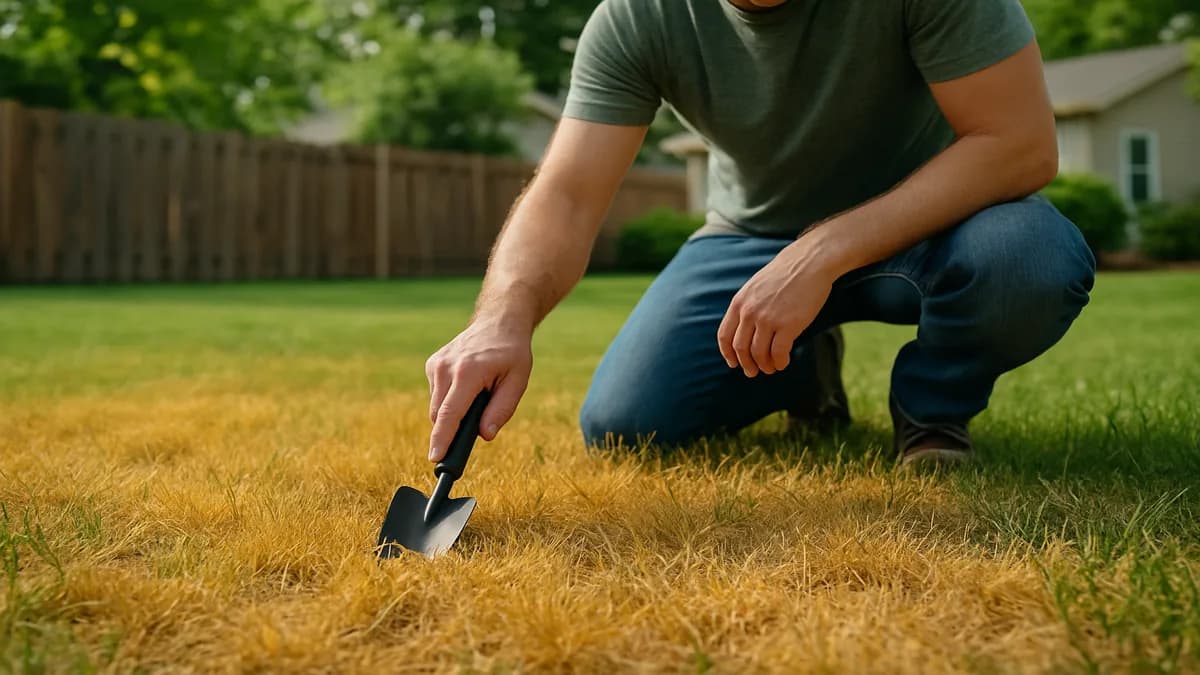
Yellow grass can be a quick fix or a sign of bigger trouble. Learn how to spot the difference, what to do first, and which mistakes to avoid.
8 min read
Spotted something out of date or wrong? Tell us , we correct guides rather than leaving them to rot.