Flagstone Landscaping Without Regrets: What Actually Works
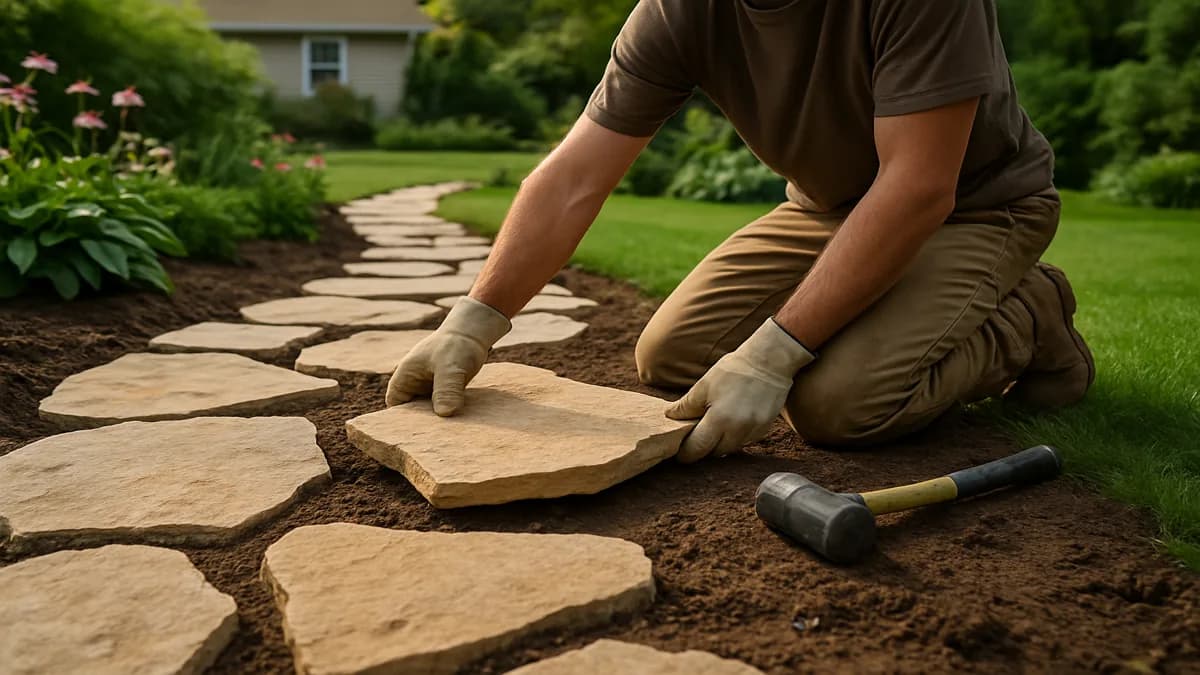
Thinking about a flagstone patio or path? Get the truth on thickness, base prep, joint options, and what flagstone really costs before you start hauling stone.
On this page
- Flagstone Basics: What Are You Really Buying?
- Flagstone Thickness: Don’t Cheap Out
- Flagstone vs. Pavers: Which Makes Sense?
- Dry-Laid vs. Mortared Flagstone: Pick Your Method
- How to Build a Dry-Laid Flagstone Patio or Walkway
- What Goes Between the Stones? Joint Options
- Flagstone Cost: What You’ll Actually Pay
- Worked Example: 200 Square Foot Patio
- Honest Skip-It Scenario
- Where People Mess Up: The Top Mistakes
- Practical Tips for Flagstone Projects
- What Else Goes With Flagstone?
- When Not to Use Flagstone
- Related Reading
You’re here because you want a flagstone patio or path that looks like it belongs in a magazine, but you don’t want it to fall apart or cost you twice what you expected. Here’s what actually matters before you buy a single stone or start digging: flagstone thickness, installation method, joint material, and real costs. If you get those right, the rest is just sweat and patience.
Flagstone Basics: What Are You Really Buying? (opens in a new tab)
Flagstone isn’t a single rock. It’s a category of flat, split sedimentary stones,usually sandstone, bluestone, limestone, or quartzite,sold in irregular or cut shapes. You’ll see pallets labeled “patio stone,” “steppers,” or “flagstone,” but what matters most is thickness and type.
| Stone Type | Color Range | Durability / Notes |
|---|---|---|
| Bluestone | Blue-gray, buff | Very hard, holds up in freeze-thaw, pricey |
| Sandstone | Tan, red, brown | Softer, easy to shape, some types flake |
| Limestone | Gray, cream, buff | Smooth, can be slippery, reacts to acid |
| Quartzite | Silver, gold | Extremely hard, tough to cut, sparkly |
| Slate | Gray, black, green | Splits thin, best for mortared installs |
Irregular flagstone (natural edges) is cheaper per square foot but takes more time to fit. Cut flagstone (sawn rectangles) costs more but installs faster and gives a formal look.
Flagstone Thickness: Don’t Cheap Out (opens in a new tab)
This is where people mess up. For dry-laid patios and walkways (set on gravel and sand), you need flagstone at least 1.5 inches thick,2 inches is safer. Anything thinner will crack or wobble, especially if you get freeze-thaw cycles. For mortared installs over concrete, 1 to 1.5 inch is fine because the slab carries the load. Stepping stones in a lawn should be 2 inches thick so they don’t snap when you step on the edge.
Flagstone vs. Pavers: Which Makes Sense? (opens in a new tab)
| Feature | Flagstone | Pavers |
|---|---|---|
| Look | Natural, irregular | Uniform, geometric |
| Cost (material) | $4-$14/sq ft | $2-$6/sq ft |
| Labor | Slow, hand-fit | Fast, modular |
| DIY Difficulty | Moderate to hard | Easier |
| Repairs | Tedious (irregular) | Simple (swap paver) |
| Best Use | Paths, patios, steppers | Patios, driveways |
If you want a rustic, natural look and don’t mind paying more, flagstone is worth it. For driveways or a budget patio, pavers win.
Dry-Laid vs. Mortared Flagstone: Pick Your Method (opens in a new tab)
- Dry-laid: Flagstone set on a compacted gravel base with sand or stone dust. Permeable, easier to fix if stones settle, best for freeze-thaw climates. Needs thicker stone (1.5-2 inches).
- Mortared: Flagstone set in mortar over a concrete slab. Rigid, weed-free, good around pools or where you already have a slab. Can use thinner stone (1-1.5 inches), but cracks if the slab moves.
On most lawns, dry-laid is the way to go unless you already have a solid slab.
How to Build a Dry-Laid Flagstone Patio or Walkway (opens in a new tab)
Excavate Deep Enough
Dig out the area 6-8 inches below finished grade. You’ll need room for 4 inches of gravel, 1 inch of sand or stone dust, and 1.5-2 inches of flagstone.
Set Slope for Drainage
Slope the base away from buildings at least 1/4 inch per foot. Don’t try to fix drainage by tilting stones later,it never works.
Compact the Subgrade
Use a plate compactor (rent one) to firm up the soil. Skipping this step means your patio will settle unevenly.
Install the Gravel Base
Add 4 inches of crushed stone (not pea gravel), compact in 2-inch layers. For clay or wet soils, use 6 inches.
Add the Setting Bed
Spread 1 inch of stone dust or coarse sand. Stone dust locks stones better for flagstone.
Lay the Stones
Start with the biggest, flattest stones in high-traffic spots. Fit smaller pieces around them. Aim for joints 1/2 to 1.5 inches wide.
Level and Set Each Stone
Tap each stone with a rubber mallet. Check for wobble and level. If it rocks, add or remove stone dust underneath.
Fill the Joints
Sweep in your joint material (see below), water it in, and top up after it settles.
What Goes Between the Stones? Joint Options (opens in a new tab)
The joint material affects drainage, weeds, and looks. Here’s what actually works:
| Joint Material | Best For | Pros / Cons |
|---|---|---|
| Polymeric sand | Joints under 1/2 inch | Hardens, resists weeds, needs tight joints |
| Stone dust / DG | Wider, natural joints | Looks natural, weeds can grow, easy to top up |
| Groundcover plants | Wide, low-traffic joints | Pretty, needs time to fill in, some care |
| Mortar | Mortared installs only | Permanent, cracks if base moves |
| Pea gravel | Very wide, informal joints | Moves around, messy, not for patios |
Flagstone Cost: What You’ll Actually Pay (opens in a new tab)
Flagstone isn’t cheap. Here’s what you’re in for:
| Item | Price Range (per sq ft) |
|---|---|
| Irregular flagstone | $4-$9 |
| Cut flagstone | $6-$14 |
| Base & setting material | $1.50-$3 |
| Dry-laid, installed | $18-$38 |
| Mortared, installed | $20-$45 |
Labor is the big cost. Fitting irregular stone takes time. If you DIY, you’ll save, but plan for a sore back.
Worked Example: 200 Square Foot Patio (opens in a new tab)
Let’s say you want a 200 sq ft patio, dry-laid:
- Flagstone (irregular): $7/sq ft x 200 = $1,400
- Base & setting material: $2/sq ft x 200 = $400
- Delivery: $150
- DIY labor: free (your time)
- Total: $1,950 (plus tax, tools, and sweat)
Hire it out? Expect $4,000-$7,600 installed for the same size.
Honest Skip-It Scenario (opens in a new tab)
If your site is always soggy or you have heavy clay that never drains, skip flagstone patios. The base will stay wet, stones will shift, and frost heave will wreck your work. Consider a raised deck or gravel seating area instead.
Where People Mess Up: The Top Mistakes (opens in a new tab)
- Using thin stone for dry-laid installs. It cracks. Always.
- Skipping base compaction. Stones settle, joints open, weeds move in.
- Not buying extra stone. You’ll need 10-15% more for cuts, breakage, and color matching.
- Ignoring slope. Water pools, moss grows, stones get slick.
- Filling wide joints with polymeric sand. It won’t set up right and washes out.
Practical Tips for Flagstone Projects (opens in a new tab)
- Sort stones by thickness and size before you start. It saves time and your knees.
- Use a diamond blade in an angle grinder for cuts. Wear eye and dust protection.
- Flagstone is heavy: 12-18 lbs per sq ft at 1.5 inches thick. A pallet can weigh 1.5-2 tons. Plan for delivery and moving stones.
- For steps or pool decks, use stones with a rough (cleft or thermal) finish to avoid slips.
- Most people skip sealing. If you do seal, use a breathable, non-slip product and plan to reapply every few years.
What Else Goes With Flagstone? (opens in a new tab)
Flagstone pairs well with:
- Privacy hedges for screening
- Flowering vines to soften hard edges
- Pergolas for shade
- Mulch in garden beds around the patio
- Rainwater harvesting if you want to manage runoff
When Not to Use Flagstone (opens in a new tab)
- Driveways or car parking: It will crack. Use pavers or concrete.
- Poor drainage: If your base stays wet, flagstone will shift and settle. Fix drainage first or pick another material.
Related Reading (opens in a new tab)
- Guide to Pergolas: Types, Uses, Costs
- How to Winterize a Garden
- Koi Pond Maintenance
- Mulch Calculator: How Much Mulch Do You Need?
If you want a flagstone patio or path that lasts, don’t cut corners on thickness or base prep. Buy a little extra stone, get your joints right, and you’ll have something to enjoy for decades. If you want it to go faster and cheaper, pavers are your friend. Either way, measure twice,haul once.
Frequently asked questions
Calculators for this job
Gravel Calculator
Gravel is ordered by the ton but measured by volume, so this calculator gives you both. Pick your stone, enter the area and depth, and you'll get cubic yards, tons, and a delivered cost range.
OpenSand Calculator
Enter your area and depth for sand volume in cubic yards, tons, and 50 lb bags. Includes the right sand type and layer thickness for paver bedding, which is where most sand estimates go wrong.
OpenPaver Calculator
Enter your patio or walkway size and paver dimensions to get the paver count plus every layer underneath, base depth by traffic type, bedding sand, joint sand, and edging.
OpenKeep reading
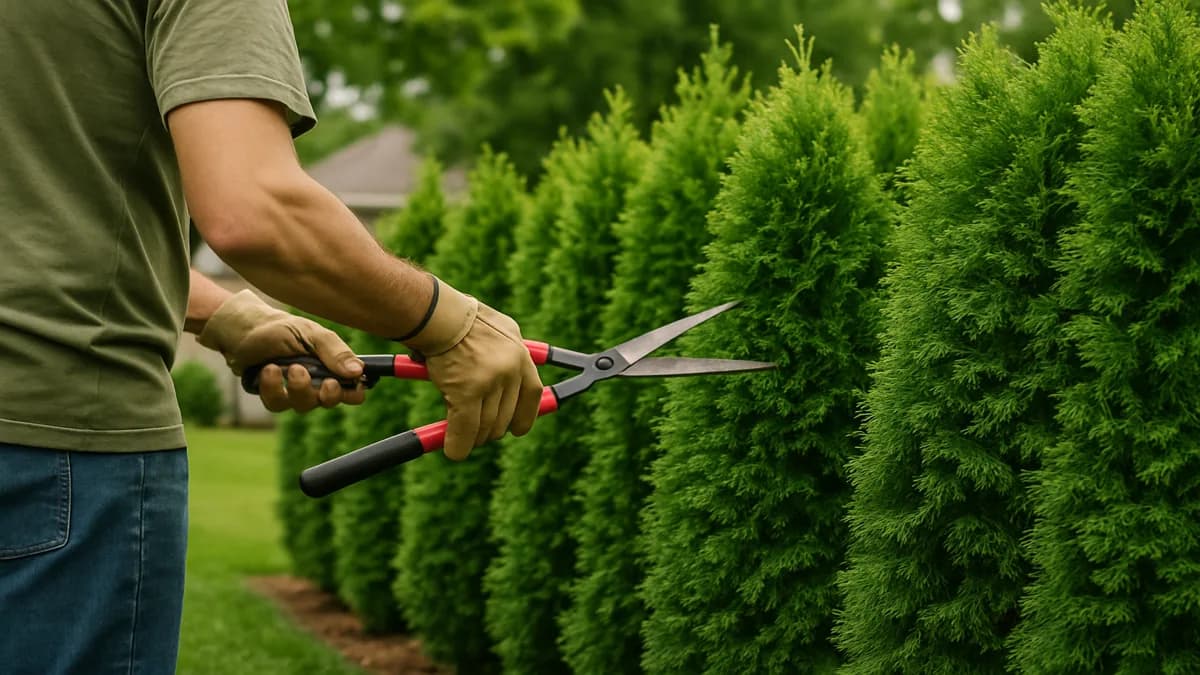
Privacy Plants That Work: Fast, Dense, and Right for Your Yard
Choosing privacy plants is about more than speed. Get real advice on spacing, climate fit, and which hedges actually work for small yards or tough spots.
6 min read
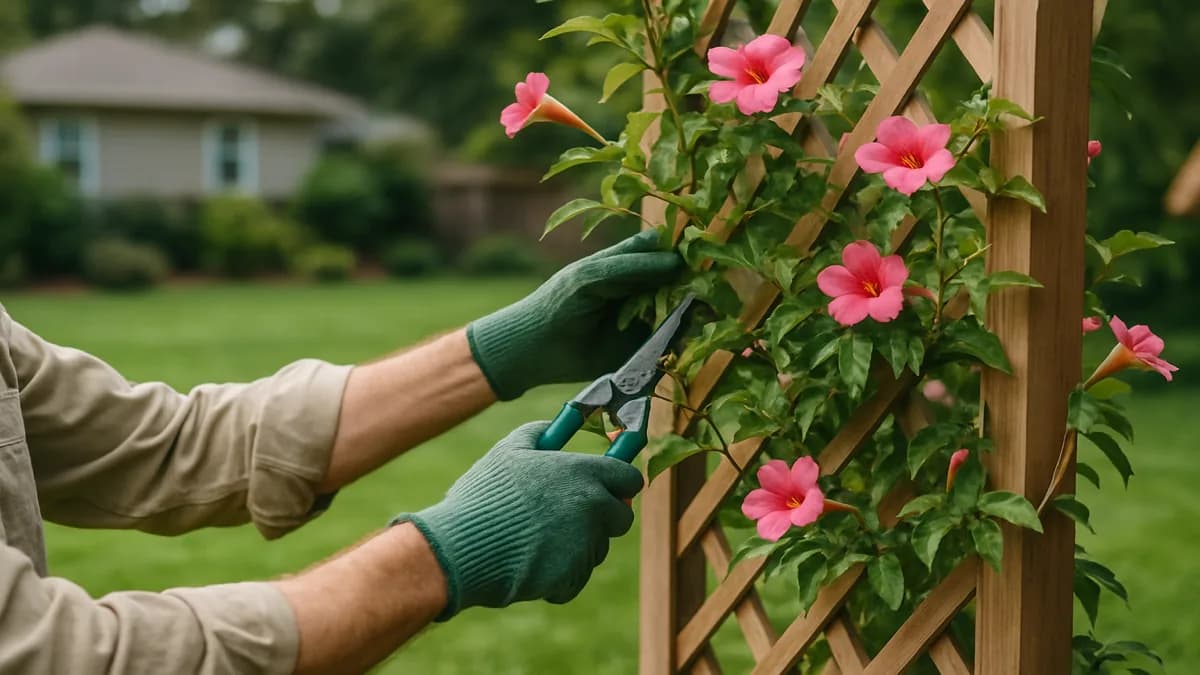
Flower Vines for Your Yard: What Works, What Wrecks, and What to Skip
Not all flower vines are friendly. Here’s how to pick the right climbers for your yard, match them to supports, and dodge invasives and home damage.
7 min read
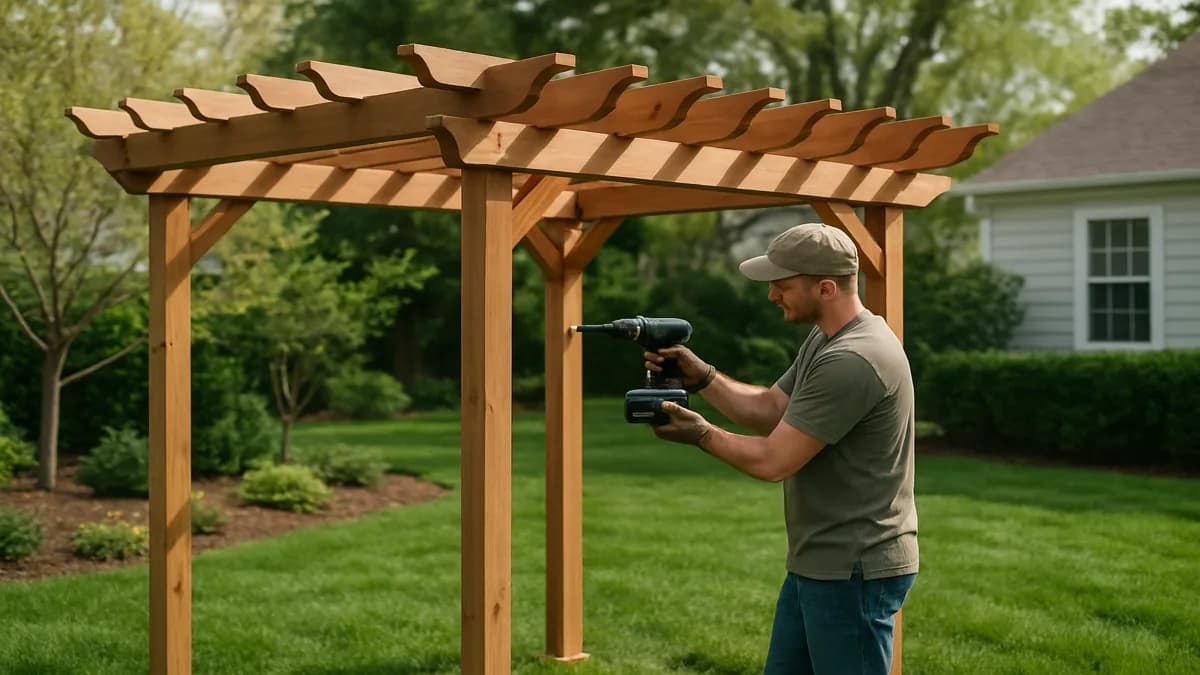
Pergola Types, Costs, and How to Avoid Regrets
Not all pergolas are the same. Get the facts on types, costs, and planning so you don’t waste money or end up with a sunburn trap.
7 min read
Spotted something out of date or wrong? Tell us , we correct guides rather than leaving them to rot.