Real-World Koi Pond Maintenance: Water Quality, Filtration, and Troubleshooting
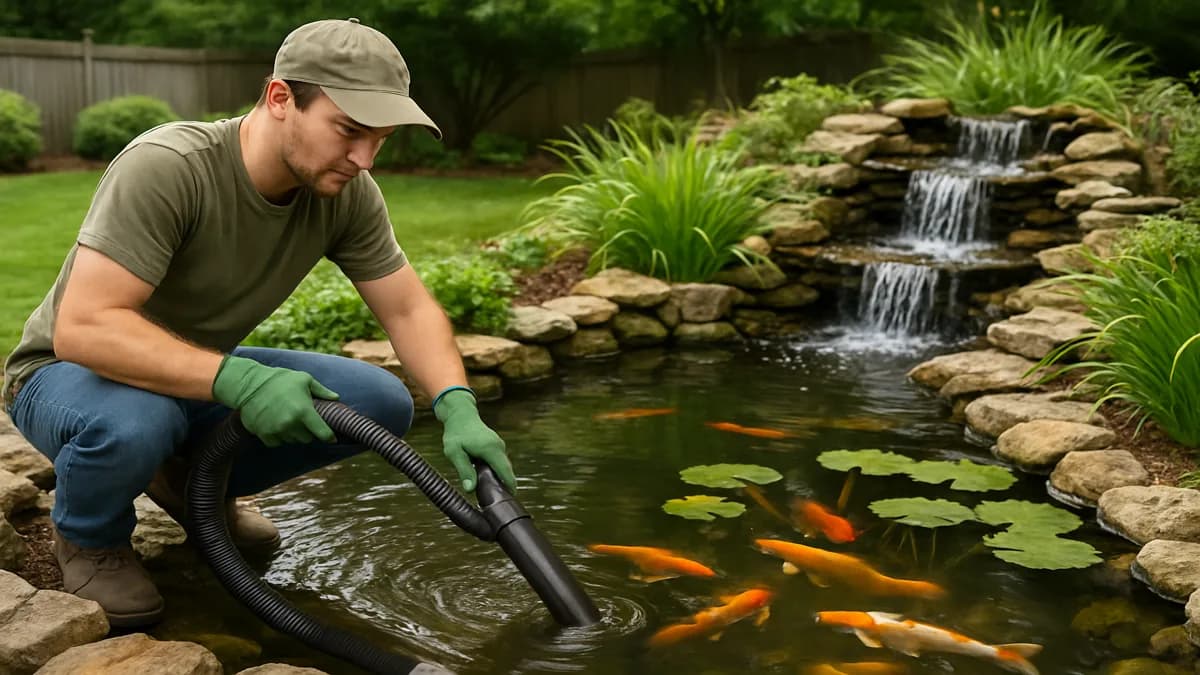
If your koi pond water is cloudy, green, or just smells off, here’s how to get it back on track,without wasting time or money.
On this page
- The Real Basics: What Makes Koi Pond Water Go Bad?
- What Water Parameters Matter (and What to Do About Them)
- Pond Filtration: What Actually Works
- Feeding and Stocking: Where People Mess Up
- Green Water and Algae: Quick Fixes and Long-Term Solutions
- Koi Pond Maintenance Schedule: What to Do and When
- Skip-It Scenario: Thinking Plants Alone Will Filter Your Pond
- Common Mistake: Overcleaning the Biofilter
- Troubleshooting: What’s Wrong With My Pond?
- Worked Example: Sizing a Pump and Filter for a 1,500-Gallon Pond
- More Resources
If you’re standing by your koi pond wondering why the water is green, the fish are hiding, or there’s a weird smell, you’re not alone. Most pond headaches come down to water quality. Today, you’re probably trying to figure out: How do I keep my koi pond clear, healthy, and low-hassle,without spending every weekend cleaning filters or dumping in chemicals?
Here’s what actually works, what’s a waste of time, and where most folks go wrong.
The Real Basics: What Makes Koi Pond Water Go Bad? (opens in a new tab)
Fish waste and leftover food break down into ammonia. Ammonia is toxic. Good bacteria (living mostly in your filter) convert ammonia into nitrite (also toxic), then into nitrate (less toxic). Nitrate builds up until you remove it with water changes or plants.
If you only remember one thing:
- Ammonia and nitrite: always zero.
- Nitrate: keep under 40 ppm.
If you see green water, cloudy water, or your fish are acting off, something in this cycle is broken.
What Water Parameters Matter (and What to Do About Them) (opens in a new tab)
| Parameter | Ideal Range | If It’s Off, Do This |
|---|---|---|
| Ammonia (NH₃) | 0 ppm | Stop feeding, partial water change, check filter |
| Nitrite (NO₂) | 0 ppm | Same as ammonia; add pond salt (1-3 ppt) to help fish cope |
| Nitrate (NO₃) | under 40 ppm | Water changes, add more plants |
| pH | 7.0-8.5 (stable) | Add baking soda to raise KH, avoid sudden changes |
| KH (carbonate hardness) | > 100 ppm | Add baking soda as needed |
| Dissolved Oxygen | > 6 ppm | Add aeration (air stones, waterfall) |
| Temperature | 50-85 °F (10-29 °C) | Adjust feeding, watch oxygen in heat |
Use a liquid test kit (not strips) weekly in spring and summer, and anytime fish act weird. In new ponds, test daily for the first month.
Pond Filtration: What Actually Works (opens in a new tab)
You need two types:
- Mechanical filtration: Traps solid waste (fish poop, leaves, uneaten food). Clean these filters every week or two, more in heavy feeding season.
- Biological filtration: Where the good bacteria live. This is what turns ammonia into nitrate. Bio-balls, ceramic rings, or sponges work. Clean only when water flow drops, and always use pond water.
How big should your filter and pump be?
- Turn over your entire pond volume every 1-2 hours.
- Example: 1,500-gallon pond needs a pump rated for 1,000-1,500 gallons per hour (gph), after accounting for pipe length and elevation.
- Always size up if you keep more than a handful of koi.
Aeration matters:
- Warm water holds less oxygen. Use an air pump with diffusers or a waterfall, especially in summer. Koi need dissolved oxygen above 6 ppm.
Feeding and Stocking: Where People Mess Up (opens in a new tab)
Most pond problems start with too many fish or too much food. Koi get big,18 to 24 inches (45-60 cm) is normal for adults. A pond that looks roomy at first gets crowded fast.
Stocking rule of thumb:
- 250-300 gallons (950-1,100 L) per adult koi, minimum.
Feeding:
- Only what they eat in 5 minutes, once or twice a day when water is above 60 °F (16 °C).
- Below 50 °F (10 °C), stop feeding. Koi can’t digest food in cold water, and leftovers rot.
| Water Temp (°F) | Feeding Frequency & Food Type |
|---|---|
| Above 68 | 2-3 times daily, high-protein pellets |
| 60-68 | Once daily, normal koi food |
| 50-60 | Every other day, wheatgerm-based food |
| Below 50 | Do not feed at all |
Green Water and Algae: Quick Fixes and Long-Term Solutions (opens in a new tab)
Green water is just single-celled algae floating in the pond. It’s ugly but not usually dangerous. It means you’ve got too much sunlight and too many nutrients.
Quick fix:
- Install a UV clarifier sized for your pond. It’ll clear green water in a week.
Long-term fixes:
- Cut back on feeding and fish.
- Add more filtration.
- Cover at least half the pond surface with floating plants (water lilies, water lettuce) or provide shade.
- Add more marginal plants to soak up nutrients.
String algae (the long, slimy kind) is different. Pull it out by hand. Some is normal, but if it takes over, reduce nutrients and add shade. Barley straw pouches sometimes help, but don’t expect miracles.
Koi Pond Maintenance Schedule: What to Do and When (opens in a new tab)
Spring
Restart pumps and filters. Test water every few days. The biofilter needs a few weeks to recover after winter. Start feeding slowly once water is above 50 °F (10 °C). Watch for disease,koi are weakest now.Summer
Peak feeding and waste. Check oxygen, especially in heat waves. Top off evaporation with dechlorinated water. Change 10-20% of water every 1-2 weeks. Clean mechanical filters as needed.Autumn
Net the pond before leaves drop. Switch to wheatgerm food as water cools. Stop feeding below 50 °F (10 °C). Remove debris before winter. Clean filters before shutting down.Winter
No feeding. Keep a hole in the ice with a floating de-icer or air stone for gas exchange. Never smash ice,it can kill fish. Turn off pumps not rated for freezing. Ponds at least 3 feet (0.9 m) deep are safest for overwintering koi.
Skip-It Scenario: Thinking Plants Alone Will Filter Your Pond (opens in a new tab)
If you try to run a koi pond with just plants and no mechanical filter, you’ll end up with sludge, stinky water, and sick fish. Plants help, but they can’t keep up with koi waste. Don’t skip the filter.
Common Mistake: Overcleaning the Biofilter (opens in a new tab)
People get nervous about dirty-looking filter media and scrub it with tap water. That wipes out your good bacteria and resets the nitrogen cycle. Only rinse gently in pond water, and only when water flow slows. If your ammonia or nitrite spikes after cleaning, this is probably why.
Troubleshooting: What’s Wrong With My Pond? (opens in a new tab)
| Symptom | Likely Cause | What to Check First |
|---|---|---|
| Fish gasping at surface | Low oxygen, high temp | Aeration, water temp |
| Fish flashing/rubbing | Parasites or ammonia/nitrite spike | Test water, check filter |
| Sudden fish deaths | Ammonia/nitrite or oxygen crash | Test water, any recent changes |
| Cloudy gray/white water | Bacterial bloom (new pond cycling) | Wait it out, test water |
| Green water | Excess nutrients, sunlight | Feeding, filtration, UV clarifier |
| Rotten smell | Anaerobic sludge, debris | Clean pond bottom, check filter |
| Fish not eating | Water too cold or poor water quality | Check temp, test water |
Always test your water before reaching for medications. Most pond problems are water quality, not disease. Meds can make things worse if the water’s already bad.
Worked Example: Sizing a Pump and Filter for a 1,500-Gallon Pond (opens in a new tab)
Let’s say your pond holds 1,500 gallons. You want to turn over the whole volume every 1.5 hours:
- 1,500 gallons ÷ 1.5 hours = 1,000 gph (gallons per hour)
- Add 20% for pipe and elevation losses: 1,200 gph pump
- Filter should be rated for at least 1,200 gph and have plenty of bio-media (bio-balls, ceramic rings, etc.)
- Add an air pump or waterfall for extra oxygen, especially in July and August
More Resources (opens in a new tab)
Frequently asked questions
Calculators for this job
Irrigation Calculator
Find out how much water your lawn or garden actually needs each week, in both inches and gallons, and how to split it across the week for your soil type.
OpenLandscaping Cost Calculator
Pick a project, enter its size, and set your market. You'll get a DIY material cost and an installed cost range, with the drivers behind the spread spelled out.
OpenKeep reading
Winterizing Your Garden: What Actually Matters
Winter garden prep isn’t about wrapping everything in burlap. Here’s what actually matters for healthy beds, roses, and irrigation,plus what you can skip.
7 min read
Flower Vines for Your Yard: What Works, What Wrecks, and What to Skip
Not all flower vines are friendly. Here’s how to pick the right climbers for your yard, match them to supports, and dodge invasives and home damage.
7 min read
Privacy Plants That Work: Fast, Dense, and Right for Your Yard
Choosing privacy plants is about more than speed. Get real advice on spacing, climate fit, and which hedges actually work for small yards or tough spots.
6 min read
Spotted something out of date or wrong? Tell us , we correct guides rather than leaving them to rot.