How to Figure Out How Much Mulch You Really Need
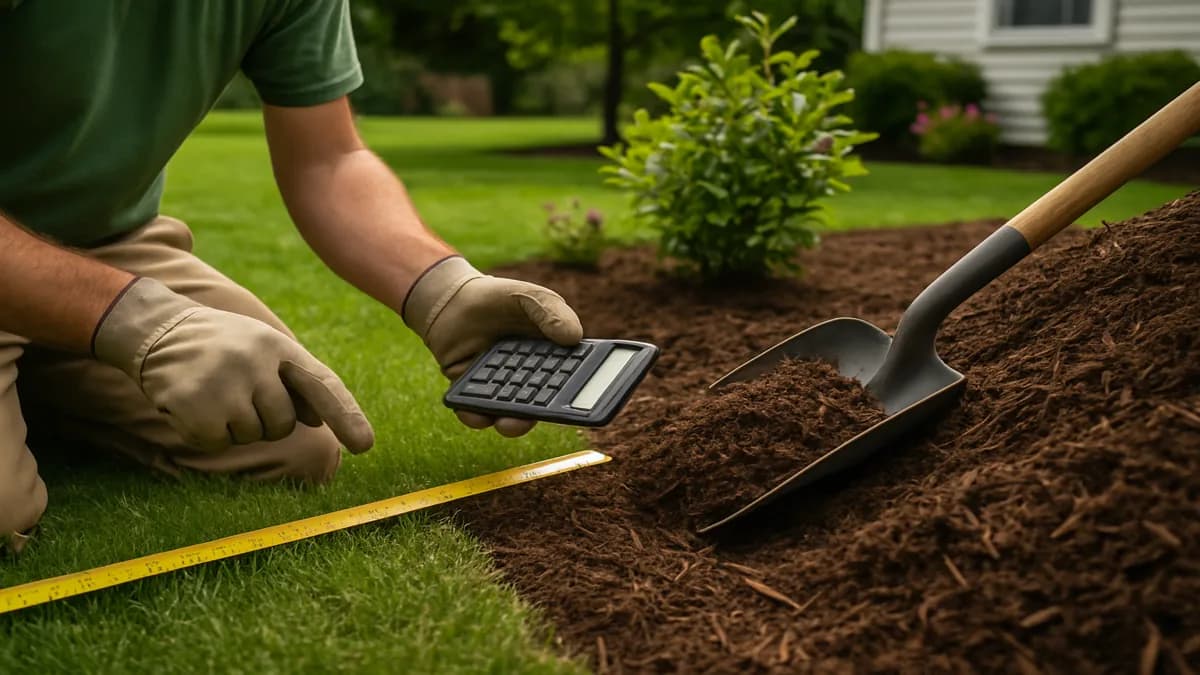
Most folks buy too much or too little mulch. Here’s how to measure, calculate, and choose between bags and bulk,plus what to skip.
On this page
- Step-by-Step: Figuring Out How Much Mulch You Need
- Mulch Coverage Table: Yards and Bags
- Real Example: A Typical Foundation Bed
- Bulk vs Bagged Mulch: Which Should You Buy?
- Measuring Odd-Shaped Beds
- How Deep Should Mulch Be?
- Topping Up Old Mulch
- Mulch Types: What Lasts and What Doesn’t
- When to Mulch
- Skip-It Scenario: When Mulch Isn’t Worth It
- Where People Mess Up: The Mulch Volcano
- More Ways to Use Mulch
- Quick Math for Mulch
- Price Comparison: Bags vs Bulk
- Final Tips
You’re here because you want to know exactly how much mulch to buy,no guesswork, no wasted money, no running out halfway through the job. Here’s the short version: measure your beds, pick your depth, and do a little math (or use the calculator below). Bags or bulk? I’ll show you when each makes sense.
Step-by-Step: Figuring Out How Much Mulch You Need (opens in a new tab)
Let’s break it down. Here’s what you do:
Measure Your Beds
Use a tape measure. For rectangles, multiply length by width (in feet). For circles, area = 3.14 × (radius × radius). Odd shapes? Break them into chunks and add the areas together.Pick Your Mulch Depth
2 to 3 inches is standard for most beds. Go thinner (1.5-2 inches) if you’ve got heavy clay or poor drainage. Never go over 4 inches,roots need air.Calculate Volume
Multiply total area (sq ft) by depth (inches), then divide by 12 to get cubic feet. Divide by 27 to get cubic yards. Example: 150 sq ft × 3 in ÷ 12 = 37.5 cu ft; 37.5 ÷ 27 = 1.39 cu yd.Convert to Bags (If Needed)
Divide cubic feet by the bag size. Most bags are 2 cu ft. In the example: 37.5 ÷ 2 = 18.75 bags. Always round up,you’ll lose some to spillage.
Mulch Coverage Table: Yards and Bags (opens in a new tab)
| Mulch Depth (inches) | 1 cu yd covers (sq ft) | 1 bag (2 cu ft) covers (sq ft) | Bags per 100 sq ft |
|---|---|---|---|
| 1 | 324 | 24 | 4.2 |
| 2 | 162 | 12 | 8.3 |
| 3 | 108 | 8 | 12.5 |
| 4 | 81 | 6 | 16.7 |
Real Example: A Typical Foundation Bed (opens in a new tab)
Let’s say you’ve got a 25-foot-long, 5-foot-wide bed. You want 3 inches of mulch.
- Area: 25 × 5 = 125 sq ft
- Depth: 3 inches
- Volume: 125 × 3 = 375; 375 ÷ 12 = 31.25 cu ft
- Cubic yards: 31.25 ÷ 27 = 1.16 cu yd
- Bags (2 cu ft): 31.25 ÷ 2 = 15.6 bags
So, you’ll need about 1.25 cubic yards or 16 bags. At $4 per bag, that’s $64. Bulk? Most places sell by the full yard, so you’ll buy 1 or 1.5 yards,figure $40 to $70 delivered, depending on your area.
Bulk vs Bagged Mulch: Which Should You Buy? (opens in a new tab)
| Bagged Mulch | Bulk Mulch | |
|---|---|---|
| Price per cu yd | $55-$70 | $30-$55 (delivered) |
| Handling | Easy to carry, store | Needs wheelbarrow, tarp |
| Best for | Under 2 cu yd | Over 2 cu yd |
| Leftovers | Easy to store | Sits outside, can get wet |
| Delivery | Fits in any car | Needs truck access |
Bags are great for small jobs, tight access, or if you want to spread the work out. Bulk is cheaper for anything over 2 yards, but you’ll need a place for the truck to dump and a way to move it (wheelbarrow, tarp, strong back). Delivery fees can eat up savings on small orders.
Measuring Odd-Shaped Beds (opens in a new tab)
- Curved borders: Measure the length along the curve, multiply by average width.
- Circles: Area = 3.14 × (radius × radius). For a 4-foot radius, that’s 3.14 × 16 = 50.24 sq ft.
- Donuts around trees: Subtract the inner circle from the outer. Example: Outer radius 3 ft (28.3 sq ft), inner radius 1 ft (3.14 sq ft). 28.3 - 3.14 = 25.16 sq ft.
- Weird shapes: Break into rectangles and triangles. Add up the pieces.
How Deep Should Mulch Be? (opens in a new tab)
- 2 to 3 inches is right for most beds. Less won’t block weeds or hold moisture. More can suffocate roots, especially in heavy clay.
- Never pile mulch against tree trunks or plant stems. Leave a 2-3 inch gap. I’ve seen more trees rot from ‘mulch volcanoes’ than I can count.
- Annuals and veggies: 1 to 2 inches is enough. Too much mulch and seedlings struggle.
Topping Up Old Mulch (opens in a new tab)
Don’t just dump a new layer every year. First, rake the old mulch to break up any crust. Measure what’s left,if you still have 1 inch, only add enough to reach your target depth. Too much mulch is a recipe for root rot and unhappy plants.
Mulch Types: What Lasts and What Doesn’t (opens in a new tab)
| Type | How Long It Lasts | Best Use | Notes |
|---|---|---|---|
| Shredded hardwood | 1-2 years | Slopes, general beds | Knits together, stays put |
| Pine bark nuggets | 2-3 years | Flat beds | Floats, not for drainage |
| Cedar | 2-3 years | Beds near house | Smells good, fades slow |
| Pine straw | ~1 year | Southern gardens | Light, easy to spread |
| Compost | under 1 year | Veggie beds, soil improvement | Feeds soil, less weed block |
| Rubber | Indefinite | Play areas, paths | Not for plant health |
| Gravel/rock | Indefinite | Permanent beds, dry gardens | Heats up soil, never breaks down |
For a deep dive on options, see Types of Organic Mulch.
When to Mulch (opens in a new tab)
- Spring: Once soil warms up, mulch to lock in moisture and block weeds.
- Fall: In cold climates, mulch after the ground freezes to protect perennials from frost heave.
- Always weed first. Mulch won’t kill established weeds,just keeps new ones from sprouting.
Skip-It Scenario: When Mulch Isn’t Worth It (opens in a new tab)
If you’ve got a bed full of groundcover (like pachysandra or vinca) that already shades the soil, skip the mulch. It’ll just smother your plants and waste your money.
Where People Mess Up: The Mulch Volcano (opens in a new tab)
Biggest mistake? Piling mulch up against tree trunks or shrub stems. That’s how you get rot, girdled trunks, and rodents chewing bark. Always keep mulch pulled back 2-3 inches from any woody stem.
More Ways to Use Mulch (opens in a new tab)
- Around new privacy hedges to keep weeds down
- Under flowering vines for moisture retention
- Around flagstone paths to keep weeds out of cracks
- In beds you’re winterizing for extra root protection
Quick Math for Mulch (opens in a new tab)
- Formula: (Area in sq ft × Depth in inches) ÷ 12 = cubic feet
- Cubic yards: Cubic feet ÷ 27
- Bags: Cubic feet ÷ bag size (usually 2 cu ft)
Price Comparison: Bags vs Bulk (opens in a new tab)
Say you need 2 yards of mulch:
- Bags: 2 yards × 13.5 bags = 27 bags. At $4.50 each, that’s $121.50.
- Bulk: 2 yards delivered, $35 per yard = $70 (plus maybe $30 delivery fee). Still cheaper than bags.
Final Tips (opens in a new tab)
- Always round up,better to have a little left than run short.
- Wet mulch is heavy. Don’t overload your car or wheelbarrow.
- If you’re storing leftovers, keep bags dry and out of the sun.
Still not sure? Use the calculator above or ask at your local garden center. We do this all day, every day.
Frequently asked questions
Calculators for this job
Mulch Calculator
Enter your bed dimensions and how deep you want the mulch. You'll get cubic yards, the number of 2 cu ft bags, delivered weight, and whether bags or bulk works out cheaper at that volume.
OpenSoil Calculator
Work out soil volume for any planting area, then see it costed as bags and as bulk. Handles rectangular beds, curved borders, circles, and irregular shapes built from sections.
OpenCompost Calculator
Compost gets applied far thinner than mulch or soil, and the right depth depends entirely on the job. Enter your area and pick the application to get volume, bags, and cost.
OpenKeep reading
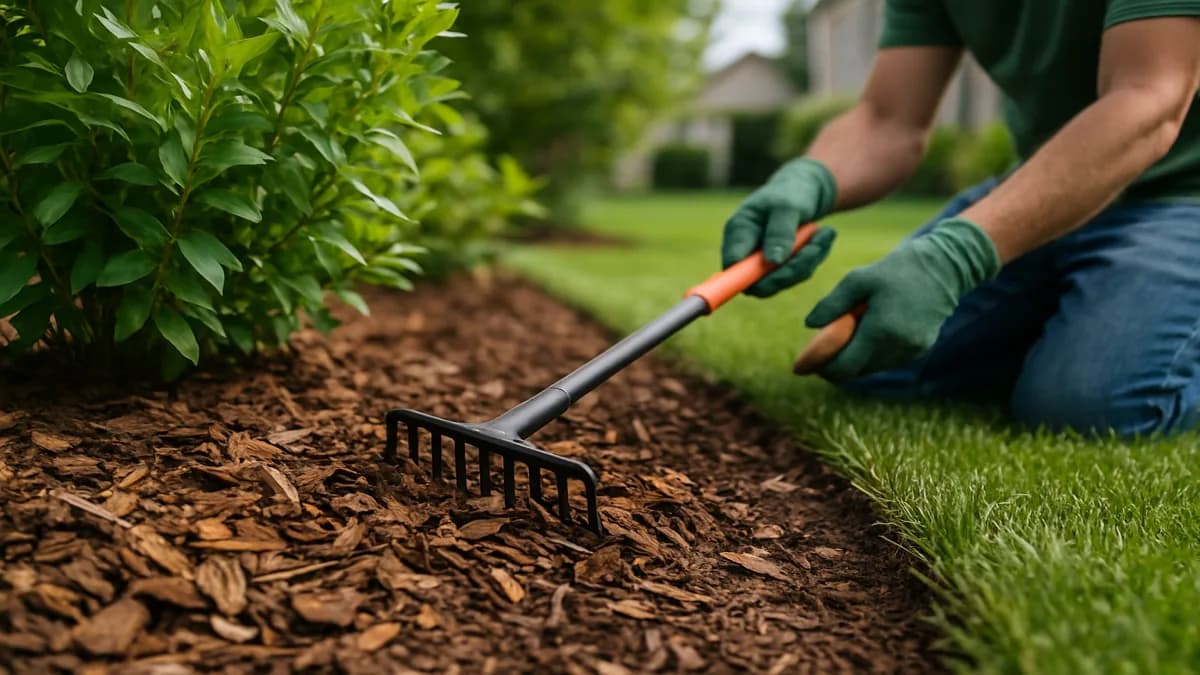
Which Organic Mulch Is Best? Real Advice for Beds, Slopes, and Veggie Gardens
Not all organic mulches are equal. Here’s how to pick the right one for your beds, slopes, or vegetable patch,without wasting money or time.
7 min read
Winterizing Your Garden: What Actually Matters
Winter garden prep isn’t about wrapping everything in burlap. Here’s what actually matters for healthy beds, roses, and irrigation,plus what you can skip.
7 min read
Privacy Plants That Work: Fast, Dense, and Right for Your Yard
Choosing privacy plants is about more than speed. Get real advice on spacing, climate fit, and which hedges actually work for small yards or tough spots.
6 min read
Spotted something out of date or wrong? Tell us , we correct guides rather than leaving them to rot.