Pergola Types, Costs, and How to Avoid Regrets
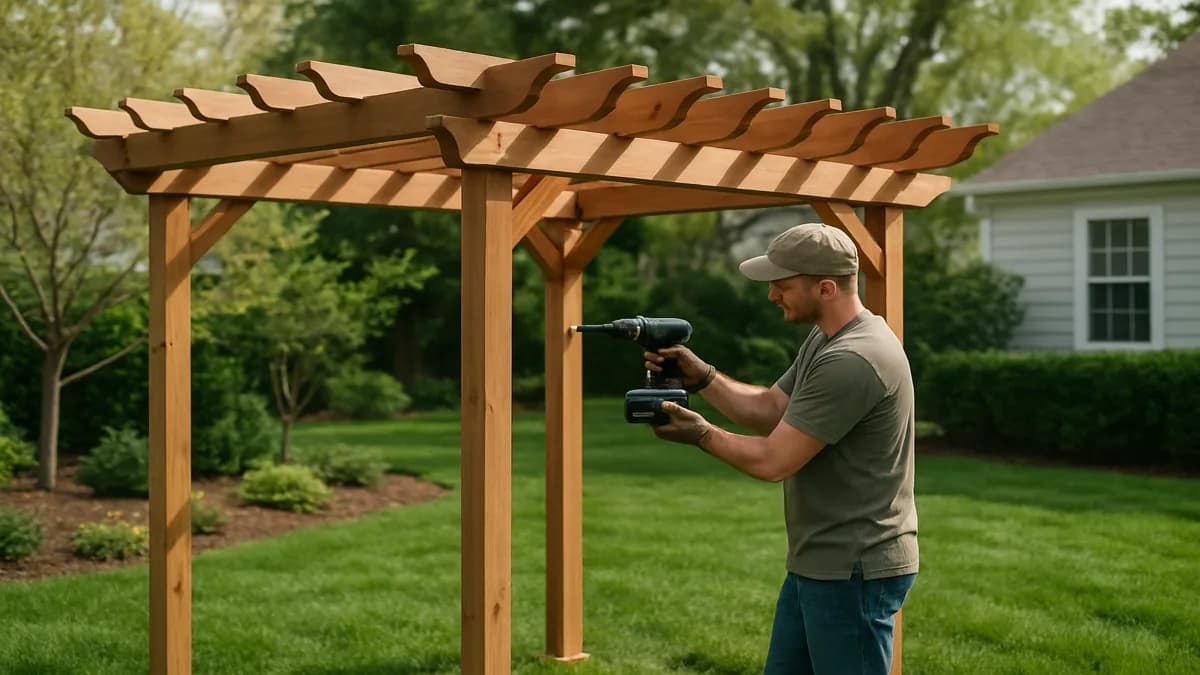
Not all pergolas are the same. Get the facts on types, costs, and planning so you don’t waste money or end up with a sunburn trap.
On this page
- Pergola Types: What Actually Works in a Yard
- Freestanding Pergolas
- Attached Pergolas
- Louvered Pergolas
- Arched Pergolas and Arbors
- Pergola Materials: Pros, Cons, and Costs
- How Much Shade Will You Really Get?
- Pergola Costs: Real Numbers, Not Just Averages
- Permits, Codes, and Other Red Tape
- Where People Mess Up (And How to Avoid It)
- When to Skip a Pergola
- Planning Your Pergola: Sizing, Placement, and Basics
- Pergola vs. Gazebo vs. Arbor: What’s Right for You?
- Next Steps: What to Do Before You Buy or Build
If you’re here, you’re probably trying to figure out: Is a pergola worth the money and hassle? Which type actually fits your yard, and how much will it cost,really? Here’s what you need to know before you start digging holes or ordering a kit.
Most folks want a pergola for two things: shade and style. The catch? Not all pergolas give much shade, and costs add up fast. Let’s break down your options, what works, and where people go wrong.
Pergola Types: What Actually Works in a Yard (opens in a new tab)
Freestanding Pergolas (opens in a new tab)
These stand on four (or more) posts, not attached to your house. You can put them anywhere,over a patio, fire pit, or in the middle of your lawn. They’re good for creating a focal point or a separate hangout spot.
What to watch: You’ll need solid footings (usually concrete) or the whole thing will shift or lean over time. Placement matters: If you put it too far from the house, you may not use it much.
Attached Pergolas (opens in a new tab)
One side bolts to your house (with a ledger board), the other stands on posts. These are popular for shading patios or decks right outside your door.
Common mistake: Poor flashing at the ledger. I’ve seen more than one homeowner end up with rotten siding or framing because water sneaks in. If you’re not confident with waterproofing, hire a pro for this step.
Louvered Pergolas (opens in a new tab)
These have adjustable slats (louvers), usually aluminum, that tilt open or closed. Some are motorized. You can block sun, let in light, or even keep rain out.
Downside: Price. Expect to pay at least double (sometimes quadruple) compared to a basic wood pergola.
Arched Pergolas and Arbors (opens in a new tab)
Smaller, decorative, often used over walkways or as garden entrances. Usually 3-6 feet wide. Great for supporting vines or marking a transition in your landscape.
Pergola Materials: Pros, Cons, and Costs (opens in a new tab)
| Material | Typical Installed Cost | Lifespan | Maintenance Needs | Looks/Notes |
|---|---|---|---|---|
| Pressure-treated pine | $20-$40/sq ft | 15-20 years | Stain every 2-3 years | Cheapest, can warp/check |
| Western red cedar | $35-$75/sq ft | 20-30 years | Optional stain/seal | Weathers to silver, stable |
| Redwood | $40-$80/sq ft | 25-40 years | Optional stain/seal | Regional, premium look |
| Vinyl | $30-$60/sq ft | 20+ years | Hose off as needed | Limited styles, low upkeep |
| Aluminum | $50-$90/sq ft | 30+ years | Minimal | Modern, resists rust/rot |
| Fiberglass | $70-$110/sq ft | 30+ years | Minimal | Long spans, high-end |
- Cedar is the go-to for most yards: stable, rot-resistant, looks good unfinished or stained.
- Pressure-treated pine is cheapest, but warps as it dries and needs more upkeep. Only use ground-contact rated posts if they touch soil or concrete.
- Aluminum/fiberglass: Lasts decades, almost no maintenance, but costs more up front.
- Vinyl: Low maintenance, but looks less natural and can get brittle with age.
- Redwood: Excellent, but pricey and not always available outside the West.
How Much Shade Will You Really Get? (opens in a new tab)
Shade from a pergola depends on rafter spacing, orientation, and what you add on top. Here’s what actually makes a difference:
- Rafter orientation: North-south rafters block more midday sun; east-west blocks morning/evening sun. Think about when you’ll use the space.
- Rafter spacing: Standard is 12-16 inches apart. For more shade, go 6-8 inches.
- Rafter depth: Deeper (2x8) rafters cast wider shadows than 2x4.
- Purlins: Add a second layer of boards perpendicular to rafters for more shade (can nearly double it).
- Canopy: Retractable fabric or shade sails can block 70%+ of sun, but may need replacing every few years.
- Vines: Wisteria, grape, or trumpet vine will give dense summer shade,just make sure your pergola is built to hold the weight. See flowering vines for your yard for ideas.
Pergola Costs: Real Numbers, Not Just Averages (opens in a new tab)
| Pergola Type/Size | Typical Cost Range (Installed) | Notes |
|---|---|---|
| Small DIY kit (10x10) | $2,000 - $4,000 | Basic wood or vinyl kits |
| Larger DIY kit (12x16) | $3,500 - $7,000 | More complex kits, better materials |
| Custom cedar (12x16) | $6,700 - $14,400 ($35-$75/sq ft) | Site prep, finish, and design matter |
| Aluminum/Fiberglass | $9,600 - $17,300 ($50-$110/sq ft) | Modern look, low maintenance |
| Louvered, motorized | $19,200 - $38,400+ ($100-$200/sq ft) | Adjustable, weatherproof |
Worked Example:
Say you want a 12x16 ft cedar pergola (192 sq ft), installed. At $50/sq ft, that’s $9,600. Add $1,500 for concrete footings (needed in most climates), and $800 for basic lighting. Total: $11,900. If you DIY, you might save 30-40%,but only if you have the tools and skills.
Extra costs to plan for:
- Concrete footings below frost line (a must in cold states)
- Patio, deck, or gravel base under the pergola (nobody wants to sit on mud)
- Electrical work for lights or fans
- Permit fees and inspections
Permits, Codes, and Other Red Tape (opens in a new tab)
- Attached pergolas: Almost always need a permit. The city wants to check the ledger and waterproofing.
- Freestanding pergolas: Sometimes exempt if under 100-200 sq ft, but rules vary. Always check local codes and HOA rules.
- Triggers for permits: Electrical work, deep footings, floodplain or historic area, or if you’re in an HOA. Don’t guess,ask before you build.
Where People Mess Up (And How to Avoid It) (opens in a new tab)
- Skipping permits: You might get away with it, but if a neighbor complains or you sell your house, you could face fines or have to tear it down.
- Bad ledger flashing: On attached pergolas, water sneaks in and rots your house framing. If you’re not sure, hire a pro for this step.
- Undersized footings: Posts need to go below frost depth or your pergola will shift and sag. Don’t just set posts on pavers or in shallow holes.
- No surface underneath: Building over grass or dirt? You’ll regret it. Add a patio, deck, or gravel pad first. See landscaping with flagstone or use our paver calculator for help.
When to Skip a Pergola (opens in a new tab)
If you want full rain protection or deep shade, a pergola isn’t the answer. You’ll be disappointed. Go for a gazebo, pavilion, or solid-roof patio cover instead. Pergolas are about filtered sun and open-air feel,not staying dry in a storm.
Planning Your Pergola: Sizing, Placement, and Basics (opens in a new tab)
- Post spacing: 8-10 feet apart is standard for wood. Wider spans need beefier beams (and more money).
- Beam overhang: 12-18 inches past the posts looks good and adds shade.
- Height: 8 feet minimum under the beam, 9-10 feet feels more open and lets you add a ceiling fan.
- Rafter tails: Angled or curved cuts look finished, but keep it simple if you’re DIYing.
- Surface first: Plan your patio or deck before sizing the pergola. A too-small pergola over a big patio looks odd.
Pergola vs. Gazebo vs. Arbor: What’s Right for You? (opens in a new tab)
| Want... | Best Structure | Why? |
|---|---|---|
| Partial shade, open air | Pergola | Filtered sun, vines possible |
| Full shade and rain cover | Gazebo or pavilion | Solid roof, dry in storms |
| Adjustable shade | Louvered pergola | Slats tilt for sun or rain |
| Cheapest shade | Shade sail | Fabric, fast install |
| Garden entry or path accent | Arbor | Small, supports vines |
Next Steps: What to Do Before You Buy or Build (opens in a new tab)
- Decide how much shade and weather protection you really want.
- Pick a type and material that fits your style, maintenance tolerance, and budget.
- Plan the size and placement based on how you’ll use the space and the sun’s path.
- Check city, county, and HOA rules before you buy anything.
- If you’re not confident with ledgers, footings, or electrical, hire a pro for those parts.
For more ideas, see our flowering vines for your yard for pergola plant options, landscaping with flagstone for patio surfaces, and mulch calculator if you want a low-maintenance ground cover around your pergola. If you’re dreaming bigger, check out how to build a treehouse for more backyard inspiration.
Frequently asked questions
Calculators for this job
Landscaping Cost Calculator
Pick a project, enter its size, and set your market. You'll get a DIY material cost and an installed cost range, with the drivers behind the spread spelled out.
OpenConcrete Calculator
Get cubic yards and exact bag counts for slabs, footings, cylindrical piers, and stairs, plus whether mixing bags or ordering ready-mix makes sense at your volume.
OpenPaver Calculator
Enter your patio or walkway size and paver dimensions to get the paver count plus every layer underneath, base depth by traffic type, bedding sand, joint sand, and edging.
OpenKeep reading
Flower Vines for Your Yard: What Works, What Wrecks, and What to Skip
Not all flower vines are friendly. Here’s how to pick the right climbers for your yard, match them to supports, and dodge invasives and home damage.
7 min read
How to Build a Treehouse That Lasts (and Doesn’t Kill the Tree)
The real trick to building a treehouse isn’t the carpentry,it’s attaching to a living tree without wrecking it. Here’s how to do it right, from hardware to safety.
6 min read
Flagstone Landscaping Without Regrets: What Actually Works
Thinking about a flagstone patio or path? Get the truth on thickness, base prep, joint options, and what flagstone really costs before you start hauling stone.
7 min read
Spotted something out of date or wrong? Tell us , we correct guides rather than leaving them to rot.