Privacy Plants That Work: Fast, Dense, and Right for Your Yard
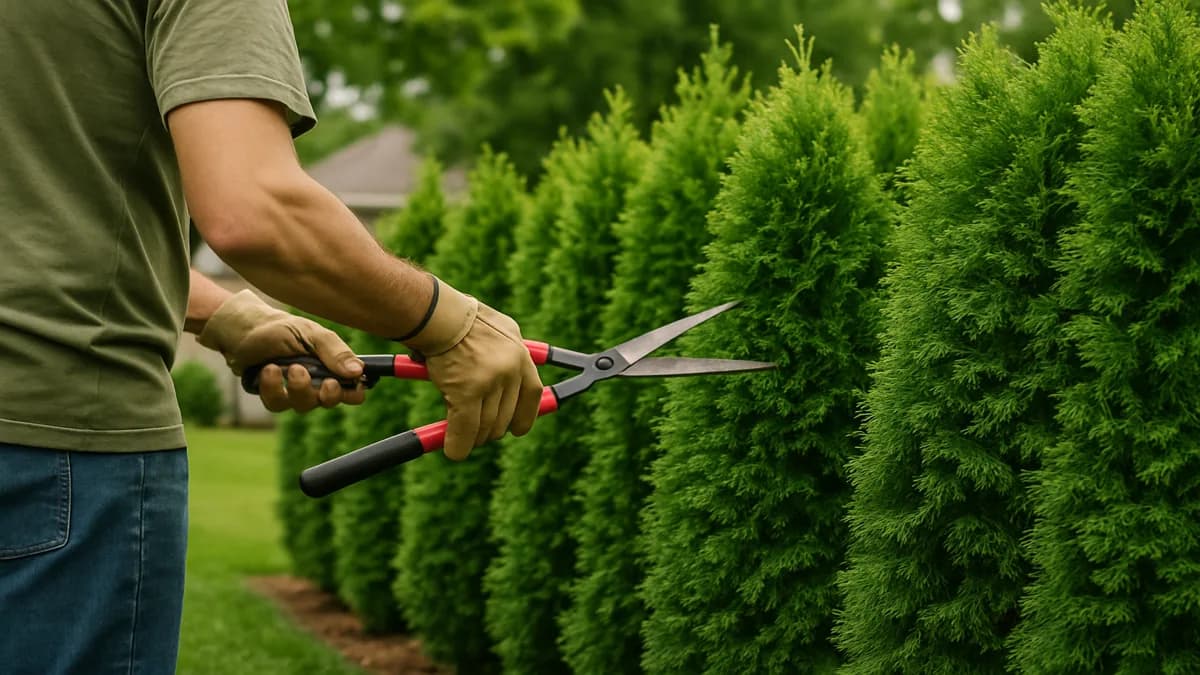
Choosing privacy plants is about more than speed. Get real advice on spacing, climate fit, and which hedges actually work for small yards or tough spots.
On this page
- The Best Privacy Hedges,By Speed, Size, and Climate
- Fast-Growing Privacy Screens
- Medium-Growth Hedges
- Slow-Growing, Classic Screens
- How Many Shrubs Do You Need?
- Step-by-Step: Planting a Privacy Hedge That Lasts
- Pruning: The Secret to a Thick, Healthy Hedge
- Skip-It Scenario: When a Hedge Is the Wrong Choice
- Where People Mess Up: Planting Too Close
- Real Numbers: Mulch and Water for a 30-Foot Hedge
- Hedge Alternatives and Add-Ons
- More Reading
You’re here because you want to block a neighbor’s view, quiet the street, or just carve out a green hideaway. The right privacy plants can do all that,if you pick the right species for your yard and climate, and space them properly. Get it wrong, and you’ll be fighting bare spots, disease, or a hedge that takes over your whole lawn.
Here’s what actually works, what to avoid, and how to get a hedge that fills in fast,and stays healthy for years.
The Best Privacy Hedges,By Speed, Size, and Climate (opens in a new tab)
There’s no single “best” hedge for everyone. What works in Georgia won’t survive a Minnesota winter. Some hedges fill in fast but get huge. Others take their sweet time but fit tight spots.
| Plant Name | USDA Zones | Mature Height | Growth Rate | Spacing | Evergreen? | Good For: |
|---|---|---|---|---|---|---|
| Thuja 'Green Giant' | 5-8 | 30-50 ft | 3 ft/yr | 5-8 ft | Yes | Big yards, fast fill |
| Leyland Cypress | 6-10 | 40-60 ft | 3-4 ft/yr | 6-10 ft | Yes | Large lots, warm |
| Privet (Ligustrum spp.) | 4-8 | 10-15 ft | 2-3 ft/yr | 2-3 ft | Semi | Cheap, quick, urban |
| 'Emerald Green' Arborvitae | 3-8 | 12-15 ft | 1 ft/yr | 2-3 ft | Yes | Small yards, narrow |
| American Holly | 5-9 | 15-30 ft | 1-2 ft/yr | 4-6 ft | Yes | Wildlife, berries |
| Cherry Laurel | 6-9 | 10-20 ft | 2 ft/yr | 4-6 ft | Yes | Shade, broadleaf |
| Wax Myrtle | 7-11 | 10-20 ft | 2-3 ft/yr | 4-6 ft | Semi | Salt, tough soils |
| Viburnum (various) | 4-8 | 8-15 ft | 1-2 ft/yr | 4-6 ft | Varies | Flowers, color |
| Boxwood (Buxus spp.) | 5-9 | 3-8 ft | 3-6 in/yr | 18-24 in | Yes | Formal, slow, small |
| Yew (Taxus spp.) | 4-7 | 4-20 ft | 6-12 in/yr | 3-4 ft | Yes | Shade, classic |
| Hornbeam | 4-8 | 15-30 ft | 1-2 ft/yr | 3-4 ft | No | Wet soils, sheared |
Fast-Growing Privacy Screens (opens in a new tab)
Thuja ‘Green Giant’: Grows 3 feet a year, tops out at 30-50 feet tall and 12-20 feet wide. Handles heat, humidity, and clay. Deer usually leave it alone. Needs space,don’t try this in a 5-foot strip.
Leyland Cypress: The fastest. Up to 4 feet a year. Gets huge (40-60 feet tall, 15-25 feet wide). Shallow roots, so don’t plant near sidewalks or septic. Prone to canker if crowded or stressed.
Privet (Ligustrum spp.): Cheap, fast, and forgiving. Grows 2-3 feet a year, 10-15 feet tall. Handles pruning abuse. But: Some types are invasive in the South and Midwest. Check local rules before planting.
Medium-Growth Hedges (opens in a new tab)
‘Emerald Green’ Arborvitae: Stays narrow (3-4 feet wide), grows to 12-15 feet tall. Perfect for tight spaces or along driveways. Only grows about a foot a year. Deer love it,protect young plants.
American Holly: 1-2 feet a year, 15-30 feet tall. Evergreen, spiny leaves, red berries (if you plant a male nearby). Good for wildlife. Slow but dense.
Cherry Laurel: Broadleaf evergreen, 2 feet a year, 10-20 feet tall. Tolerates shade. Leaves and seeds are toxic if eaten,don’t use where kids or pets chew.
Wax Myrtle: 2-3 feet a year, 10-20 feet tall. Handles salt, drought, wet feet, and poor soil. Spreads by suckers,keep an eye on it.
Viburnum (various): 1-2 feet a year, 8-15 feet tall. Some are evergreen, some not. Flowers, berries, and fall color. Watch for viburnum leaf beetle in the Northeast.
Slow-Growing, Classic Screens (opens in a new tab)
Boxwood: 3-6 inches a year, 3-8 feet tall. Formal look, takes shearing. Boxwood blight is a real problem,buy resistant types.
Yew: 6-12 inches a year, 4-20 feet tall. Shade tolerant, lives forever. All parts except the red aril are toxic. Needs good drainage.
Hornbeam: 1-2 feet a year, 15-30 feet tall. Deciduous, but holds leaves in winter for some privacy. Takes hard pruning, tolerates clay and wet soils.
How Many Shrubs Do You Need? (opens in a new tab)
Worked Example: Say you want a 30-foot hedge of Thuja ‘Green Giant’ (mature width: 15 feet). Two thirds of 15 is 10 feet. 30 divided by 10 = 3, plus one = 4 plants. Don’t try to squeeze in more,crowding causes disease.
Step-by-Step: Planting a Privacy Hedge That Lasts (opens in a new tab)
Measure your space and check mature size
Don’t guess. A 10-foot-wide hedge won’t fit in a 4-foot bed. Look up the mature width and plan accordingly.
Stay inside your property line
Hedges spread. Plant at least 2 feet inside your line to avoid future arguments (and chainsaws).
Call 811 before you dig
It’s free, and hitting a gas or water line is not a fun surprise.
Plant in fall if possible
Cooler weather means less stress and better root growth before summer.
Dig a trench, not holes
A trench lets roots spread and helps the hedge fill in evenly. Dig 2 feet wide and as deep as the root ball.
Mulch the whole row
Lay down 2-3 inches of mulch (not touching stems). Keeps weeds down and moisture in.
Water deeply for the first two years
This is where folks mess up. Shallow or inconsistent watering leads to stunted, patchy hedges. Deep soak once a week.
Pruning: The Secret to a Thick, Healthy Hedge (opens in a new tab)
If you want a solid screen, you have to prune. Start light trimming in year two. Always keep the top of the hedge a little narrower than the base,this lets sunlight reach the lower branches, so you don’t end up with a green top and bare legs.
Skip-It Scenario: When a Hedge Is the Wrong Choice (opens in a new tab)
If you want instant privacy, have less than 3 feet of width, or can’t commit to yearly pruning, skip the hedge. Go with a fence instead.
A lot of folks put up a fence first, then plant a hedge for long-term beauty and extra screening.
Where People Mess Up: Planting Too Close (opens in a new tab)
I’ve seen more sad, sick hedges from crowding than anything else. People want a thick screen fast, so they plant too close. What usually happens is the plants compete for light and water, get thin, and start dying from the inside out. Stick to the spacing rule,even if it looks sparse at first.
Real Numbers: Mulch and Water for a 30-Foot Hedge (opens in a new tab)
Say you’re planting a 30-foot row of ‘Emerald Green’ arborvitae, spaced 3 feet apart (11 plants). Mulch a 3-foot-wide strip:
- Area: 30 ft x 3 ft = 90 sq ft
- Depth: 3 inches (0.25 ft)
- Volume: 90 x 0.25 = 22.5 cubic feet of mulch
Water: Deep soak (about 5 gallons per plant) once a week for the first two years, unless it rains.
Hedge Alternatives and Add-Ons (opens in a new tab)
Don’t have space for a hedge? Try flowering vines on a trellis or a pergola with climbing plants. Want a more formal look? Mix hedges with flagstone paths or mulch beds.
More Reading (opens in a new tab)
Frequently asked questions
Calculators for this job
Plant Spacing Calculator
Find out how many plants a bed needs at your chosen spacing, and how many fewer you need if you offset the rows. Triangular spacing fits about 15% more plants into the same ground.
OpenMulch Calculator
Enter your bed dimensions and how deep you want the mulch. You'll get cubic yards, the number of 2 cu ft bags, delivered weight, and whether bags or bulk works out cheaper at that volume.
OpenFence Calculator
Enter your fence run and style to get post count, rail count, picket count, and the concrete for setting posts, plus how deep the holes need to be.
OpenKeep reading
Flower Vines for Your Yard: What Works, What Wrecks, and What to Skip
Not all flower vines are friendly. Here’s how to pick the right climbers for your yard, match them to supports, and dodge invasives and home damage.
7 min read
Pergola Types, Costs, and How to Avoid Regrets
Not all pergolas are the same. Get the facts on types, costs, and planning so you don’t waste money or end up with a sunburn trap.
7 min read
Winterizing Your Garden: What Actually Matters
Winter garden prep isn’t about wrapping everything in burlap. Here’s what actually matters for healthy beds, roses, and irrigation,plus what you can skip.
7 min read
Spotted something out of date or wrong? Tell us , we correct guides rather than leaving them to rot.