Brown Patch in Lawns: How to Tell It From Dog Spots and Drought
Brown patch often shows up as tan rings or smoke-ring patches in humid weather. The fix starts with mowing, watering, and nitrogen timing before fungicide.
On this page
Brown patch lawn fungus is most likely when tan or brown rings show up during warm, humid weather, especially on tall fescue or perennial ryegrass that stays wet overnight. Start by correcting water timing, mowing height, airflow, and summer nitrogen before reaching for fungicide.
Assumptions for this guide: a US home lawn, cool-season turf such as tall fescue or perennial ryegrass, and late-spring through late-summer disease pressure. Warm-season lawns can get patch diseases too, but the timing and management may differ by grass type and region.
Brown Patch vs. Dog Urine vs. Drought (opens in a new tab)
The fastest way to avoid wasting money is to read the pattern. Brown patch is a disease pattern, not just any brown grass. It often spreads in circles or arcs because the fungus moves through leaf tissue under favorable conditions. Dog urine and drought have different fingerprints.
| Symptom | Brown patch lawn fungus | Dog urine spot | Drought stress |
|---|---|---|---|
| Shape | Rings, arcs, circles, or irregular patches | Small round burn, often with green edge | Broad dry areas or sprinkler gaps |
| Size | Inches to several feet wide | Often hand-size to dinner-plate size | Follows slopes, edges, sandy soil, or heat |
| Weather | Warm, humid, wet nights | Any season dogs use the lawn | Hot, dry, windy weather |
| Morning clue | Dark smoky edge or wet-looking border may appear | No smoky edge | Footprints stay pressed |
| First move | Dry the leaf blades and reduce stress | Flush, dilute, patch if dead | Water deeply and check coverage |
For more lookalikes, use the yellow grass causes and treatment guide. If the spots are small and clustered along a dog route, compare them with dog urine spots on lawn before buying fungicide.
Why Brown Patch Shows Up (opens in a new tab)
Brown patch is favored by humid weather, warm nights, wet leaves, excess quick-release nitrogen, poor airflow, and stressed turf. You cannot control the weather, but you can control how long the grass stays wet and how hard you push growth during risky periods.
Tall fescue and perennial ryegrass are common cool-season lawns that can show brown patch in late summer. If your lawn is mostly tall fescue or perennial ryegrass, pay close attention during muggy stretches when nighttime drying is poor.
Check the Grass Before You Treat (opens in a new tab)
Get down on your knees and look at the blades. Brown patch often leaves tan lesions with darker borders on individual leaves. The patch edge may look more active than the center. In the morning, the edge can have a smoky cast when humidity is high.
Do not diagnose from the driveway. Walk the lawn and note where the problem starts: shady side yard, low airflow corner, overwatered zone, or area that received extra fertilizer. A disease pattern plus disease weather is a stronger clue than color alone.
| Clue to inspect | What it suggests | What to do next |
|---|---|---|
| Wet leaves after sunrise | Disease-friendly irrigation or dew | Shift watering to early morning and improve drying |
| Lawn cut short in heat | Stress plus exposed crowns | Raise mowing height |
| Dark green, lush growth | Too much summer nitrogen | Pause feeding and review fertilizer plan |
| Circular patches returning yearly | Repeat brown patch pressure | Consider prevention timing next season |
| Soil dry several inches down | Drought instead of fungus | Water deeply and test sprinkler coverage |
| Sharp spots near pet paths | Urine burn | Treat as pet damage, not disease |
Cultural Fixes Come First (opens in a new tab)
The first treatment is a drier, less stressed canopy. Water early in the morning so leaves dry during the day. Avoid evening irrigation, especially during humid weather. If you do not know how much water the lawn gets, measure it instead of guessing.
Most established lawns need deep, infrequent watering rather than nightly sprinkling. The watering schedule guide explains how to work in inches per week instead of minutes on a controller.
Next, raise the mower to the recommended range for your grass. Scalped grass has less leaf area, shallower roots, and fewer reserves. Use the lawn mowing height by grass type guide if you are unsure where to set the deck.
Then look at nitrogen. Heavy quick nitrogen during brown patch weather can make susceptible turf softer and more disease-prone. That does not mean the lawn never needs fertilizer. It means timing matters. Use a soil test and a seasonal plan rather than chasing color during humid heat.
Worked Example (opens in a new tab)
Say you have a 5,000 sq ft tall fescue lawn. In late July, you see tan circles in the back yard, from 12 inches to 3 feet wide. The back yard is shaded until late morning, and the sprinkler controller runs every evening for 12 minutes. You fertilized with a fast-green product two weeks ago.
The likely first diagnosis is brown patch pressure made worse by wet leaves and summer nitrogen. The first fix is not more fertilizer. Change watering to early morning, skip evening cycles, raise the mower if it is low, and avoid additional nitrogen until disease pressure drops. Use the lawn area number to plan any product label rates if fungicide becomes necessary.
For planning costs, a small DIY fungicide treatment may mean one homeowner-size product purchase, while larger lawns or repeat treatments cost more. A professional visit is usually a higher planning range because it includes diagnosis, equipment, labor, and return applications when needed. Price the actual lawn area and label rate rather than buying by guesswork.
When Fungicide Is Worth It (opens in a new tab)
Fungicide is worth considering when the diagnosis is strong, conditions remain favorable, and the lawn matters enough to justify the cost. Examples include a front lawn declining quickly, a tall fescue lawn with a repeat history, or a newly renovated lawn you are trying to protect.
Fungicide is less useful when the damage is old, weather has turned cool and dry, or the real cause is dog urine, drought, grubs, or fertilizer burn. It also will not repair dead turf overnight. Think of fungicide as a disease-management tool, not paint.
If brown patch returns every year, prevention timing may be more effective than rescue treatment. Keep notes on the first week symptoms appear, recent weather, fertilizer timing, and irrigation schedule. That record helps you act earlier next year.
Repairing Thin or Dead Areas (opens in a new tab)
Brown patch often leaves crowns alive, so give the lawn time before tearing it up. If the center of a patch is straw-brown but still anchored, improve conditions and wait for new growth. If the turf pulls up easily, is fully dead, or stays bare after weather improves, rake out debris and reseed at the right season.
Late summer into early fall is often a good repair window for cool-season lawns because temperatures ease and seedlings face less heat stress. If compaction is part of the problem, pair repair with aeration so roots and water can move through the soil more easily.
Common Mistakes (opens in a new tab)
Most brown patch mistakes come from treating color instead of cause.
| Mistake | Why it backfires | Better move |
|---|---|---|
| Watering at night | Leaves stay wet for hours | Water early morning |
| Adding nitrogen for quick green-up | Soft growth can worsen disease pressure | Pause heavy feeding in humid heat |
| Mowing too low | Stresses crowns and roots | Raise the deck for your grass type |
| Buying fungicide for dog spots | Wrong problem, wasted money | Match spot size and pattern first |
| Ignoring sprinkler overlap | Some zones stay wet while others dry out | Audit coverage and runtime |
| Reseeding too soon | Living crowns may recover | Wait for weather shift unless turf is dead |
Also avoid raking aggressively during active disease. You can thin already stressed turf and spread clippings around. Mow with a sharp blade, remove heavy clumps, and let the lawn dry before working in it.
When to Skip It (opens in a new tab)
Skip fungicide when the patches are old, the weather has cooled, and grass is already recovering. Skip it when the pattern points clearly to dog urine or drought. Skip it on a low-priority back lawn if the crown is alive and fall recovery is likely.
Do not skip the cultural work, though. Watering at the wrong time, mowing short, and pushing nitrogen can set the table for the same problem next year.
A Practical Recovery Plan (opens in a new tab)
Start with a diagnosis walk after dew dries. Mark whether patches are rings, pet spots, or dry zones. Adjust irrigation, raise mowing height, and pause extra nitrogen. If the lawn keeps declining during humid weather and the pattern still fits brown patch, price fungicide by square footage and label rate. If the turf thins after disease pressure passes, repair during the right seeding window.
For a longer nutrient plan, use a seasonal fertilizer schedule and confirm basics with how to soil test your lawn. Brown patch is frustrating, but most homeowners get farther by changing the conditions around the disease than by chasing every brown spot with a spray.
Frequently asked questions
Calculators for this job
Lawn Area Calculator
Almost every other lawn number depends on this one. Break your yard into simple shapes, subtract the parts that aren't grass, and get a square footage you can use for seed, fertilizer, and quotes.
OpenIrrigation Calculator
Find out how much water your lawn or garden actually needs each week, in both inches and gallons, and how to split it across the week for your soil type.
OpenFertilizer Calculator
Turf guidance is written in pounds of nitrogen per 1,000 sq ft, but fertilizer is sold as a percentage analysis. This converts between them for any bag you have, enter the three numbers on the front.
OpenKeep reading
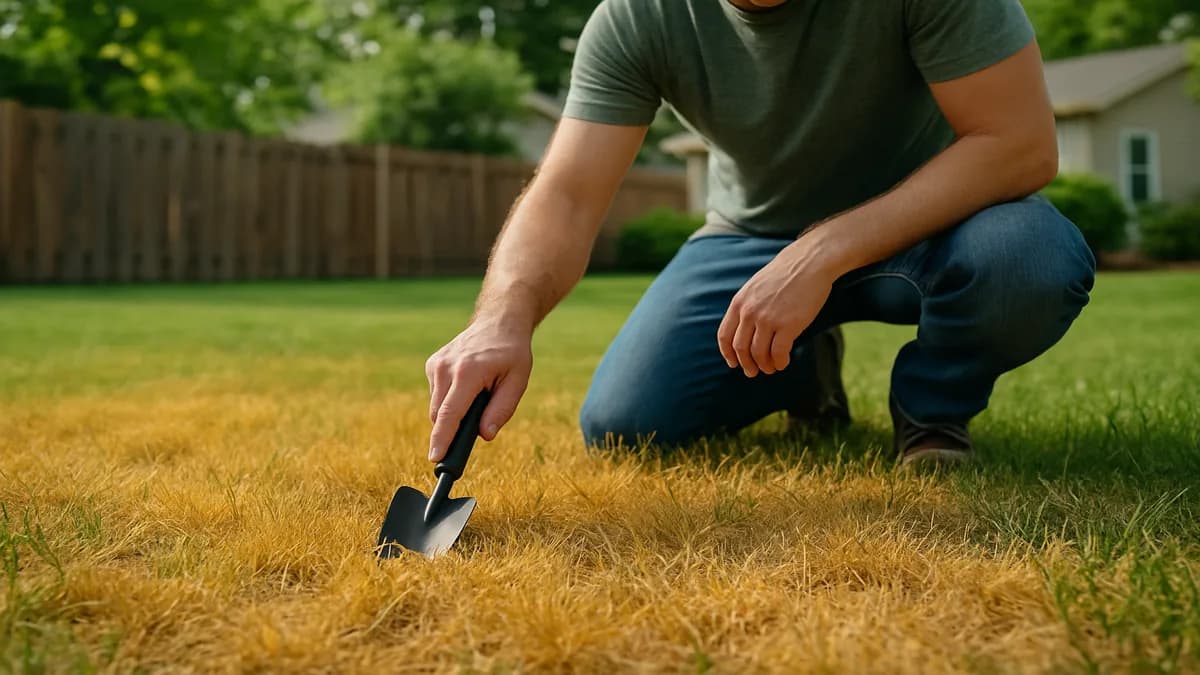
Yellow Grass in Your Lawn: What’s Wrong and How to Fix It
Yellow grass can be a quick fix or a sign of bigger trouble. Learn how to spot the difference, what to do first, and which mistakes to avoid.
8 min read
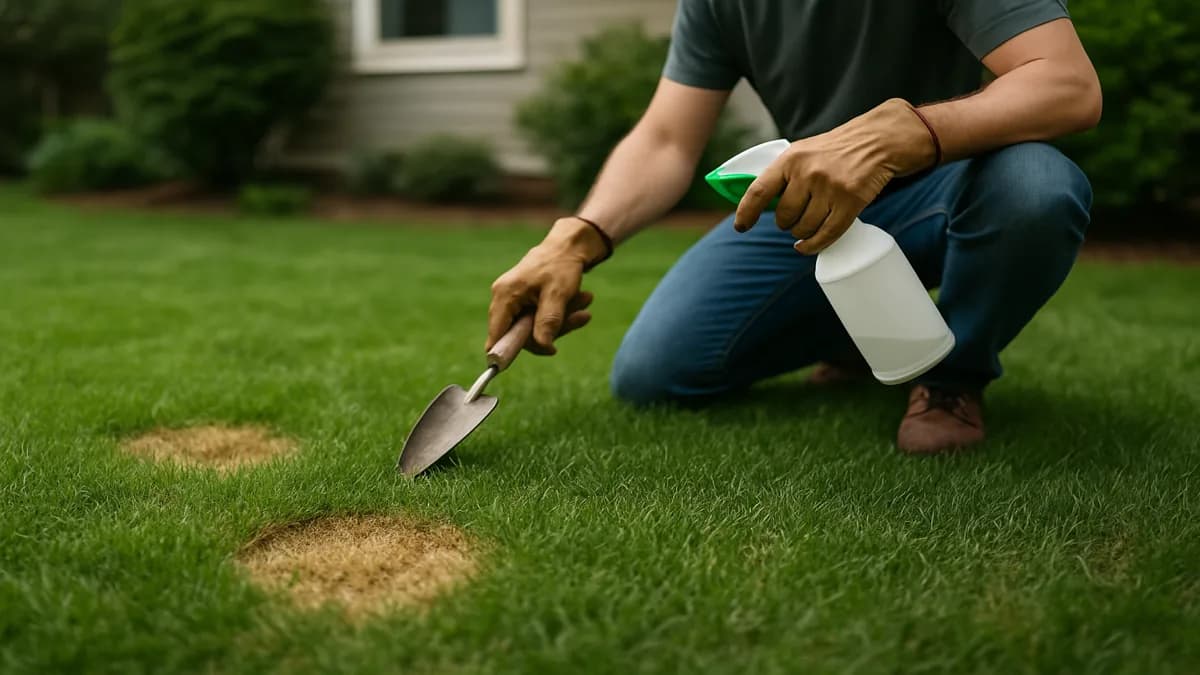
How to Fix Dog Urine Spots on Your Lawn
Dog urine can burn grass because of concentrated nitrogen and salts. Learn what the pattern means, how to repair spots, and which prevention myths to skip.
8 min read
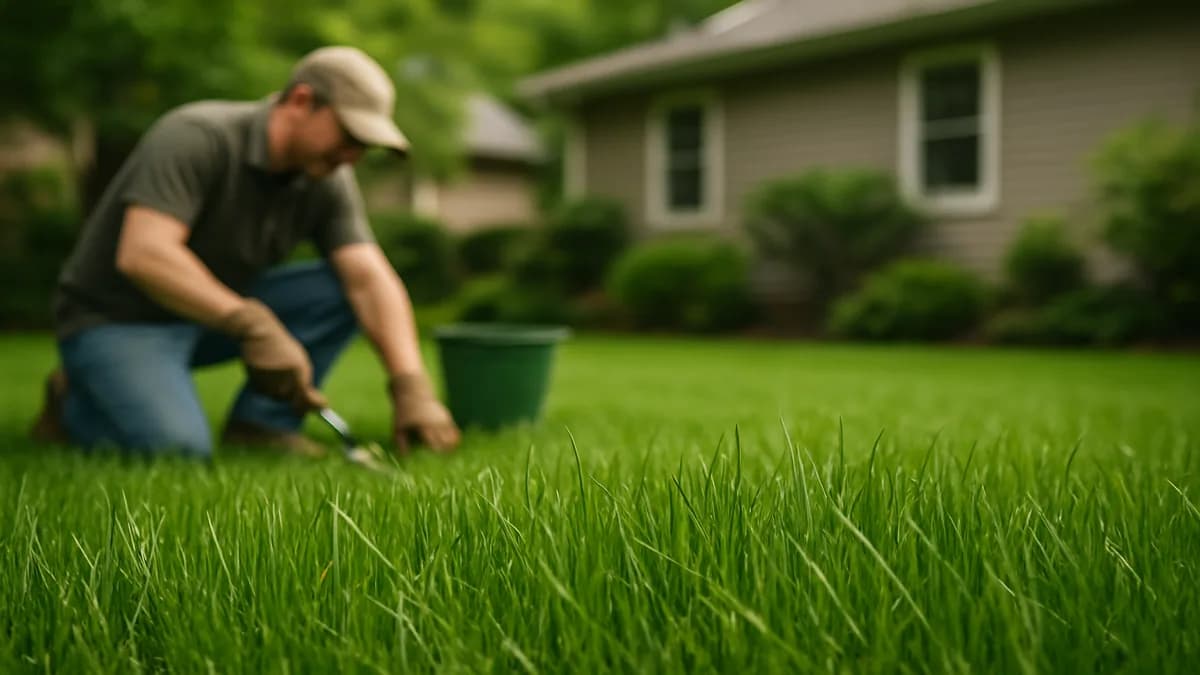
Tall Fescue: The Cool-Season Workhorse for Real Yards
Tall fescue is a practical cool-season grass for transition-zone lawns, but it grows in bunches and needs overseeding to stay thick.
9 min read
Spotted something out of date or wrong? Tell us , we correct guides rather than leaving them to rot.