Moss in Your Lawn Means the Grass Is Losing
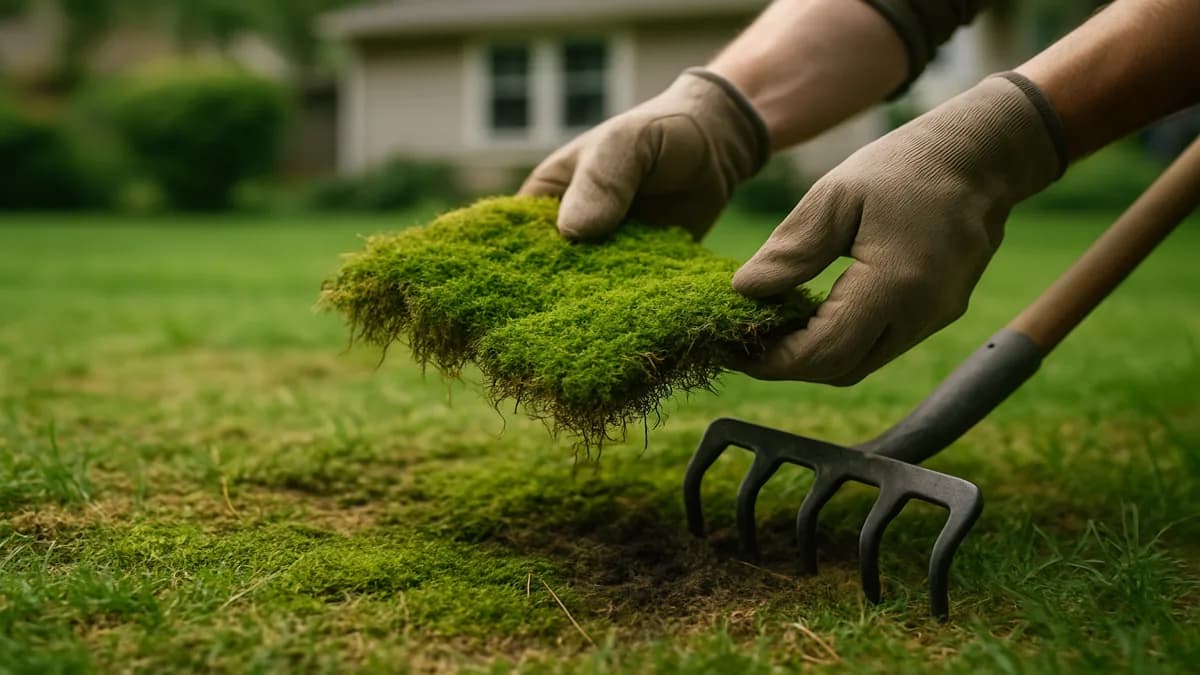
Lawn moss grows where turf is too weak to compete. Learn how to find the cause, remove moss, rebuild grass, and avoid repeat patches.
On this page
Moss in a lawn means the grass is losing the growing conditions battle. Killing moss with iron or soap products can clear the patch for a while, but moss usually comes back unless you fix the cause: shade, wet soil, low pH, compaction, poor fertility, or thin turf.
Assumptions for this guide: You have a US residential lawn, not a putting green or native moss garden; you want turfgrass in the area; and any fertilizer, lime, or moss control product will be applied according to its label and local restrictions.
Why Moss Shows Up (opens in a new tab)
Moss fills space where turfgrass is thin and slow. It does not kill grass like a disease. It takes advantage of spots where grass roots are weak, soil stays wet, or sunlight is limited.
Use the pattern first, then test. A shady side yard with moss needs a different fix than a sunny low spot that stays soggy after every storm.
| What You See | Likely Cause | Quick Check | Best First Fix |
|---|---|---|---|
| Moss under trees or along a fence | Too much shade | Less than a few hours of direct sun | Prune lightly or switch to shade-tolerant grass |
| Moss in a low, soft area | Poor drainage or overwatering | Soil stays wet 24-48 hours after rain | Reduce watering and improve drainage |
| Moss on hard, thin soil | Compaction | Screwdriver is hard to push in | Aerate, then topdress |
| Moss across a pale lawn | Low fertility or wrong pH | Slow grass growth, weak color | Soil test before feeding or liming |
| Moss where mower scalps | Mowing too short | Grass crowns exposed, brown stubble | Raise mowing height |
Step 1: Test Before You Lime or Fertilize (opens in a new tab)
A soil test is the cleanest way to stop guessing. Moss often appears in acidic soil, but not always. Wet shade and compaction can grow moss even when soil pH is fine.
Start with how to soil test your lawn and look for pH, phosphorus, potassium, and organic matter results. Most home lawn decisions start there because lime and fertilizer change the soil for months, sometimes longer.
If the test calls for lime, follow the recommendation by soil type and square footage. The guide on when to lime your lawn explains timing and why fall is often easier on cool-season lawns.
Step 2: Remove the Moss (opens in a new tab)
Remove moss after a dry spell if you can. Damp moss tears up in mats, but wet soil also ruts easily and smears under foot traffic.
For small patches, rake hard with a steel garden rake. For larger areas, dethatching equipment can pull moss and loose organic debris from the surface. Bag the material, especially if it is thick enough to block seed-to-soil contact.
Iron-based moss control and fatty acid soap products can blacken moss quickly. They are temporary tools. They do not add sunlight, drain a low spot, loosen compacted soil, or build turf density.
| Moss Removal Option | Best For | Pros | Watch Out For |
|---|---|---|---|
| Hand raking | Small patches under 100 sq ft | Cheap and precise | Labor heavy on thick moss |
| Dethatching rake or machine | Larger thin lawns | Removes mats fast | Can stress weak turf |
| Iron moss control | Visible moss before raking | Fast blackening | Can stain concrete and does not fix causes |
| Soap-based moss control | Spot treatment | Often easy to apply | Follow label limits around desirable plants |
Step 3: Fix the Cause (opens in a new tab)
The right treatment depends on why grass is thin. If you skip this step, moss removal becomes an annual chore.
More Light (opens in a new tab)
Grass needs enough light to make food. If moss is strongest under dense trees, prune only what is reasonable and safe. Do not butcher trees for a weak lawn. If the site stays deeply shaded, choose a shade-tolerant seed mix or accept a different groundcover.
Less Wet Soil (opens in a new tab)
Moss likes steady moisture. Many homeowners water shady zones the same way they water sunny zones, which keeps shade wet too long. Check how often to water your lawn and adjust by zone, not by wishful thinking.
If water puddles after rain, look beyond irrigation. Redirect downspouts, fill shallow depressions, or improve the grade so water moves away from the grass.
Looser Soil (opens in a new tab)
Compacted soil favors moss because grass roots cannot spread. Aerate during the active growing season for your grass type, then topdress lightly if the soil is thin or uneven.
The guide to topdressing lawn grass explains when compost, sand, or soil makes sense. Most home lawns do best with a modest topdressing, not a heavy blanket.
Taller, Thicker Grass (opens in a new tab)
Short mowing makes moss problems worse because grass loses leaf area and shade tolerance. Raise the mower to the recommended range for your turf. If you are not sure, use lawn mowing height by grass type before you set the deck.
Fertility matters too. Thin, pale grass cannot crowd out moss, but fertilizer should follow the soil test and the season. Feed actively growing turf, not dormant grass or saturated soil.
Thin turf needs seed once the moss is gone and soil is corrected. Match the seed to the site. Shade mixes are useful where sun is limited, but no grass seed solves deep shade.
Worked Example: A Shady 300 Sq Ft Side Yard (opens in a new tab)
Say a 300 sq ft side yard has moss under a maple, thin cool-season grass, and wet soil two days after watering. The homeowner first measures the area, then sends a soil sample to a lab. The test says pH is acceptable, so lime is skipped.
The fix is practical: reduce that sprinkler zone, rake out moss, loosen the top inch of soil, add a light compost topdressing, and seed with a shade-tolerant mix at the label rate. If the seed label calls for 4 pounds per 1,000 sq ft, the patch needs 300 / 1,000 x 4 = 1.2 pounds of seed.
That repair may still be thinner than the sunny front lawn. That is normal. The goal is dense enough grass to cover soil, not a perfect carpet in tree shade.
When to Skip the Moss Fight (opens in a new tab)
Skip the grass repair if the spot gets deep shade, constant roof runoff, or heavy foot traffic that you cannot change. In those areas, turf may never compete well. Mulch, stepping stones, a shade garden, or a planned moss area can be more honest than reseeding every spring.
Common Moss Mistakes (opens in a new tab)
The biggest mistake is treating moss like the enemy and ignoring why grass failed. Spraying moss killer without correcting shade, water, soil, and mowing buys a short clean-up, not a lawn.
Other mistakes are just as common: liming without a soil test, seeding over living moss, watering shady areas every day, mowing low to "clean up" the patch, and topdressing so heavily that the remaining grass is buried.
A Simple Moss Repair Order (opens in a new tab)
Follow this order so each step supports the next one:
- Measure the mossy area.
- Check light, drainage, mowing height, and soil compaction.
- Soil test before lime or major fertilizer changes.
- Rake out moss or kill it, then rake it out.
- Correct drainage or compaction.
- Topdress lightly if the soil surface is poor.
- Seed when your grass type is actively growing.
- Water for germination, then shift back to deeper, less frequent watering.
Moss control works best when it is boring. Find the weak condition, fix that condition, then rebuild the turf. The moss is only telling you where the lawn stopped competing.
Frequently asked questions
Calculators for this job
Lawn Area Calculator
Almost every other lawn number depends on this one. Break your yard into simple shapes, subtract the parts that aren't grass, and get a square footage you can use for seed, fertilizer, and quotes.
OpenGrass Seed Calculator
Seeding rates differ by species by a factor of twenty, bermudagrass wants 1 lb per 1,000 sq ft, perennial ryegrass wants 8. Pick your grass and whether you're starting fresh or overseeding.
OpenCompost Calculator
Compost gets applied far thinner than mulch or soil, and the right depth depends entirely on the job. Enter your area and pick the application to get volume, bags, and cost.
OpenTopsoil Calculator
Topsoil is heavy, roughly a ton per cubic yard, so knowing the weight matters as much as the volume. Enter your area and depth for yards, bags, and delivered tonnage.
OpenKeep reading
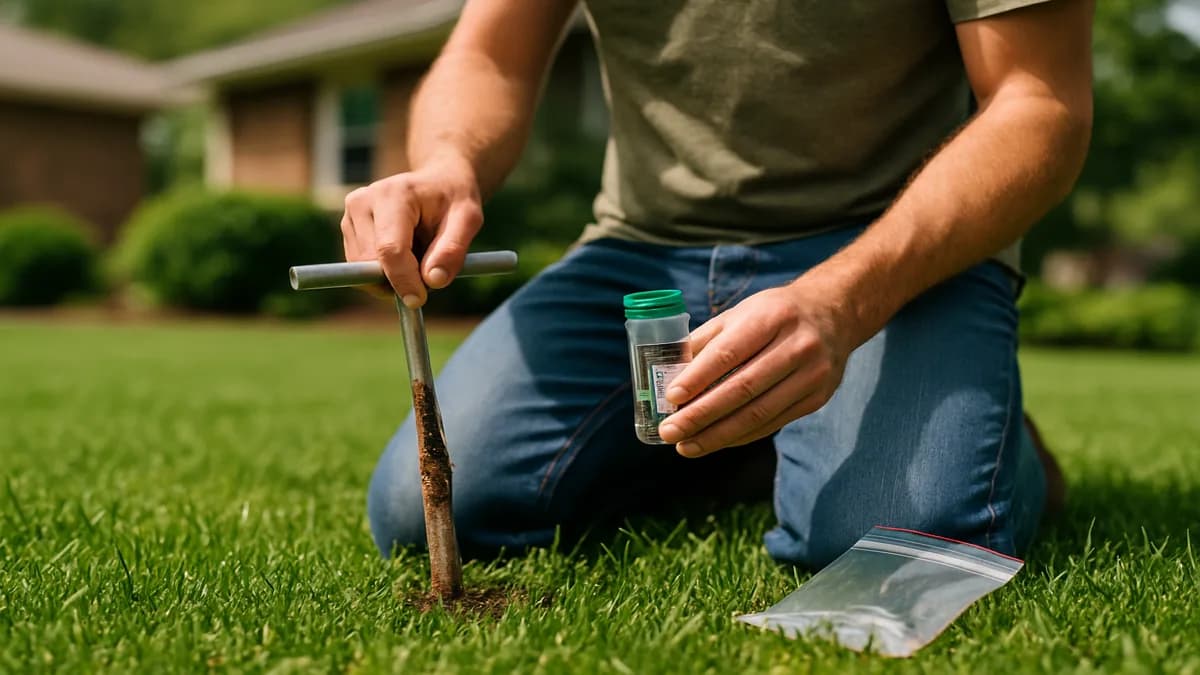
How to Soil Test Your Lawn (and Actually Use the Results)
A soil test replaces fertilizer guesswork with numbers. Here’s how to sample, read the report, and turn results into a plan.
6 min read
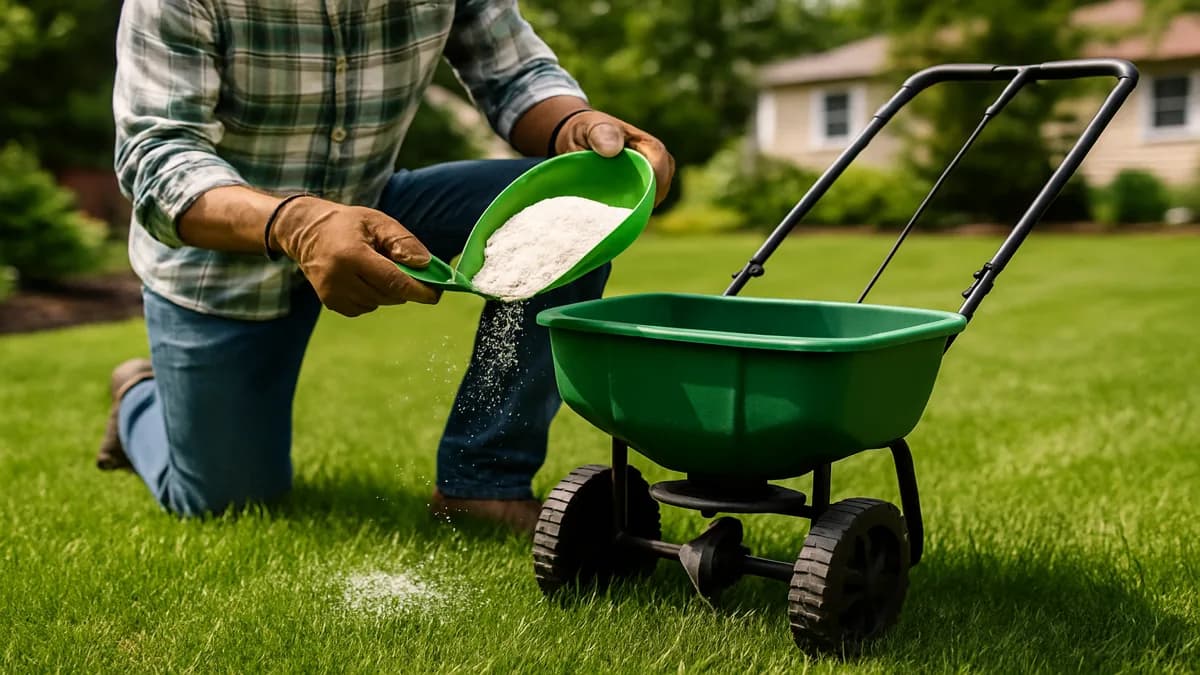
When to Lime Your Lawn (and How Much to Use)
Lime only helps acidic soil. Test first, follow the lab rate, and cap single applications so you raise pH without burning the turf.
6 min read
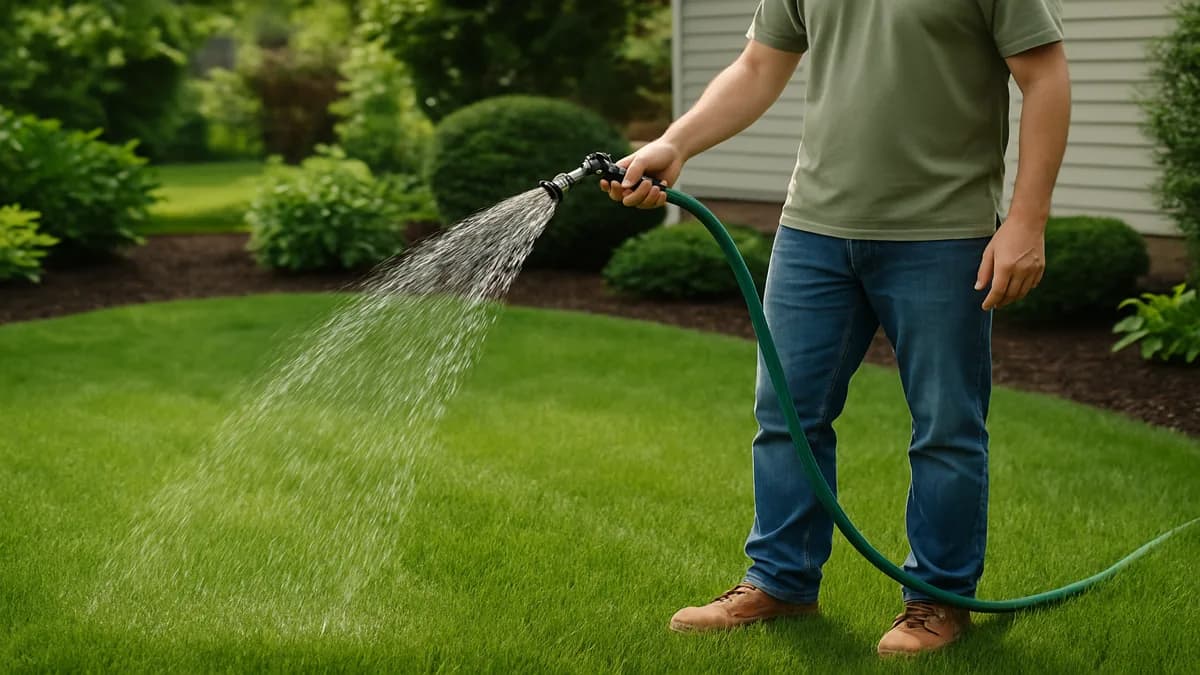
How Often Should You Water Your Lawn?
Most established lawns need about 1 to 1.5 inches of water per week including rain. Water deep and infrequent, not a little every day.
6 min read
Spotted something out of date or wrong? Tell us , we correct guides rather than leaving them to rot.