Which Organic Mulch Is Best? Real Advice for Beds, Slopes, and Veggie Gardens
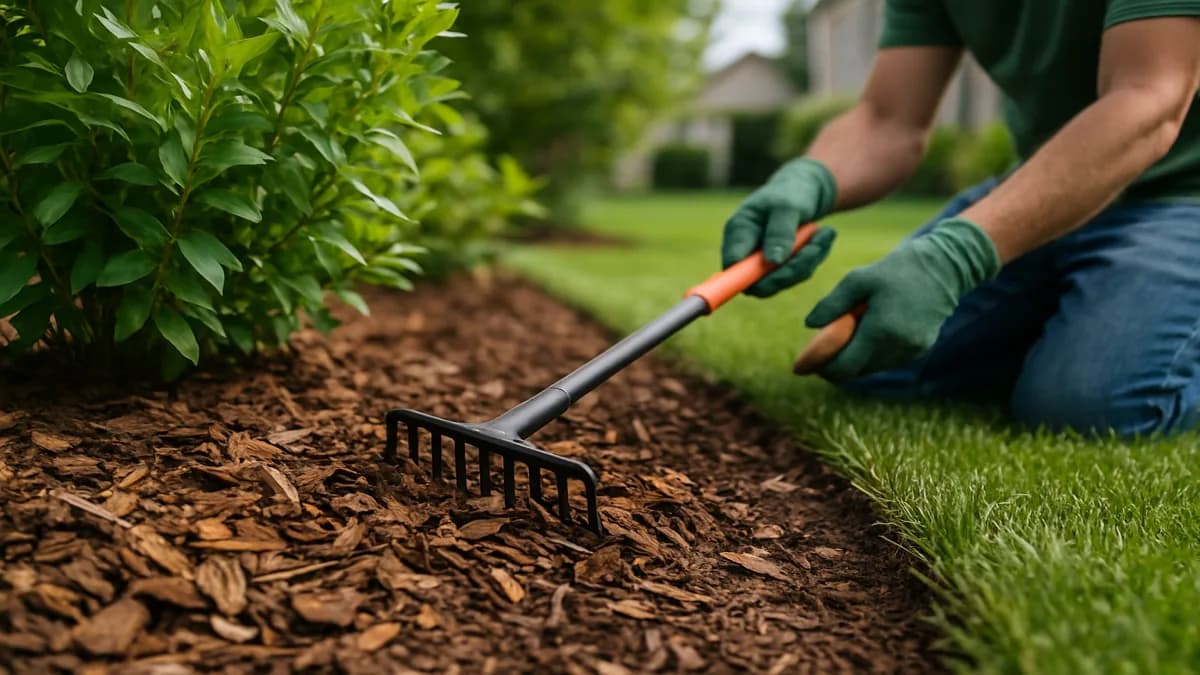
Not all organic mulches are equal. Here’s how to pick the right one for your beds, slopes, or vegetable patch,without wasting money or time.
On this page
- Quick Comparison: Organic Mulch Types
- Where People Mess Up With Mulch
- Skip It: When Mulch Isn’t Worth the Trouble
- Shredded Hardwood Mulch (The Workhorse)
- Pine Bark Mulch: Nuggets vs. Fines
- Cedar and Cypress Mulch
- Pine Straw (Needles)
- Compost as Mulch
- Straw (Not Hay)
- Grass Clippings
- Wood Chips (Arborist Chips)
- Leaf Mould
- How Much Mulch Do You Need? (Worked Example)
- Application: How to Mulch Without Messing Up
- Hardwood vs. Bark Mulch: Which Is Better?
- Mulch for Slopes: What Actually Works
- Mulch for Vegetable Gardens
- Nitrogen and Mulch: The Real Story
- Should You Use Dyed Mulch?
- Mulch Mistakes That Cost You
- When to Mulch
- More on Landscaping and Garden Beds
You’re standing in the mulch aisle, staring at bags and piles labeled hardwood, bark, pine straw, compost, and more. You want something that keeps weeds down, looks good, and doesn’t wash away or rot too fast. Here’s what actually matters,and where most folks waste money or effort.
If you want mulch that stays put and helps your soil, pick a shredded (fibrous) type like hardwood or pine straw. If you care more about looks and don’t have a slope, bark nuggets or cedar might fit. Skip the fancy bags if you’re mulching a veggie patch,compost or straw works better there.
Quick Comparison: Organic Mulch Types (opens in a new tab)
| Mulch Type | Lasts (Typical) | Stays Put? | Improves Soil? | Looks | Bulk Cost (per cu yd) | Best Use |
|---|---|---|---|---|---|---|
| Shredded hardwood | 1-2 years | Yes | Yes | Dark, natural | $30-$55 | Beds, slopes |
| Pine bark nuggets | 2-3 years | No | Some | Chunky, decorative | $32-$60 | Flat beds |
| Pine bark fines | 1-2 years | Yes | Excellent | Fine, dark | $35-$60 | Soil boost, beds |
| Cedar/cypress | 2-3 years | Yes | Some | Aromatic, light | $40-$70 | Beds, color retention |
| Pine straw | ~1 year | Excellent | Some | Loose, rustic | $25-$45 | Slopes, acid-lovers |
| Compost | under 1 year | Some | Excellent | Black, crumbly | $35-$65 | Veggie beds |
| Straw | 1 season | No | Good | Golden, loose | $25-$45 | Veggies, seed |
| Wood chips | 2-4 years | Yes | Yes | Coarse, rustic | Often free | Paths, trees |
Where People Mess Up With Mulch (opens in a new tab)
What usually happens is someone dumps a thick layer of bark nuggets on a slope or in a rain-prone spot. First big storm, half your mulch is at the bottom of the hill or clogging the drain. Or they use dyed mulch in a veggie garden, wondering why the tomatoes look sad. Don’t do that.
Skip It: When Mulch Isn’t Worth the Trouble (opens in a new tab)
If you have a dense groundcover, mature shrubs that shade the soil, or a woodland bed with thick leaf litter, you can skip mulching. Nature’s already doing the job. Adding more just wastes money and can even smother roots.
Shredded Hardwood Mulch (The Workhorse) (opens in a new tab)
- Where it shines: Most landscape beds, especially if you want mulch to stay put
- Pros: Knits together, resists wind and rain, improves soil as it breaks down
- Cons: Can crust over,rake it each spring
- How long it lasts: 1-2 years
- Bulk price: $30-$55 per cubic yard
Pine Bark Mulch: Nuggets vs. Fines (opens in a new tab)
- Nuggets: Look sharp, last longer (2-3 years), but float and roll on slopes or in heavy rain. Good for flat, formal beds.
- Fines: Smaller particles, break down faster, boost soil more. Stay put better than nuggets. Good for soil improvement and mixed beds.
Cedar and Cypress Mulch (opens in a new tab)
- Good for: Beds where you want color to last and don’t want to reapply every year
- Pros: Smells nice, resists decay, holds color
- Cons: Cypress may not be sustainably harvested,cedar is a safer bet
- Lasts: 2-3 years
- Bulk price: $40-$70 per cubic yard
Pine Straw (Needles) (opens in a new tab)
- Best for: Southern yards, slopes, acid-loving plants (azaleas, camellias)
- Pros: Interlocks, won’t wash away, easy to spread
- Cons: Needs annual top-up, may not be available up North
- Lasts: About a year
- Cost: $25-$45 per cubic yard (or $5-$8 per bale)
Compost as Mulch (opens in a new tab)
- Where it works: Vegetable beds, annual flowers, anywhere you want to feed the soil
- Pros: Feeds plants, boosts microbes, improves structure
- Cons: Weeds can sprout if compost isn’t fully finished, doesn’t block weeds as well as wood mulch
- Lasts: Less than a year
Straw (Not Hay) (opens in a new tab)
- Use for: Veggie gardens, covering new grass seed
- Pros: Cheap, easy to spread, breaks down fast
- Cons: Blows away, not for looks, must be straw (hay brings weed seeds)
- Lasts: One season
Grass Clippings (opens in a new tab)
- Best for: Between veggie rows
- How to use: Dry them first, spread thin (no more than 1 inch thick)
- Warning: Never use clippings from a lawn treated with herbicides
Wood Chips (Arborist Chips) (opens in a new tab)
- Where they fit: Paths, woodland beds, around trees and shrubs
- Pros: Usually free from tree services, lasts 2-4 years
- Cons: Coarse, not tidy, don’t dig fresh chips into soil
Leaf Mould (opens in a new tab)
- Good for: Shade gardens, woodland beds, soil improvement
- Pros: Free if you have trees, great for soil
- Cons: Takes a year or two to make, not as neat as store-bought mulch
How Much Mulch Do You Need? (Worked Example) (opens in a new tab)
Let’s say you’ve got a 20x10 foot (200 sq ft) bed and want to mulch 3 inches deep:
- 3 inches = 0.25 feet
- 200 sq ft x 0.25 ft = 50 cubic feet
- 1 cubic yard = 27 cubic feet
- 50 ÷ 27 ≈ 1.85 cubic yards
So you’ll need about 2 cubic yards. At $40 per yard, that’s $80 for hardwood mulch.
Application: How to Mulch Without Messing Up (opens in a new tab)
Weed first
Mulch won’t kill established weeds. Pull or hoe them out before you start.
Water the soil
Dry soil under mulch stays dry. Water first if it’s dusty.
Rough up old mulch (if reapplying)
Break up any crust so water can get through.
Spread mulch 2-3 inches deep
Check depth with a ruler. Most people overdo it.
Keep mulch away from trunks and stems
Leave a 2-3 inch gap around trees and shrubs to avoid rot and critters.
Hardwood vs. Bark Mulch: Which Is Better? (opens in a new tab)
If you want mulch that stays put, go with shredded hardwood. For showy beds where you want a tidy look and don’t mind topping up after storms, bark nuggets are fine. On slopes, avoid nuggets,they’ll end up in the gutter.
| Feature | Shredded Hardwood | Bark Nuggets |
|---|---|---|
| Stays put | Yes | No |
| Looks tidy | Decent | Very |
| Soil improvement | Good | Moderate |
| Lasts | 1-2 years | 2-3 years |
| Cost (bulk) | $30-$55/yd | $32-$60/yd |
| Good for slopes | Yes | No |
Mulch for Slopes: What Actually Works (opens in a new tab)
On a slope, use shredded hardwood or pine straw. Both lock together and won’t wash away in a downpour. Bark nuggets, wood chips, or straw will slide or float. If you already have chunky mulch on a slope, rake it off and use it elsewhere.
Mulch for Vegetable Gardens (opens in a new tab)
Stick with compost, straw, or grass clippings. They break down fast and feed your crops. Don’t use dyed or bark mulches in food beds,no benefit, and sometimes they’re made from questionable wood.
Nitrogen and Mulch: The Real Story (opens in a new tab)
Wood mulches do tie up a little nitrogen at the soil surface, but only in the top half inch. This only matters for seeds or shallow-rooted annuals. For shrubs and trees, it’s not a problem. Never till fresh wood mulch into your soil.
Should You Use Dyed Mulch? (opens in a new tab)
Most dyes are harmless (iron oxide, carbon black), but the wood source is the real worry. Some dyed mulches are made from recycled pallets or treated wood. That’s a no-go for veggie beds or play areas. Only buy dyed mulch if the supplier tells you exactly what wood it’s made from.
Mulch Mistakes That Cost You (opens in a new tab)
- Piling mulch against tree trunks (mulch volcanoes): invites rot and pests.
- Using bark nuggets on slopes: they’ll wash away.
- Spreading mulch too thick: suffocates roots, keeps soil soggy.
- Using hay instead of straw: brings in weeds.
- Using grass clippings from treated lawns: can kill your plants.
When to Mulch (opens in a new tab)
Best time is spring, after the soil warms up and before weeds get going. Fall works too, especially for winter protection in veggie beds.
More on Landscaping and Garden Beds (opens in a new tab)
- How Much Mulch Do You Need?
- How to Winterize a Garden
- 11 of the Best Privacy Hedges
- Flowering Vines for Your Yard
- Guide to Pergolas: Types, Uses, Costs
If you want to get fancy, you can combine mulches: pine straw under shrubs, hardwood in the front, compost in the veggie patch. Just don’t overthink it. The best mulch is the one you’ll actually spread and maintain.
Frequently asked questions
Calculators for this job
Mulch Calculator
Enter your bed dimensions and how deep you want the mulch. You'll get cubic yards, the number of 2 cu ft bags, delivered weight, and whether bags or bulk works out cheaper at that volume.
OpenCompost Calculator
Compost gets applied far thinner than mulch or soil, and the right depth depends entirely on the job. Enter your area and pick the application to get volume, bags, and cost.
OpenSoil Calculator
Work out soil volume for any planting area, then see it costed as bags and as bulk. Handles rectangular beds, curved borders, circles, and irregular shapes built from sections.
OpenKeep reading
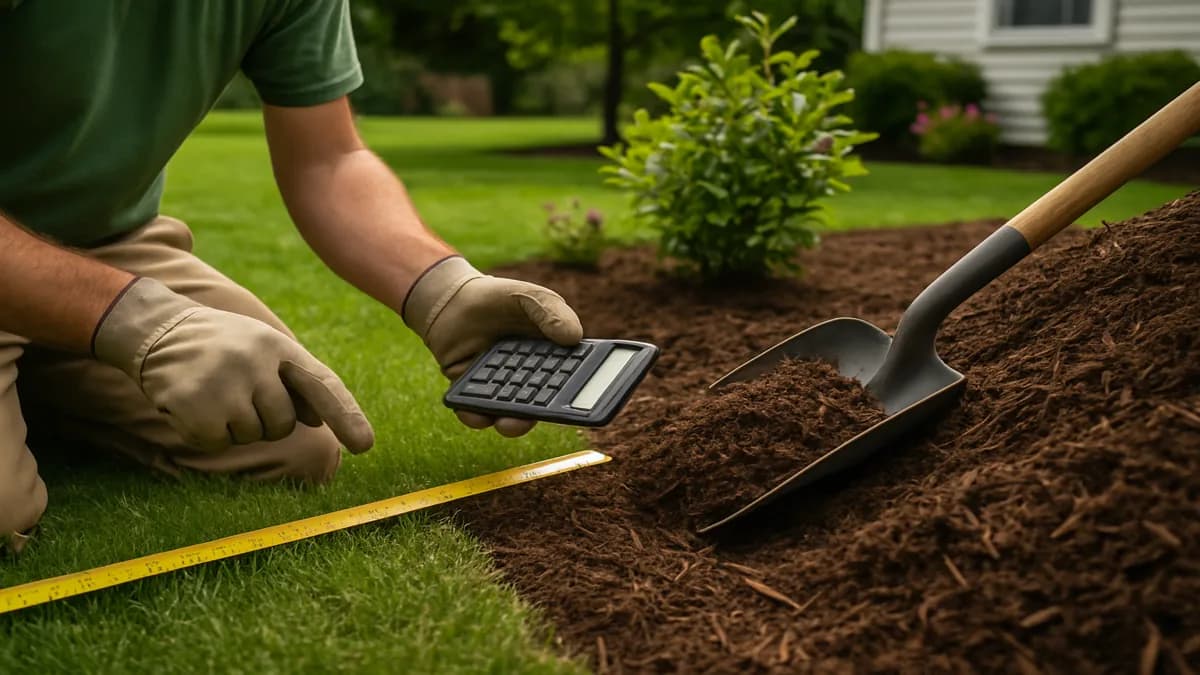
How to Figure Out How Much Mulch You Really Need
Most folks buy too much or too little mulch. Here’s how to measure, calculate, and choose between bags and bulk,plus what to skip.
6 min read
Winterizing Your Garden: What Actually Matters
Winter garden prep isn’t about wrapping everything in burlap. Here’s what actually matters for healthy beds, roses, and irrigation,plus what you can skip.
7 min read
Privacy Plants That Work: Fast, Dense, and Right for Your Yard
Choosing privacy plants is about more than speed. Get real advice on spacing, climate fit, and which hedges actually work for small yards or tough spots.
6 min read
Spotted something out of date or wrong? Tell us , we correct guides rather than leaving them to rot.