Chinch Bugs in Your Lawn: Damage Signs and What to Do
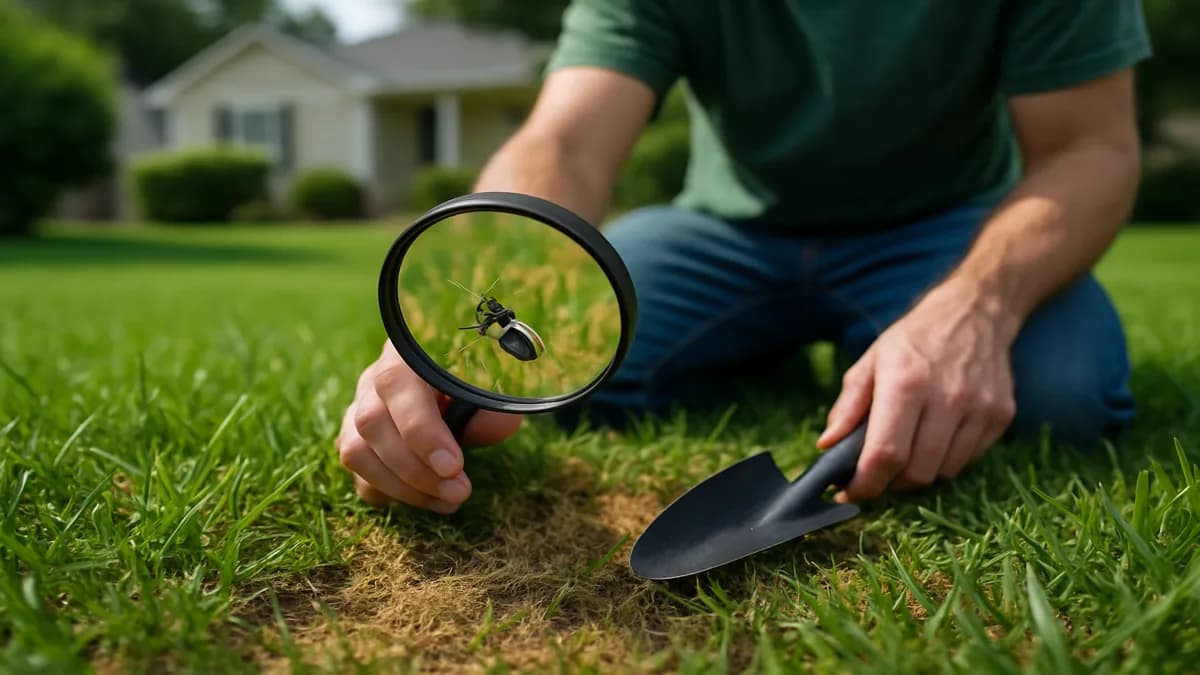
Irregular yellow-to-brown patches in hot, sunny turf may be chinch bugs. Confirm with a float test before you spray.
On this page
- Where Chinch Bugs Hit Hardest
- Damage Signs vs Look-Alikes
- Confirm With a Float Test
- Cultural Control Comes First
- Chemical Control: Labels and Resistance
- Repair After the Bugs
- Worked Example
- Life Cycle Snapshot
- Beneficial Insects and Why Blanket Sprays Hurt
- Product Application Notes (General)
- St. Augustine Variety Choices
- Mistakes to Avoid
- Seasonal Monitoring Calendar (Southern Warm-Season)
- Kids, Pets, and Reentry
In hot southern lawns, expanding straw-colored patches in full sun often get blamed on drought or fungus. Southern chinch bugs are another top suspect, especially in St. Augustinegrass. They are tiny, so damage usually appears before you notice the insects. Confirm them before you treat.
Where Chinch Bugs Hit Hardest (opens in a new tab)
Southern chinch bugs (Blissus insularis) are a major St. Augustine pest across the Southeast and Gulf Coast. Related chinch bugs can bother other turfgrasses in warm regions. Damage concentrates where turf is heat-stressed: south-facing exposures, along pavement, and underirrigation zones (Texas A&M (opens in a new tab), UF/IFAS (opens in a new tab), UGA (opens in a new tab)).
If you manage cool-season turf in the North, this pest is less central than white grubs. Use the grubs guide for carpet-peel summer patches there.
Damage Signs vs Look-Alikes (opens in a new tab)
| Clue | Chinch bugs | Brown patch fungus | Grubs | Drought |
|---|---|---|---|---|
| Patch shape | Irregular, spreads outward | Often circular / smoky rings | Irregular | Follows dry zones |
| Turf lift test | Usually rooted | Usually rooted | Peels like carpet | Rooted but wilted |
| Hot sunny edges | Very common | More humidity-driven | Anywhere roots are eaten | Yes |
| Insects visible | Tiny bugs in thatch / float test | No | C-shaped in soil | No |
For a full symptom tree, see yellow grass causes and treatment.
Confirm With a Float Test (opens in a new tab)
Choose the fringe
Work where dead turf meets green turf. That is where feeding is active.Insert a bottomless can
A coffee can or PVC ring pushed 1 to 3 inches into the soil works.Fill with water
Keep the water level up for 5 to 10 minutes.Watch the surface
Chinch bugs float. Count what appears. Repeat in a few spots.
You can also vacuum a square foot of fringe into a light tray or part the thatch by hand. Adults are small, blackish with white wings; nymphs look different by stage. When unsure, bag a sample for your county extension office.
Thresholds vary by publication and turf condition. Texas A&M discusses damaging populations in the range of roughly 20 to 25 per square foot in some guidance, while other university materials use lower float-test action levels. Use local extension numbers when available, and always weigh visible damage plus counts.
Cultural Control Comes First (opens in a new tab)
Insecticides fail more often when the lawn stays stressed.
- Water correctly. Deep, appropriate irrigation reduces drought mimicry and stress. See how often to water your lawn.
- Reduce thatch when it is excessive. Thick thatch shelters chinch bugs. Mechanical dethatching is a separate decision (power rake vs dethatching).
- Avoid excess nitrogen that creates lush, soft growth in peak heat.
- Monitor weekly in known problem neighborhoods during warm months.
Chemical Control: Labels and Resistance (opens in a new tab)
When cultural care is not enough and counts plus damage warrant treatment:
- Choose a product labeled for chinch bugs on your grass type
- Treat active edges and affected zones thoroughly
- Water in when the label says the product needs to reach thatch
- Rotate modes of action across seasons if you treat repeatedly
Southern chinch bug populations have shown resistance to multiple insecticide classes in research and extension reports. Repeating the same chemistry is a common reason control collapses.
Repair After the Bugs (opens in a new tab)
Dead centers will not green up from insecticide alone. Once populations are down:
- Rake out dead material
- Correct irrigation coverage
- Reseed or resod with a grass type suited to the site when the season allows
St. Augustine recovery is often sod or plugs rather than seed, depending on cultivar and region.
Worked Example (opens in a new tab)
A St. Augustine lawn in July shows two expanding straw patches along a west-facing driveway. Float tests at the fringe produce numerous chinch bugs. Plan:
- Spot-treat labeled insecticide on damaged zones and a buffer.
- Adjust irrigation so driveway edges get even coverage without constant wilt.
- Schedule thatch evaluation after stress eases.
- Replace dead centers with matching sod after control.
Life Cycle Snapshot (opens in a new tab)
Chinch bugs develop from eggs to nymphs to adults in warm weather. Multiple generations can occur in long southern seasons. That is why a single spray in May may not protect August turf if populations rebound and resistant individuals survive. Monitoring through the hot months matters more than one calendar spray.
Eggs and young stages live in thatch and lower canopy. Products and watering instructions that never move active ingredient into that zone underperform.
Beneficial Insects and Why Blanket Sprays Hurt (opens in a new tab)
Big-eyed bugs and other predators feed on chinch bugs. Broad, repeated insecticide use can reduce those allies and select for resistant chinch bug populations. Extension programs emphasize scouting and cultural care for this reason. Treat when damage and counts justify it, not because a neighbor sprayed yesterday.
Product Application Notes (General) (opens in a new tab)
Always defer to the label, but common themes in university guidance include:
- Adequate coverage of thatch and leaf bases
- Irrigation when the product must reach thatch
- Avoiding applications to wilted turf outside label conditions
- Rotating chemical classes across seasons if retreatment is needed
If a product fails and you confirmed insects again, do not immediately reapply the same active ingredient family. Ask extension about local resistance reports.
St. Augustine Variety Choices (opens in a new tab)
Some St. Augustine cultivars show better chinch bug tolerance than older standards, but tolerance is not immunity. Cultivar choice is a long-term strategy when renovating, not a rescue for an active outbreak. Local extension and sod growers can advise what performs in your county.
Mistakes to Avoid (opens in a new tab)
- Spraying brown patch fungicide for chinch damage
- Treating the whole subdivision lawn with no float test
- Ignoring resistance and reusing one product all summer
- Letting driveway edges stay chronically dry
- Confusing grub carpet-peel with chinch feeding
- Mowing extremely low and overfertilizing during peak heat
- Stopping irrigation entirely “to dry them out” and cooking the turf
Seasonal Monitoring Calendar (Southern Warm-Season) (opens in a new tab)
| Period | Action |
|---|---|
| Late spring | Begin weekly visual checks on sunny edges |
| Peak summer | Float-test suspicious patches promptly |
| Late summer | Re-check treated areas for rebound |
| Fall | Repair dead centers; note problem zones for next year |
Kids, Pets, and Reentry (opens in a new tab)
Follow label reentry intervals after insecticide applications. Keep pets and children off treated turf until sprays dry or as the label requires. Store products locked and in original containers. Spot-treating smaller zones reduces how much active lawn you take out of use.
If you hire a service, ask which active ingredient they used, when you can reenter, and whether they rotate chemistries. Bring float-test results so they are not spraying blind.
Chinch bugs are a regional, heat-season problem with a clear confirmation test. Identify, count, fix stress, then treat if needed. That order keeps southern lawns alive through the hottest months.
Frequently asked questions
Calculators for this job
Irrigation Calculator
Find out how much water your lawn or garden actually needs each week, in both inches and gallons, and how to split it across the week for your soil type.
OpenLawn Area Calculator
Almost every other lawn number depends on this one. Break your yard into simple shapes, subtract the parts that aren't grass, and get a square footage you can use for seed, fertilizer, and quotes.
OpenGrass Seed Calculator
Seeding rates differ by species by a factor of twenty, bermudagrass wants 1 lb per 1,000 sq ft, perennial ryegrass wants 8. Pick your grass and whether you're starting fresh or overseeding.
OpenKeep reading
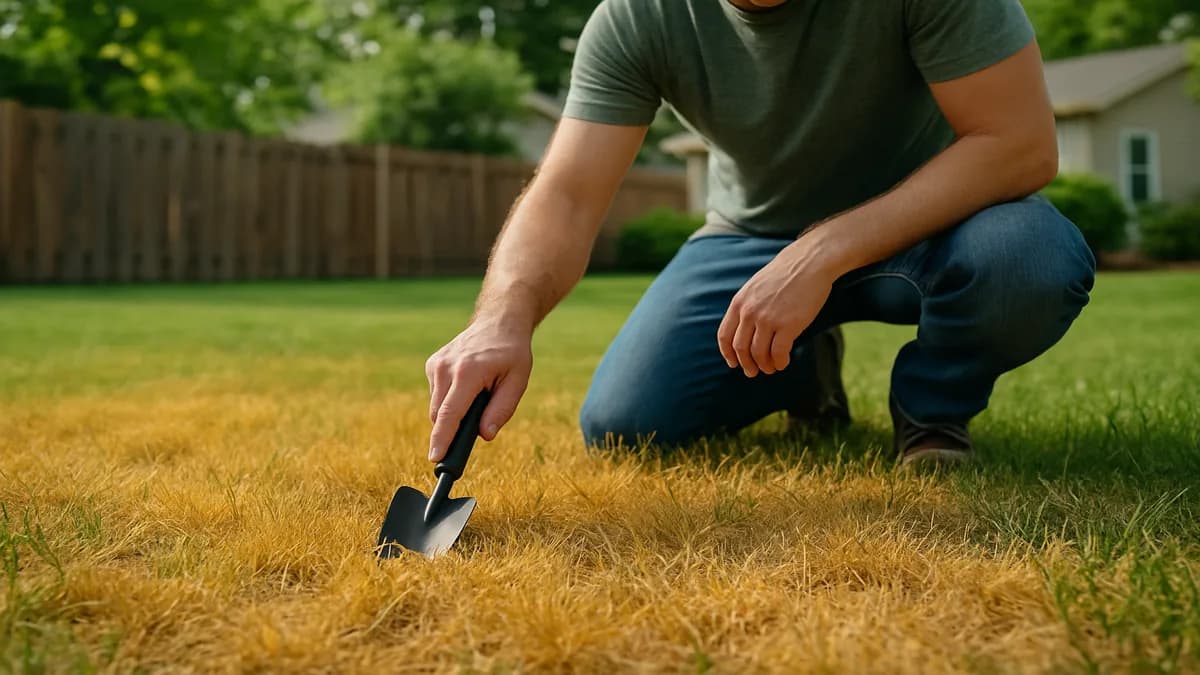
Yellow Grass in Your Lawn: What’s Wrong and How to Fix It
Yellow grass can be a quick fix or a sign of bigger trouble. Learn how to spot the difference, what to do first, and which mistakes to avoid.
8 min read
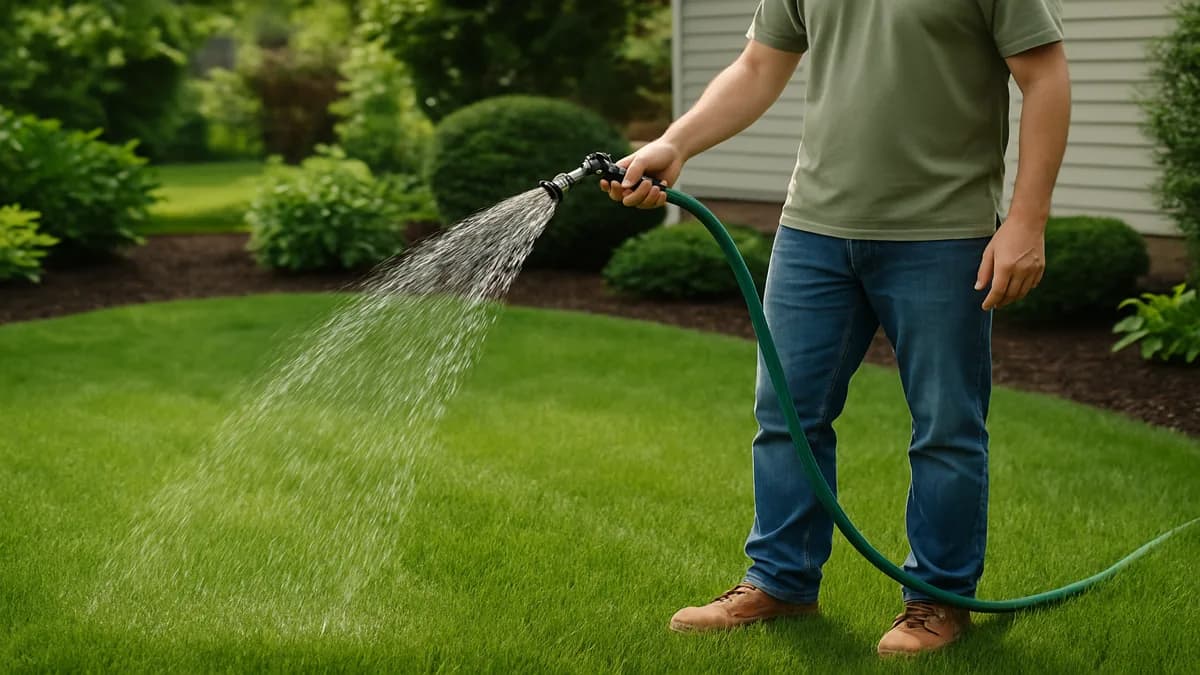
How Often Should You Water Your Lawn?
Most established lawns need about 1 to 1.5 inches of water per week including rain. Water deep and infrequent, not a little every day.
6 min read
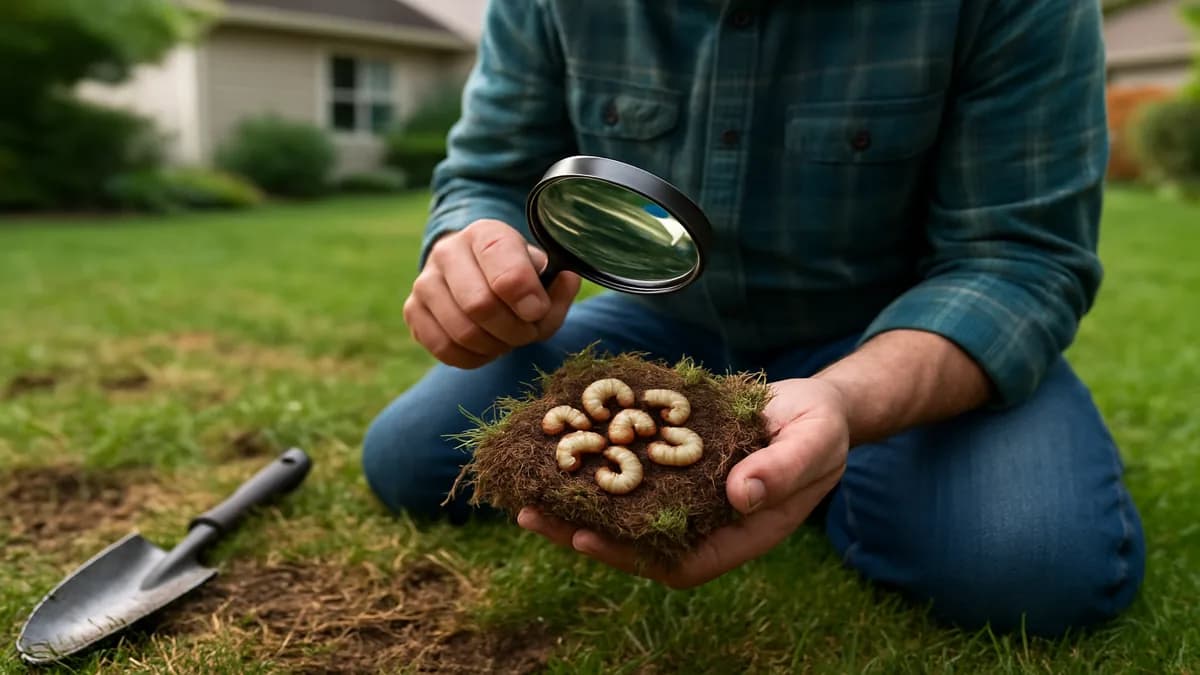
Grubs in Your Lawn: How to Confirm Damage and Treat It
Brown patches that peel like carpet often mean grubs. Confirm the count before you buy a treatment, then time preventive or curative products correctly.
7 min read
Spotted something out of date or wrong? Tell us , we correct guides rather than leaving them to rot.